Selenium Marsh Mass Balance
CEE 2025-2026 Winter
Spring
Industry Sponsored

Selenium Volatilization in San Joaquin Marsh Plants

The San Joaquin Marsh (SJM) is a constructed wetland located in Irvine, California within the Newport Bay watershed. A prominent feature of the habitat is the natural wetland treatment system, where urban runoff and groundwater travels through a series of ponds with vegetation, and the effluent (clean water) makes its way towards upper Newport Bay and the ocean. One major pollutant of emerging concern present in the marsh is selenium (Se), a naturally occurring element in the surrounding foothills around the area. At high levels, Se can be toxic to native aquatic plants and animals present in these ecosystems. This project quantifies the amount of Se removal via volatilization. Acrylic chambers were designed, assembled, and deployed clear at Pond 3 in the SJM to capture volatilized Se from bulrush and cattail utilizing carbon filters via a vacuum pump. The constructed chambers enclosed water and plants, allowing data collection over a...

Final Product
EECS 2025-2026 Fall
Winter
Internally Mentored (faculty, staff, TA)

SmartCan

SmartCan is a smart sorting bin designed to identify and collect recyclable materials using computer vision. Improper waste disposal and low recycling rates contribute to environmental issues, while individuals with mobility limitations may face challenges in properly disposing of waste. This project addresses both concerns by creating an autonomous system that can detect recyclable objects and move toward them. By combining accessibility with sustainability, SmartCan aims to promote cleaner environments and make recycling more convenient for a wider range of users.

SmartSweat
MAE 2025-2026 Fall
Winter
Internally Mentored (faculty, staff, TA)

SmartSweat - Lactate Sweat Analyte Band

According to an article by the American Chemical Society:

"Sports physiology will likely benefit from a technology able to account for high-resolution temporal lactate changes according to the intensity of the physical activity, rather than discrete information from centralized lab-based analysis.” 

Lactate is a byproduct of muscular metabolism and an indicator of workout intensity. This market gap exists due to the difficulty in isolating and measuring specific chemicals in sweat, such as lactate. Currently, lactate sensors on the market are usually invasive and require lab analysis. This leaves a large market gap for non-invasive, real time lactate sensors, among athletes as well as the average consumer. 

SmartSweat proposes an electrochemical lactate sensor working in combination with a mobile app to provide real-time lactate analysis on the user's sweat. 

Our booth at the Senior Design Showcase
EECS 2025-2026 Fall
Winter
Internally Mentored (faculty, staff, TA)

Software-Defined Phase Array Radar for Near-Range Drone Detection

The signal strength necessary to identify small radar cross sections of miniature drones has resulted in most modern radars designed for this task being highly expensive and energy-intensive, rendering them impractical for use in an instructional setting and pushing university curricula to lean toward simulation as opposed to real-world testing. We are designing a cost-effective, energy-efficient phased array radar module using the ADALM-PLUTO software-defined radio (SDR), capable of detecting unmanned aerial vehicles (UAVs) at short to medium ranges. The proposed model may act as a replicable instructional platform for radar experimentation and a foundation for small-scale research in UAV detection and target classification. 

Image depicting final stair climber robot prototype
MAE 2025-2026 Fall
Winter
Internally Mentored (faculty, staff, TA)

Stair Climber Robot Final Prototype

Stairs remain one of the biggest obstacles for mobile robots, limiting their usefulness in real world environments. While robots excel on flat surfaces, they struggle with the vertical challenge of staircases. Our project addresses this problem by designing a robot capable of quickly and reliably climbing the Engineering Gateway stairs at UC Irvine while transporting a standard 0.5L water bottle. The core challenge is balancing torque, traction, weight, and stability to achieve a controlled ascent without flipping or stalling. This matters because first responders need robots that can access upper floors in collapsed buildings. Delivery companies need robots that can reach front doors beyond ground level. Individuals with mobility impairments could benefit from assistive devices that navigate stairs in their own homes. Our specific task of climbing the Engineering Gateway stairs with a water bottle serves as a testbed for these broader applications. The problem we are tackling affects...

StairForce One
MAE 2025-2026 Fall
Winter
Internally Mentored (faculty, staff, TA)

StairForce One

Current delivery devices and services are optimized for flat terrain and struggle with stair-like obstacles. StairForce One is a remotely operated tracked vehicle designed to transport small payloads up steep staircases without physical tethering. The system uses a dual-track drivetrain and distributed wheel and distributed gear support to maintain stability and traction while climbing. StairForce One successfully transported a 0.5 L (16.9 oz) water bottle up UCI Engineering Gateway stairway in less than 30 seconds with 50% power, demonstrating reliable ascent and remote operation. This project highlights the potential for compact stair-climbing vehicles in last-mile delivery, accessibility support, and emergency logistics.

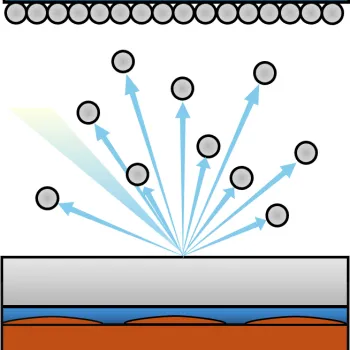
Diagram illustrating the increased introduction of constituents into receiving water bodies through stormwater runoff after the development of impervious surfaces. BMPs (best management practices) are permanent infrastructures that intercept the runoff and remove the constituents.
CEE 2025-2026 Winter
Spring
Industry Sponsored

Stormwater Runoff Management for UCI Site Redevelopment

Impervious surfaces introduced by site developments generate higher flows and volumes of surface runoff during storm events compared to undeveloped conditions, where precipitation would be more likely to percolate into underlying, native soils. This excess surface runoff mobilizes constituents such as sediments or nutrients along its path, ultimately discharging into receiving water bodies. The University of California, Irvine’s Department of Campus Planning & Sustainability has requested consulting services to develop best management practices (BMPs) for treating surface water runoff quality and managing runoff volumes associated with campus redevelopments. The requested BMPs will be designed to accommodate the runoff generated by the construction of new amenities for the UC Irvine Institute for Memory Impairments and Neurological Disorders (UCI MIND). The UCI MIND site plan currently consists of two 0.36-acre buildings that will function as mixed-use research facilities and office spaces and will be located on the UCI campus by the...

SubSurface Systems Team Logo - RC submarine icon
MAE 2025-2026 Fall
Winter
Internally Mentored (faculty, staff, TA)

SubSurface Systems: RC Submarine

Most commercially available 1:18 scale RC boats are designed solely for surface operation, lacking the structural integrity, waterproofing, and buoyancy control needed for submersion. While RC submarines are available as niche hobbyist products, they tend to be expensive, specialized, and limited in depth capability. This project aims to bridge that gap by converting an off-the-shelf RC boat into a functional submarine, applying engineering principles to address challenges in waterproofing, ballast design, and underwater propulsion.

Sustainable Aviation Fuel (SAF) Production from Bio-Ethanol (Team 7)
CBE 2025-2026 Spring Competition/Extracurricular Project Sub-team

Sustainable Aviation Fuel (SAF) Production from Bio-Ethanol: Process Design and Techno-Economic Feasibility Assessment

Aviation is a major contributor to global climate change, accounting for approximately 2.5% of global CO₂ emissions and roughly 5% of total anthropogenic warming when non-CO₂ effects are included. Without intervention, aviation emissions are projected to double by 2050, yet Sustainable Aviation Fuel (SAF) currently represents only 0.2% of global jet fuel consumption. This project addresses the urgent need to scale up SAF production by designing and evaluating a commercially viable bio-ethanol-to-jet (ETJ) fuel process. The aviation industry, airlines, passengers, and the broader global community concerned with climate change are all directly affected, as are agricultural and biofuel producers who stand to benefit from an expanded market for bio-ethanol feedstocks. By demonstrating a technically sound and economically feasible pathway to produce low-carbon jet fuel, this project contributes to the decarbonization of one of the hardest-to-abate sectors in the global economy.

Suture Sense
BME 2025-2026 Fall
Winter
Spring
Internally Mentored (faculty, staff, TA)

Suture Sense

Real‑time suture tension feedback for safer hernia repairs.

A mechanical, surgeon‑friendly tool designed to standardize closure tension and reduce recurrence.


WHY THIS MATTERS

Ventral hernia repair makes up about a third of all hernia surgeries in the United States. However, recurrence rates remain high, between 45% and 73% within 5 years, leading to costly re-operations.


SURGEON VARIABILITY

There is no widely adopted method for measuring suture tension in the operating room. This leads to variability across surgeons, techniques, and suture types, impacting patient outcomes.


CAD Diagram of Full Block Configuration
EECS 2025-2026 Fall
Winter
Internally Mentored (faculty, staff, TA)

Synthesizer Blocks

The project addresses the challenge of making analog signal processing and synthesizer operation accessible to beginners, since conventional synthesizers are often costly, highly complex, and difficult to interpret without prior technical knowledge. To address this, a modular educational system called Synthesizer Blocks was developed, in which individual signal-processing functions such as waveform generation, filtering, mixing, and amplitude modulation are implemented as physically interchangeable blocks. This architecture enables users to assemble signal chains while directly observing waveform changes through built-in test points, supporting a clearer understanding of electrical engineering fundamentals. The scope of the project included the design, fabrication, and validation of PCB-based functional modules capable of producing audible output while serving as a hands-on instructional platform for signal processing concepts.

E3 Engineering
CEE 2025-2026 Winter
Spring
Industry Sponsored

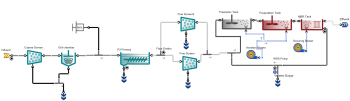
Techno-Economic Analysis of Advanced Solids Treatment by Anaerobic Co-Digestion and Hydrothermal Liquefaction

The solids treatment options in wastewater treatment facilities are at a crossroad. While recent technological advances provide opportunities to increase resource recovery concerns about emerging contaminants pose challenges for beneficial use. For example, addition of non-sludge organic wastes to the anaerobic digesters has the potential to increase biogas production while diverting organic wastes from disposal in landfills where they produce greenhouse gases. However, there are emerging concerns about the presence of per- and polyfluoroalkyl substances (PFAS) that can render land application of biosolids unviable. The biosolids would then have to be disposed of in landfills which is associated with a large hauling costs with no beneficial use. To address these concerns, existing WWTP can be retrofitted with new technology that can minimize solids production and produce alternate beneficial products.

Co-digestion is an anaerobic digestion option where food waste is added into the sludge feed to the digester...

The irrigation machinery sets up to monitor the environment of plants.
EECS 2025-2026 Fall
Winter
Internally Mentored (faculty, staff, TA)

TeraFlow: An AI-based Autonomous Irrigation System

Water scarcity and inefficient irrigation practices continue to pose challenges for agriculture and small-scale plant management, as traditional watering methods often rely on fixed schedules that fail to adapt to real environmental conditions. This project addresses the need for a smarter irrigation solution by developing TeraFlow, an autonomous irrigation system that integrates environmental sensors, IoT communication, and AI-based image analysis to make informed watering decisions. By collecting real-time data on soil moisture, temperature, humidity, and light conditions, the system helps users monitor plant environments and automatically control irrigation when necessary. The project matters because it promotes more efficient water usage and provides accessible tools for gardeners, small-scale growers, and plant caretakers who need reliable and data-driven irrigation management.

An anteater drone logo. It's really cool
MAE 2025-2026 Winter
Spring
Internally Mentored (faculty, staff, TA)

The Anteatairs

A tiltrotor VTOL fixed-wing UAV engineered for search-and-rescue — currently undergoing airframe surface coating and final systems integration before flight testing.

The Mission
Modern search and rescue (SAR) operations face a critical tradeoff: ground teams are slow, and conventional fixed-wing aircraft require runway infrastructure that doesn't exist in disaster zones or remote terrain.

The Anteatairs solves this by engineering a tiltrotor VTOL UAV — a hybrid platform that takes off and lands vertically like a multirotor, then physically rotates its motors forward to transition into efficient fixed-wing cruise flight. No runway. No infrastructure dependency.

Built on a COTS fixed-wing airframe retrofitted with custom tiltrotor propulsion, with a scale fuselage modeled in Fusion 360, a purpose-designed payload delivery bay, FPV telemetry, and autonomous navigation — this platform is designed to rapidly deploy, survey large search areas, and deliver emergency first-aid supplies to survivors....

BOOM Squad Logo
MAE 2025-2026 Fall
Winter
Internally Mentored (faculty, staff, TA)

The BOOM Squad - Toy Ball Cannon

The Toy Ball Cannon Project is a mechatronics-focused design that redefines recreational fun. The system launches lightweight projectiles using flywheel technology while coupling RGB-oriented object detection and navigation to track fast-moving targets. This project heavily involves collaborative design, research, prototyping, performance optimization, safety considerations, and extensive testing, allowing us to apply critical engineering principles in a dynamic way to meet our stakeholder needs and expectations.

Inspired by the Nerf Rival Nemesis blaster, our team aimed to create an autonomous turret that sprays a volley of balls to hit a moving target a minimum of one time per firing cycle.

PVD Assembly for Coatings
MSE 2025-2026 Fall
Winter
Spring
Industry Sponsored

The Future of Plasma Vapor Deposition

Plasma Vapor Deposition (PVD) is a technique used for applying thin coatings on applications such as door knobs, drill bits, and decorative plating on phones and watches. The target material that creates the coating is connected to a conductive backing plate by a bonding layer. In order to deposit and sputter the material to create a film, the target material is heated in an electric field to move atoms of the target onto the desired material. Because heating makes it easier to remove atoms from the target material, the deposition rate is therefore limited by the melting temperature of each layer. Indium is traditionally used as a bonding layer, and compared to the other layers has the lowest melting temperature of 156°C. 

To improve upon the current bonding layer and ultimately decrease the processing time of PVD, a new alloy must maintain the thermal conductivity and softness...

Blue 3D-printed Guardian home security system prototype with an LCD screen displaying door status, motion sensor, fingerprint reader, and connected hardware modules.
EECS 2025-2026 Fall
Winter
Internally Mentored (faculty, staff, TA)

The Guardian - Home Security System

Home security remains a important concern for residents in the United States, with millions of residential burglaries reported each year, yet many existing security systems are expensive, complicated, or difficult to customize. Because of this, many households do not have access to reliable protection for their homes. The Guardian Home Security System addresses this problem by creating an affordable system that combines motion detection, camera monitoring, door locking, and fingerprint authentication into one easy-to-use platform. The Guardian shows how modern technology can make home security more accessible to everyday homeowners and renters who want a simple and effective way to monitor and protect their property.

Target Phase Locked Loop
EECS 2025-2026 Fall
Winter
Internally Mentored (faculty, staff, TA)

The Impact of VCO Coupling with Control Voltage on Spurs

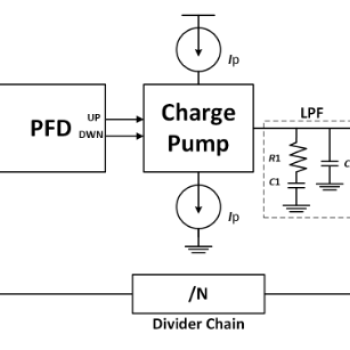
Phase locked loops are a critical component in modern communication, sensing, and imaging systems. While computer automated design tools allow for accurate simulation, they often take weeks of design and computing time. Our project's research intends to model a specific non-ideal performance of analog phase locked loops, previously not studied, as closed form equations. This allows designers to observe their system's performance in seconds, rather than weeks. 

 Structure Model
CEE 2025-2026 Winter
Spring
Industry Sponsored

Three Story School Building Design

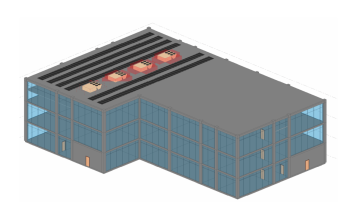
The capstone design project involves the creation of a schematic design for a three story school building to be built on the UCI Campus. The team was hired to design gravity and seismic structural components for this three-story building based on Architectural constraints. By following ASCE 7-22 and ACI 318-25 building codes, and using steel specifications from AISC 360-22 and 341-22, the building was designed as a steel structure, with steel decking on the roof level, and a composite beam with concrete-filled decking on the 2nd and 3rd stories. The framing of the entire structure was built using A992 steel with a strength of 50 ksi. The building is designed with isolated concrete spread footings. All concrete elements of the building consist of normal-weight concrete with a strength of 3 ksi. For its Lateral Force Resisting System, Special Moment Frames were designed with pre-qualified Side Plate connections. Seismic resistance...

An image of the design site layout
CEE 2025-2026 Winter
Spring
Industry Sponsored

Total Dissolved Solids (TDS) Mitigation and Advanced Treatment Evaluation for the Palm Springs Visitor Center

The Palm Springs Visitors Center operates an on-site wastewater treatment facility that is currently in noncompliance with upcoming effluent Total Dissolved Solids (TDS) concentration regulations, which take effect in June 2026. The current on-site wastewater treatment facility does not account for TDS removal. The Palm Springs Regional Water Quality Control Board established a new TDS limit of 500 mg/L for 2026. 

The focus of this project is to determine the best available treatment technology to lower TDS levels within compliance of these upcoming regulations. Multiple treatment technologies were analyzed and an effluent fate analysis was conducted in order to decide the best design strategy. Moreover, regional constraints such as permitting and environmental regulations were researched to verify compliance. Finally, a mass balance was conducted to calculate how much effluent water needs to be treated to meet the MCL.

Toy Ball Cannon: B.A.L.L.
MAE 2025-2026 Fall
Winter
Internally Mentored (faculty, staff, TA)

Toy Ball Cannon

This project is designed by UCI MAE department with the goal of creating a cannon system with the ability to discern, track and shoot at RC cars. The system should be able to hit targets in a 360 degree area from a range of 5 - 15 feet, all while in a safe manner. The three step process is autonomous requiring humans only to power the system on and reload after firing. This project addresses the current inability of off the shelf cannon systems to discern the targets it is firing at, while providing a meaningful learning experience for UCI students.

Transit Station Pedestrian Overcrossing Structural and Architectural Model
CEE 2025-2026 Winter
Spring
Internally Mentored (faculty, staff, TA)

Transit Station Pedestrian Overcrossing

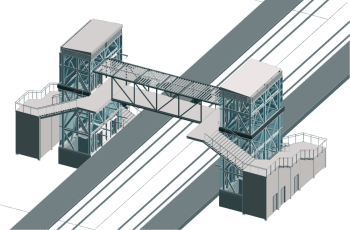
Students designed a new transit station that enables pedestrians to safely cross the train tracks at the Tustin Metrolink Station Area. The new station consists of three structural components: an elevator tower on either side of the train tracks, a pedestrian bridge spanning between the elevator towers, and a set of stairs wrapping around the exterior of each tower that descend to ground level.

Students completed preliminary gravity, wind, and seismic designs, conceptual 3D models, and conceptual detail drawings for all three structural components.

UCI Solar Airplane team logo with stylized clouds and aircraft
MAE 2025-2026 Fall
Winter
Spring
Competition/Extracurricular Project Sub-team

UCI Solar Airplane (2025-2026)


Our purpose:

The UCI Solar Airplane Project is dedicated to exploring the potential of solar-powered aviation as a more sustainable alternative to conventional flight while also developing technology that can support humanitarian aid and disaster relief efforts. As concerns about climate change and reliance on nonrenewable energy continue to grow, our team aims to demonstrate how renewable energy can be integrated into aerospace systems in meaningful and practical ways.

During the 2025–2026 academic year, the team focused on designing and building a solar-powered aircraft from scratch. Through research, prototyping, and subsystem development, team members worked to create an aircraft capable of extended flight through the integration of solar energy, lightweight structures, and efficient propulsion systems. This work required close collaboration across aerodynamics, fuselage, propulsion, and operations to move the project from concept toward a fully realized aircraft....

Team 18: Uncurrent
MAE 2025-2026 Fall
Winter
Internally Mentored (faculty, staff, TA)

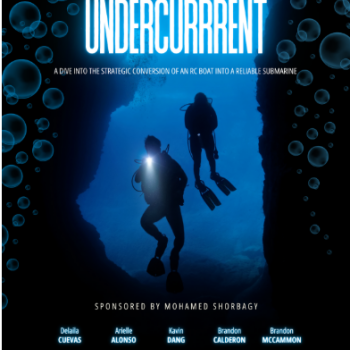
Undercurrent: RC Boat to Submarine Phase 2

This project addresses that gap by converting an off‑the‑shelf RC boat into a functional, depth‑capable submarine using readily available components, open‑source microcontrollers, and accessible design tools. The scope includes redesigning the hull to support waterproofing, integrating a ballast system for controlled diving, and developing a multi‑Arduino control architecture capable of managing pumps, sensors, and propulsion. SolidWorks is used to model structural modifications and 3D‑printed components, while ThinkerCad provides a virtual environment for simulating electrical circuits before physical assembly.

Commercial RC submarines and underwater robotics platforms are often expensive, limiting access for students, educators, and early‑stage researchers. By demonstrating that a functional, depth‑capable submarine can be built from an affordable RC boat and readily available components, this project lowers the financial barrier to hands‑on learning in marine engineering, robotics, and control systems.


VascXpand
BME 2025-2026 Fall
Winter
Spring
Industry Sponsored

VascXpand

VascXpand

Expanding into the future of healthcare


Pages