
LAMB Associates is working with Q3 Consulting on a drainage master plan study in the City of Laguna Beach for a 260-acre watershed. Canyon Acres Drive in Laguna Beach has experienced flooding during peak rain seasons during the past decades. The project focuses on evaluating the existing storm drain beneath Canyon Acres Drive to determine its existing capacity and identify the required size for a proposed storm drain to convey targeted runoff.

CEE
2025-2026
Winter
Spring Industry Sponsored
Spring Industry Sponsored
Canyon Acres Storm Drain Study

BME
2025-2026
Fall
Winter
Spring Industry Sponsored
Winter
Spring Industry Sponsored
CHROMAskin
See every shade, save every life
CHROMAskin is a 2025-2026 UCI BioENGINE Senior Capstone Project in collaboration with the team at DermaVision Technologies and University of California, Irvine Biomedical Engineering Department.
Our Cause
Why skin cancer diagnostics?
1 in 5 Americans will be diagnosed with skin cancer by age 70. This looks like over 9,500 new cases a day. As for the 5-year survival and late stage diagnostic rates for skin cancer, these fluctuate greatly between different ethnic groups with African Americans being particularly marginalized.
Industry Standard
What is the current diagnostic process?
Initial skin cancer screening involves using a dermascopy tool, the primary non-invasive method,which is subjective and leads to less accurate diagnostics. This issue is further amplified for patients with darker skin tones. Even experienced physicians...

BME
2025-2026
Fall
Winter
Spring Internally Mentored (faculty, staff, TA)
Winter
Spring Internally Mentored (faculty, staff, TA)
ClearView Global
Clear surgical visibility in humid operating rooms.
An affordable clamp-on airflow attachment for ophthalmic microscopes. The system directs controlled airflow near the optical path to reduce lens fogging and help surgeons maintain visibility with fewer workflow interruptions.
Fogging interrupts surgery.
Patient breathing, humid rooms, and long procedures can create condensation near the microscope lens. A low-cost retrofit can reduce interruptions without replacing existing microscopes.
A practical visibility problem in low-resource surgical settings
In warm, humid operating rooms, microscope lenses can fog during cataract and other ophthalmic procedures. Reduced visibility can break concentration, slow the procedure, and require repeated manual clearing.
- Fogging blocks the surgeon’s view during precision work
- Manual clearing delays the procedure and disrupts sterile workflow
- Existing solutions can be costly, bulky, or inconsistent

EECS
2025-2026
Winter
Internally Mentored (faculty, staff, TA)
Collaborative Edge–Cloud Machine Learning for Wildfire Detection
Wildfires pose a significant threat to ecosystems, infrastructure, and public safety, creating a need for faster and more reliable detection systems. This project develops a collaborative edge–cloud architecture that integrates environmental sensors, UAV imagery, and machine learning models to detect wildfire ignition early. Edge-based models provide fast, low-power detection, while cloud-based models verify events using high-accuracy image analysis. This system improves detection speed, reduces false alarms, and enables monitoring in remote or resource-limited environments.

MAE
2025-2026
Winter
Spring Internally Mentored (faculty, staff, TA)
Spring Internally Mentored (faculty, staff, TA)
Control-Sea (Spring)
The RC boat to submarine project addresses the critical need for non-invasive, cost-effective monitoring of marine ecosystems by developing a submersible capable of autonomous species identification. By integrating a Raspberry Pi 4 for real-time image processing, the vehicle can detect and categorize marine life based on color and pattern recognition through its acrylic dome, providing researchers with high-fidelity data without disturbing the natural habitat. This matters because traditional manual surveying is often limited by diver depth constraints and the high cost of industrial submersibles, whereas this Pixhawk-stabilized platform offers a scalable solution for long-term biodiversity tracking. This technology directly benefits marine biologists and conservationists by automating the cataloging of indicator species, ultimately aiding in the protection of vulnerable aquatic environments through precise, localized data collection.
Background:
Aquatic environments are essential for environmental monitoring, infrastructure inspection, and scientific research, yet they remain challenging to study due...
EECS
2025-2026
Fall
Winter Internally Mentored (faculty, staff, TA)
Winter Internally Mentored (faculty, staff, TA)
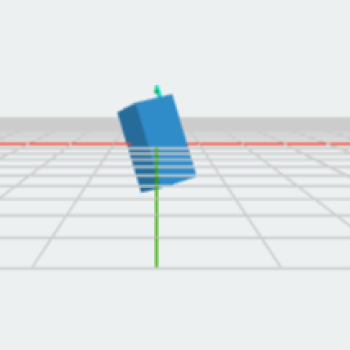
CubeSat Avionics and Attitude Control System
The CubeSat Avionics and Attitude Control System focuses on developing flight software for a 2U (10x10x20 cm) nanosatellite. We designed algorithms to control the attitude, or orientation, of the satellite using only magnetorquers. A magnetorquer is a coil of wire that generates a localized magnetic field when a current goes through it; this magnetic field produces a torque to turn the satellite. Our software drives the magnetorquer to achieve detumbling, spin stabilization, and inertial pointing of the satellite.

EECS
2025-2026
Fall
Winter
Spring Internally Mentored (faculty, staff, TA)
Winter
Spring Internally Mentored (faculty, staff, TA)
CubeSat Avionics and Attitude Control System
CubeSat ADCS requirements are driven by tight power/mass budgets yet mission success depends on reliable detumbling and pointing. We are building a magnetorquer-only ADCS and avionics stack for a 2U CubeSat that uses multi-mode control (B-dot detumble, spin stabilization, and inertial pointing) and FreeRTOS-based flight software on STM32, validated via hardware-in-the-loop simulation.
EECS
2025-2026
Fall
Winter Internally Mentored (faculty, staff, TA)
Winter Internally Mentored (faculty, staff, TA)
Dance Pose Estimation
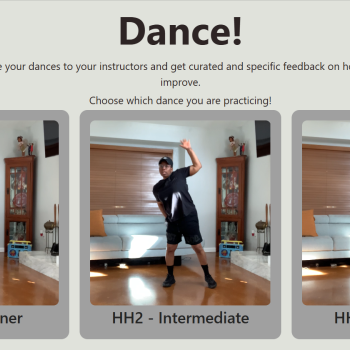
The Dance Pose Estimation project addresses the challenge of providing individualized feedback to large groups of dancers by creating an automated 3D pose evaluation web application. Traditional dance education often lacks the resources for instructors to give every student personalized instruction, which can slow down the learning process during private practice. By utilizing computer vision to compare student movements against a reference routine, the system empowers students to refine their technique independently while allowing instructors to focus on high-level group guidance. This project matters because it bridges the gap between digital accessibility and professional dance pedagogy, directly benefiting students and educators at institutions like the UCI Department of Dance.

BME
2025-2026
Fall
Winter
Spring Industry Sponsored
Winter
Spring Industry Sponsored
DermaSpect
Making the Invisible Visible
DermaVision is developing DermaSpect, a portable multispectral imaging device that uses UV-A, visible, and near-infrared (NIR) wavelengths to capture subsurface bruise information that may not be visible under standard lighting conditions. Our goal: improve consistency, objectivity, and equity in clinical and forensic imaging.
The Problem
Why This Matters
Bruise documentation plays an important role in both healthcare and forensic investigations, especially in cases involving domestic violence, sexual assault, child abuse, and physical trauma. However, current bruise assessment methods still rely heavily on visual inspection and standard photography, which are subjective and inconsistent.
According to national statistics, over 10 million domestic violence cases occur annually in the United States, and approximately 44.2% of victims are people of color. Existing bruise detection and aging methods are often less accurate on highly pigmented skin because melanin absorbs much of...
EECS
2025-2026
Fall
Winter Internally Mentored (faculty, staff, TA)
Winter Internally Mentored (faculty, staff, TA)
Design and Fabrication of Programmable UGVs for Wireless Research
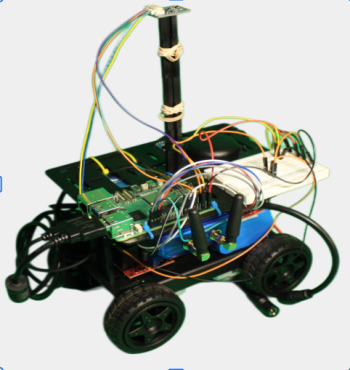
Wireless communication research requires testing and verification in constantly changing environments. However, existing wireless testing platforms are costly, difficult to operate, or offer limited user configurability. This project presents a practical, low-cost, vehicle-based wireless research platform designed to address these limitations. By using affordable off-the-shelf components, we have developed an adaptable wireless network testing interface that is user friendly and easily configurable, providing a reliable and flexible testbed for experimental research.

MAE
2025-2026
Fall
Winter Competition/Extracurricular Project Sub-team
Winter Competition/Extracurricular Project Sub-team
Design of a Banner Towing and Release Mechanism for Competition RC Aircraft
UCI Design/Build/Fly (DBF) began in 2004, competing in that year’s AIAA competition with only 37 teams participating. Since then, the team has grown tremendously in both membership and technical sophistication. Today, UCI DBF competes against over 100 international teams, tackling new and complex design challenges each year. The team is composed of passionate students from various engineering disciplines who work together to design, manufacture, and test a fully functional remote-controlled aircraft that meets the competition’s unique mission requirements. Beyond the competition, UCI DBF provides students with hands-on experience in aerodynamics, structures, controls, electronics, and project management, preparing them for future careers in the aerospace and engineering industries.
Our team focuses on Mission 3 of the upcoming DBF competition, where we are required to stow, deploy, tow, and release a banner displaying our university logo. The primary problem this project addresses is the challenge of performing this sequence...
CEE
2025-2026
Winter
Spring Industry Sponsored
Spring Industry Sponsored
Design of a Single-Story Commercial Building
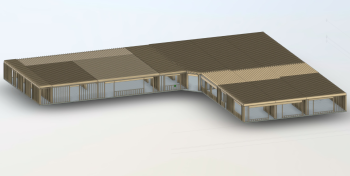
Access California Services (ACS), a nonprofit based in Anaheim, has requested a new single-story 15,000-square foot building that will house three services: senior daycare, childcare, and a health clinic. The new services will allow ACS to further their mission of empowering underserved communities. While one story will be constructed in the immediate future, a two-story building will be designed in case there are enough resources for a future expansion. The biggest priorities for this project are safety through code compliance and staying within the budget.

BME
2025-2026
Fall
Winter
Spring Internally Mentored (faculty, staff, TA)
Winter
Spring Internally Mentored (faculty, staff, TA)
DiagNose
DiagNose
Making speech assessment accessible through a portable, child-friendly nasometer.
About us
For a child born with a cleft palate, surgery is only the beginning of the journey. The real challenge is finding their voice. In low-income countries, where the majority of cleft palate cases occur, the 'gold standard' for diagnosing hypernasality is a clinician's ear. It is subjective, inconsistent, and prone to error. While objective tools like nasometers exist, they cost thousands of dollars, making them inaccessible in the communities that need them the most. We at DiagNose seek to change that with tinytalk.
The Mission
Redefining how we measure and analyze speech nasality.
tinytalk was born from the need to identify nasal air emission and hypernasality in children with cleft palate that is affordable and portable. By combining high-tech...

MAE
2025-2026
Fall
Winter Industry Sponsored
Winter Industry Sponsored
DialiTEAM: Developing a Real-Time Hematocrit Sensor
Diality is a medical device company that aims to improve lives impacted by kidney disease through the development of the next generation of hemodialysis machines for at-clinic or at-home usage. A hemodialysis machine continuously extracts blood from a patient, runs it through a dialyzer--which acts as an artificial kidney to filter out waste and excess fluids--and reintroduces the filtered blood into the patient's system. This treatment process occurs three times per week for three to four hours per session depending on the patient's support needs. A common issue with treatment currently is knowing the correct Blood Volume Removal Rate (BVRR) for each patient. If the BVRR is too low, the treatment becomes inefficient and takes longer than required, but if it is too high, the patient's blood pressure could drop significantly putting the patient at risk of complications such as dizziness or loss of consciousness. Poor reactions such as...
MAE
2025-2026
Winter
Spring Internally Mentored (faculty, staff, TA)
Spring Internally Mentored (faculty, staff, TA)
Drop Tower Systems
Drop Tower Systems focuses on the design and development of a low-cost drop weight impact tower for UCI Engineering. The system addresses the current lack of an in-house method for applying controlled dynamic loads to materials and components, as existing campus equipment is primarily limited to quasi-static hydraulic load frame testing. This project matters because many real-world engineering applications, including aerospace composites and automotive structures, involve impact and dynamic loading conditions that static tests cannot fully capture.
The final design is a 52.5" tall, wood-framed tower capable of delivering up to 100 J of impact energy through a guided 12"×12" A36 steel drop weight plate and an A2 tool steel tup with hemispherical geometry compliant with ASTM standards. The system supports variable impact energies through both adjustable supplemental weights, up to 22.5 lbs of total drop weight, and a simple rope and lock mechanism that allows drop...

BME
2025-2026
Fall
Winter
Spring Internally Mentored (faculty, staff, TA)
Winter
Spring Internally Mentored (faculty, staff, TA)
Earicular
Restoring Ears. Restoring Childhoods.
Earicular is a tissue-engineered reconstruction project to restore natural ear shape for patients with congenital deformities.
Engineering a path to natural ear restoration
Earicular combines clinical insight, allograft tissue, and 3D bioprinting to address microtia in a way that's gentler on patients.
EECS
2025-2026
Fall
Winter Internally Mentored (faculty, staff, TA)
Winter Internally Mentored (faculty, staff, TA)
EchoSafe
Industrial environments often require workers to interact closely with robotic machinery, creating safety risks during operation and maintenance. This project addresses the need for a safer and more responsive control interface by developing EchoSafe, a low-power edge-AI speech keyword detection system. The system allows operators to control machinery using voice commands such as “go” and “stop,” reducing the need for manual interaction near hazardous equipment. By running entirely offline, the system also improves reliability, security, and privacy compared to cloud-based voice systems.

BME
2025-2026
Fall
Winter
Spring Internally Mentored (faculty, staff, TA)
Winter
Spring Internally Mentored (faculty, staff, TA)
EchoTube
Transforming blind nasogastric tube placement into an ultrasound-guided procedure to enhance neonatal safety and care Background
Background
One in ten infants in the United States is born prematurely, and many rely on nasogastric (NG) tubes to receive medication and enteral nutrition. However, neonatal nasogastric tube insertion is a blind procedure, and tube misplacement has been reported in up to 59% of cases, leading to serious complications such as aspiration, perforation, and mortality.
Problem
Current confirmation methods, X-ray and gastric pH testing, also present significant limitations. Chest radiography, the current clinical gold standard, exposes infants to ionizing radiation and can further delay timely care. Gastric pH testing may also be unreliable in neonates due to limited aspirate volumes and the effects of acid-suppressive medications.
Mission
Our mission is to improve neonatal safety by enabling fast, accurate, and non-invasive confirmation of nasogastric...

MAE
2025-2026
Winter
Spring Competition/Extracurricular Project Sub-team
Spring Competition/Extracurricular Project Sub-team
Electromagnetic Suspension (EMS) Levitation Model
Hyperloop is an innovative high-speed transportation concept in which pods travel at up to 760 mph through a near-vacuum tunnel. To reach those speeds, the pod must eliminate nearly all friction with the track, which is achieved through magnetic levitation (maglev).
One method of integrating maglev technology is electromagnetic suspension (EMS). With EMS, electromagnets on the pod produce an attractive force to a magnetized material on the track, lifting the vehicle off the surface entirely. UC Irvine's Hyperloop student team, HyperXite, needs to demonstrate that this technology works at a small scale before it can be integrated into a full-size pod. Without a working levitation prototype, the team has no way to validate their design choices, test their control systems, or demonstrate the concept to advisors and sponsors.
This project matters because magnetic levitation is the key to making Hyperloop viable. It's what separates it...
EECS
2025-2026
Fall
Winter Internally Mentored (faculty, staff, TA)
Winter Internally Mentored (faculty, staff, TA)
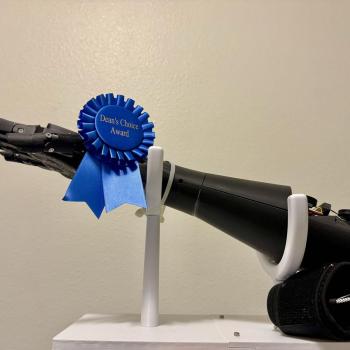
Electromyography (EMG) Controlled Prosthetic Hand
Traditional prosthetics are often prohibitively expensive, ranging from $5,000 to over $100,000, and frequently require invasive medical procedures to function. This leaves many individuals in need of amputee care unable to afford or comfortably access life-changing mobility aids. To address this critical accessibility issue, our project developed a low-cost, electromyography (EMG) controlled prosthetic hand that utilizes a non-invasive dry-electrode placed on the user's wrist. By eliminating the need for invasive procedures and drastically reducing manufacturing expenses, this project demonstrates the viability of highly accessible, neural-network-driven prosthetics for a broader demographic
EECS
2025-2026
Winter
Internally Mentored (faculty, staff, TA)
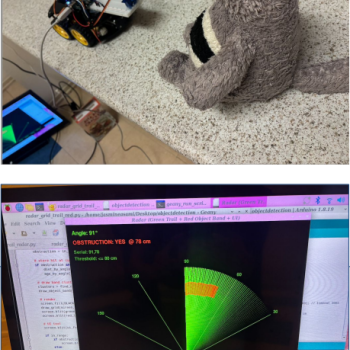
Embedded Autonomous Navigation and Real-Time Radar Visualization System
This project presents the design and implementation of an embedded autonomous navigation system featuring real-time ultrasonic radar visualization. Originally conceptualized as a Smart Digital Closet, the project's scope was strategically redefined to focus on a technically rigorous robotics platform capable of environmental scanning and autonomous decision-making. The system addresses the need for low-latency obstacle detection in mobile robotics by providing a 180 spatial awareness interface. This work is significant for developing accessible, real-time sensing solutions for autonomous indoor vehicles.
BME
2025-2026
Fall
Winter
Spring Industry Sponsored
Winter
Spring Industry Sponsored
EMBRACE
How EMBRACE Began
EMBRACE began as a Siemens-sponsored senior design capstone project through UC Irvine’s Biomedical Engineering program. The original project concept explored adaptive prosthetic control through biosignal processing and machine learning.
As our interdisciplinary team of biomedical engineering and computer science students formed, we brought together expertise in hardware design, signal acquisition, controls, and machine learning to refine the concept into a practical solution. This collaboration ultimately shaped EMBRACE into a portable EMG-controlled prosthetic system designed for intuitive and accessible upper-limb assistance.
CBE
2025-2026
Spring
Industry Sponsored
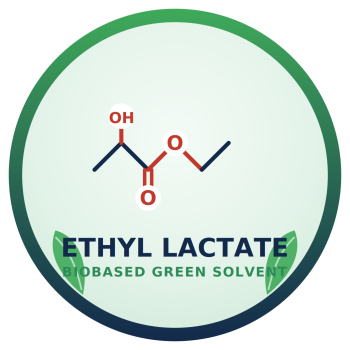
Ethyl Lactate - Commercial BioBased Green Solvent
Ethyl lactate is one of the few solvents that is fully renewable, biodegradable, and non-toxic while still performing like the petroleum-based solvents it can replace. Its low toxicity and skin-friendly profile make it valuable beyond industrial cleaning and coatings: it is used in pharmaceuticals as a green solvent for drug formulation, controlled drug delivery, and as a chiral building block in drug synthesis, and in cosmetics and personal-care products such as creams, lotions, and fragrances. Most conventional solvents, by contrast, come from petroleum and are often toxic, volatile, and environmentally persistent, posing risks to workers and a growing regulatory burden. This project designs a full-scale plant to produce ethyl lactate from renewable lactic acid and ethanol. The scope is the complete process design — reaction, separation, and purification to 99.9% purity — plus the heat-integration, environmental, safety, and economic analyses needed to judge whether the plant is technically sound...

EECS
2025-2026
Fall
Winter Internally Mentored (faculty, staff, TA)
Winter Internally Mentored (faculty, staff, TA)
Facial-Orientation and Concentration Understanding System (FOCUS)
The Facial-Orientation and Concentration Understanding System (FOCUS) addresses the growing challenge of maintaining attention among young students, particularly those with ADHD or focus-related difficulties, in learning environments. Many students struggle with sustained concentration during independent work, and there is a lack of accessible, real-time tools that provide immediate, personalized feedback on attention levels. This project develops a webcam-based application that analyzes facial orientation, gaze direction, and behavioral indicators to detect inattention and deliver timely reminders. By supporting students, educators, and caregivers with actionable insights, FOCUS aims to improve engagement, learning outcomes, and overall academic performance.

MAE
2025-2026
Fall
Winter Competition/Extracurricular Project Sub-team
Winter Competition/Extracurricular Project Sub-team
Fluid Power Vehicle Challenge - Zot Under Pressure
The Fluid Power Vehicle Challenge is a national competition among universities hosted by the National Fluid Power Association that challenges students to implement a hydraulic braking and power system to a human powered vehicle. The competition consists of 4 events, which test the speed, endurance, efficiency, and regenerative braking capabilities of the vehicle. We, Zot Under Pressure, are creating a tricycle that converts human input into hydraulic power, focusing on speed and endurance. Our team will represent UCI in the competition and showcase the applications of hydraulic power.