
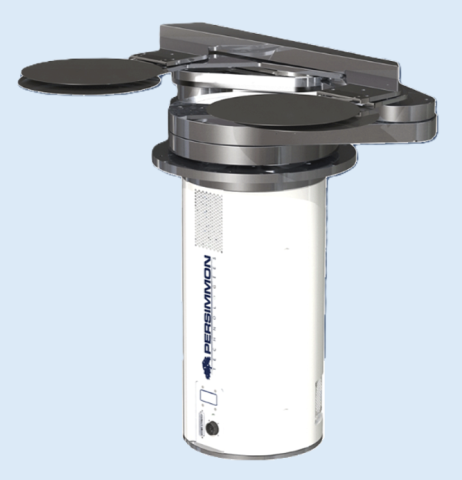
Vacuum robotics used for high-precision chip handling requires materials that minimize vibration and settling time without sacrificing stiffness or compatibility with high-vacuum environments. This project investigates high-damping aluminum-based material solutions for Persimmon Technologies’ robotic arms to improve dynamic performance beyond the current Aluminum 6061 design baseline. Improvements would decrease cycle time, leading to better productivity. Three candidate pathways were evaluated: aluminum metal matrix composites, additively manufactured lattice structures, and cold-spray processing. Cantilever damping tests, tensile testing, three-point bend testing, and scanning electron microscopy were used to compare damping ratio, natural frequency, stiffness, and microstructure across the sample sets. Initial results show that damping behavior depends strongly on microstructure and fabrication route, with cast A356 aluminum alloy outperforming baseline 6061 in damping, while the fly-ash composite underperformed expectations. Ongoing work focuses on identifying the most promising material architecture for maximizing damping while maintaining the mechanical performance required for robotic arm...
The courses for the capstone projects in the Department of Materials Science and Engineering (MSE 189 A/B/C) are run by .... and are offered during the fall, winter, and spring quarters.
HDAC - High Damping Aluminum Composites

High Performance Dental Ceramics Through Additive Manufacturing
Nearly half of all Americans are dissatisfied with the color or appearance of their teeth, yet the path to a confident smile remains lengthy and highly inefficient. Dental veneers offer one of the most effective and straight forward options, with around 8% of Americans opting for veneers. Traditional approaches such as milling are time-consuming, and waste a significant amount of material. Additionally this route requires multiple office visits and additional time for labs to process and produce the final product. For patients with more complex definitions, these timelines can stretch even further putting additional pressure on dentists and suppliers.
This project aims to address this issue by exploring the feasibility of additive manufacturing, specifically DLP, for the production of dental veneers. Rather than cutting/milling down a block of material, DLP builds the part layer by layer, enabling greater geometric precision, reduced material waste, and potential for same...

Mass-Reduced Lightning Strike Protection in Aircraft Panels
Lightning strikes pose a threat to aircraft structural integrity as well as the pilots and people aboard aircraft, due to structural damage and electromagnetic interference from the lightning strike. Lightning strike protection (LSP) is a critical requirement in modern aircraft structures, particularly for carbon fiber reinforced polymer (CFRP) composites, which exhibit low electrical conductivity compared to metallic materials. During a lightning strike event, intense localized Joule heating occurs and rapid temperature gradients within the material form. Due to the anisotropic conductivity of CFRP, where carbon fibers are conductive but the polymer matrix is insulating, current flow becomes highly non-uniform, leading to localized hotspots. Delamination, in particular, occurs due to rapid thermal expansion of the matrix and vaporization of entrapped gases, which generate internal pressure between plies and weaken interfacial bonding. To mitigate these effects, conductive pathways must be incorporated into CFRP laminates to safely dissipate electrical energy and prevent catastrophic...
The Future of Plasma Vapor Deposition
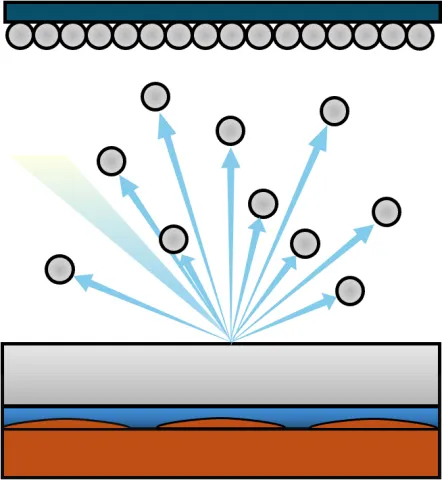
Plasma Vapor Deposition (PVD) is a technique used for applying thin coatings on applications such as door knobs, drill bits, and decorative plating on phones and watches. The target material that creates the coating is connected to a conductive backing plate by a bonding layer. In order to deposit and sputter the material to create a film, the target material is heated in an electric field to move atoms of the target onto the desired material. Because heating makes it easier to remove atoms from the target material, the deposition rate is therefore limited by the melting temperature of each layer. Indium is traditionally used as a bonding layer, and compared to the other layers has the lowest melting temperature of 156°C.
To improve upon the current bonding layer and ultimately decrease the processing time of PVD, a new alloy must maintain the thermal conductivity and softness...