Department Website

The capstone projects in the Department of Civil and Environmental Engineering is run by "faculty member name". Need to add more content specific to CEE.

Apex Lateral
CEE 2025-2026 - Winter, Spring

5-Story Mid-Rise Office Building

Apex Lateral Design Group designed the structural system for a proposed five-story office building located in Irvine, California. The main problem addressed was the need to develop a safe, efficient, and compliant code design that could support everyday gravity and seismic lateral forces. Since the building is located in a seismically active region, this project was governed by the seismic design requirements rather than wind.

This project matters because a building's structural system directly affects the safety of life and performance in the long term, for which cost efficiency is imperative to meet those standards. The final design needed to protect future occupants and satisfy the architect's/clients' design goals, ensuring that the building could safely transfer loads from the roof all the way down into the underlying foundation/soil.

The project scope included the design of the gravity framing, lateral-force-resisting, steel members, connections, base plates, and foundation systems....

GNCC Engineering project logo showing wood textured GNCC letters above a gray base.
CEE 2025-2026 - Fall, Winter, Spring

Anteater Courtyard Structural Design

The Anteater Courtyard Apartments project develops the structural design for a three-story multi-family residential building with ground-level mixed-use space. The building uses a wood-framed superstructure supported by a concrete podium, and the design study places the project in Irvine, California to address seismic design considerations. The project responds to the need for a safe, practical, and serviceable structural system that can support residential occupancy while accommodating irregular building layouts, non-stacking walls, floor openings, and architectural constraints. Because the building has different framing conditions from floor to floor, the main design challenge is to create a clear load path that safely transfers roof, floor, wall, beam, post, and connection loads down to the podium and foundation.

The project scope includes establishing loading criteria, developing roof, third-level, and second-level beam layouts, selecting joist directions, sizing major beams and posts, choosing hanger connections, and reviewing the preliminary lateral force-resisting...

Sitemap used as our cover page
CEE 2025-2026 - Winter, Spring

Bulbouts and Bike Lanes

This project was developed at the request of our client, a city in the greater Los Angeles urban area. They want to improve the safety, comfort, and accessibility of active transportation, particularly for pedestrians and cyclists. The target locations are in a dense residential area adjacent to the city's downtown. These neighborhoods have below-average rates of car ownership and stand to benefit from the improvements.

This project matters because the protection of resident safety is the primary goal. The region has a relatively high proportion of low- or no-car households. The city wants to prioritize these residents in the designs, providing them with suitable alternatives to driving. Grounding ourselves in the community's needs gave our engineering a personal touch. In the end, this active transportation project will serve the people. This will benefit those without easy access to cars, as they can now bike or...

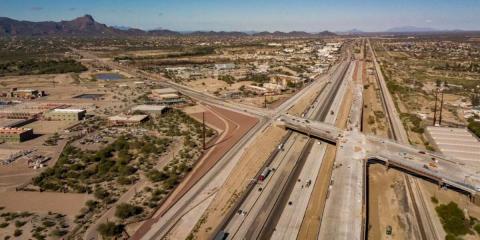
Siempre Viva Road overpass between SR-11 and Otay Mesa East Port of Entry
CEE 2025-2026 - Winter, Spring

Caltrans Bridge Design: Siempre Viva Road Overpass

The bordering countries of the United States and Mexico are growing rapidly, both internally and externally, within their trade engagements. The current movement of goods, services, and people at the San Diego-Baja California border is becoming inadequate to suit these needs. A connecting road between California State Route 11 (SR 11) and Otay Mesa East Port of Entry (OME POE) is constructed to better suit expansion in the region. The project serves to improve movement across the border, particularly by reducing vehicle wait times. Additionally, gas emissions produced by the transportation of goods, services, and passengers will be reduced. As the area is expected to remain running for years, the project is also set to support economic growth by creating additional job opportunities near the border.

The portion assigned to Connect & Carry Co. is a smaller component of the overall project, the design of a 320...

Hydrology Map
CEE 2025-2026 - Winter, Spring

Canyon Acres Storm Drain Study

LAMB Associates is working with Q3 Consulting on a drainage master plan study in the City of Laguna Beach for a 260-acre watershed. Canyon Acres Drive in Laguna Beach has experienced flooding during peak rain seasons during the past decades. The project focuses on evaluating the existing storm drain beneath Canyon Acres Drive to determine its existing capacity and identify the required size for a proposed storm drain to convey targeted runoff.

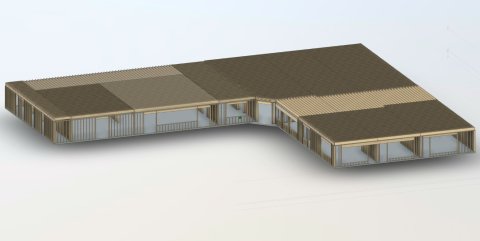
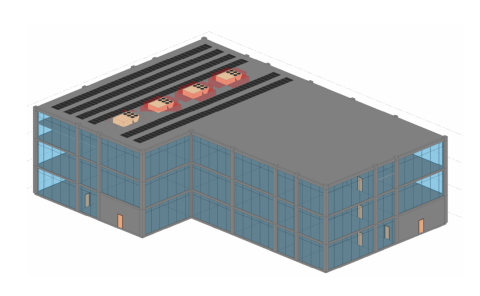
A 3D model of an L-shaped, wood-framed building
CEE 2025-2026 - Winter, Spring

Design of a Single-Story Commercial Building

Access California Services (ACS), a nonprofit based in Anaheim, has requested a new single-story 15,000-square foot building that will house three services: senior daycare, childcare, and a health clinic. The new services will allow ACS to further their mission of empowering underserved communities. While one story will be constructed in the immediate future, a two-story building will be designed in case there are enough resources for a future expansion. The biggest priorities for this project are safety through code compliance and staying within the budget.

Gridley Road Bridge
CEE 2025-2026 - Winter, Spring

Gridley Road Bridge

The Gridley Road Bridge project focused on developing a replacement design for an existing bridge located in Cerritos, California, that spans Interstate 91. The goal of the project was to evaluate the existing bridge plans and create a simplified structural design that demonstrates the engineering principles used in modern bridge design. The proposed replacement bridge was widened to accommodate increased traffic demands and improved pedestrian accessibility while maintaining structural safety and efficiency. The project addressed the need for aging infrastructure upgrades and provided insight into how bridges are analyzed, designed, and modified to meet changing transportation needs. Communities that rely on this bridge, including motorists, pedestrians, and local agencies responsible for transportation infrastructure, are directly affected by the performance and reliability of structures such as the Gridley Road Bridge. Through this project, our team gained practical experience applying industry design standards and understanding the challenges associated with real-world bridge...

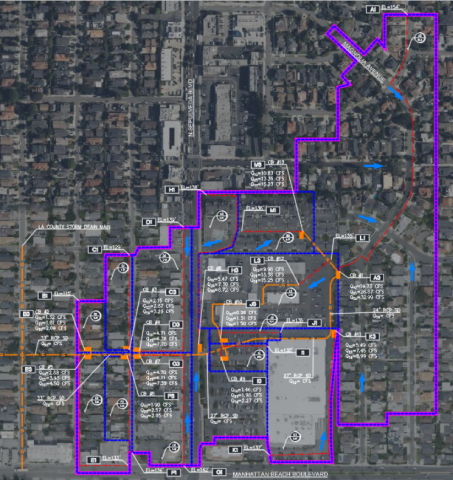
Hydrology Exhibit Displaying Drainage Corresponding to the Area of Study
CEE 2025-2026 - Winter, Spring

Here's the Catch

A hydrology study is performed in accordance with the Los Angeles County Hydrology Manual Standards for the hydraulic analysis of the existing catch basin located at 14th & Magnolia in Manhattan Beach, CA. The city has experienced frequent flooding in the area and would like to identify the deficiencies in the storm drain system. The study is to recommend improvements to address the frequent flooding that occurs.

Carbon Canyon Road Development Icon
CEE 2025-2026 - Winter, Spring

Hillside Land Development Senior Design Project

Our project takes a vacant 3.38-acre hillside parcel at 5800 Carbon Canyon Road in Brea, developing the complete preliminary civil design needed to subdivide it into seven single-family lots. We covered street layout, grading, storm drainage, sewer, and water. The site has sat undeveloped for a reason, however. It carries 40 to 50 feet of elevation change, has a single feasible access point off Carbon Canyon Road, and every street and pipe built on it has to work with that slope. 


Parcels like this are increasingly what remains in north Orange County, where housing demand is strong: but flat, easily developed land is gone. The need we are addressing is practical. Our team wants to show that a steep infill site can support a code-compliant, financially realistic subdivision. 


The outcome affects future homeowners, the City of Brea, which would...

Project icon showing a traffic signal with red, yellow, and green bicycle symbols, representing the Hoover Street protected bikeway and bicycle signal redesign project.
CEE 2025-2026 - Fall

Hoover Street Bikeway and Signal Redesign

Our project focuses on redesigning Hoover Street between Westminster Boulevard and Hazard Avenue to improve safety and comfort for bicyclists, pedestrians, and drivers. The existing corridor mainly supports vehicle traffic and only has limited bicycle protection through Class III bike facilities. This creates safety and comfort concerns for people who want to bike or walk through the area. Our project matters because a safer street design can encourage active transportation, reduce conflicts between cars and cyclists, and make the corridor more accessible for the surrounding community. The people most affected are cyclists, pedestrians, nearby residents, students, drivers, and anyone using Hoover Street to reach local homes, schools, businesses, and nearby destinations. Our final design proposes a safer corridor with a Class IV two-way protected bikeway, improved pedestrian crossings, updated signal timing, and new traffic signal equipment. 

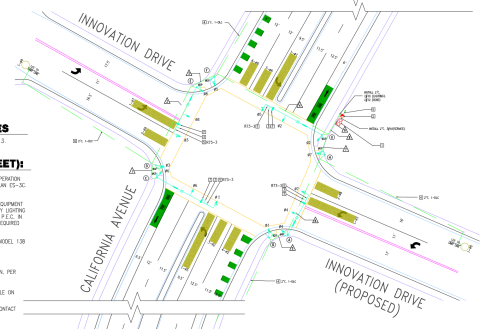
Zoomed-In Image of the Proposed Traffic Signal Improvement at California Ave/Innovation Dr
CEE 2025-2026 - Winter, Spring

Intersection Improvements Along California Ave

This project forecasted and analyzed the traffic impacts at two intersections along California Ave, which is expect to increase due to two future developments: a 2500+ housing unit area and a research park. Overall, the team recommends to build a traffic signal at California Ave/Innovation Dr and install a right turn overlap at California Ave/Academy Wy because without these improvements, they are both projected to fail to meet City of Irvine’s minimum level of service (LOS) when those developments open to the public in 2028. With these improvements, the intersections are projected to exceed the minimum LOS required, implying that these improvements will alleviate heavy traffic congestion at both intersections.

**Disclaimer: The housing development is real and is currently in development. However, the research park is a hypothetical scenario. The both the residential project and the research park have some hypothetical assumptions made - This study is...

Zot Air Infrastructure logo — Taxiway Alpha Reconstruction senior design team
CEE 2025-2026 - Winter, Spring

Keeping San Bernardino Moving: Taxiway Alpha Reconstruction

A full-depth reconstruction of Taxiway Alpha at San Bernardino International Airport, designed to FAA standards and delivered as a complete bid set. Our team rebuilt the airport's main taxiway, along with parts of Taxiway Echo and A2, so it can carry a heavier future fleet for a 20-year design life.

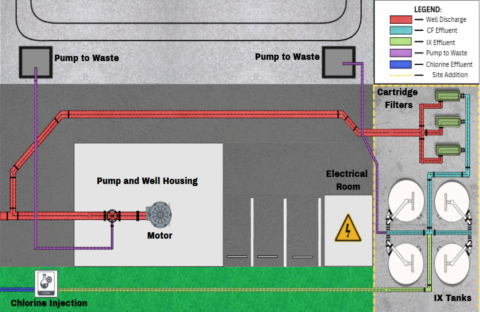
Leahy Well Treatment System- Simplified
CEE 2025-2026 - Winter, Spring

Leahy Well Ion Exchange System Design for Bellflower Somerset Mutual Water Company

Team E2 collaborated with AKM Consulting Engineers to redesign the Leahy Well to achieve a 3,000 GPM water capacity and to develop on-site treatment for perfluoroalkyl and polyfluoroalkyl substances (PFAS) via Ion Exchange (IX) for the Bellflower Somerset Mutual Water Company (BSMWC) in Bellflower, CA. 

PFAS is a broad term used to describe the thousands of variants of the man-made, synthetic chemicals that are used in everyday products such as non-stick pans, hydrophobic clothing, and consumer goods. When presented in high concentrations and ingested through drinking water, PFAS can be associated with adverse health effects such as cancer, high blood pressure, and liver damage.

The project incorporates 3 on-site cartridge filters to remove Total Suspended Solids (TSS) from the water influent before it is treated through 4 Ion Exchange tanks to reduce PFAS concentrations via anionic exchange to undetectable levels that comply with current Environmental...

OASIS DPR
CEE 2025-2026 - Winter, Spring

OASIS: Direct-Potable-Reuse

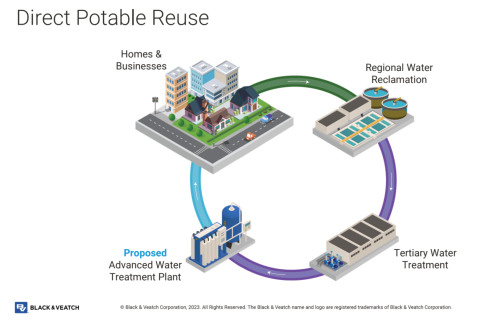
This project aims to design a Direct-Potable-Reuse (DPR) treatment to convert secondary effluent from an existing Regional Treatment Plant into potable water. The treated wastewater would be readily available for potable use directly after treatment. In addition to this treatment design, a distribution system is needed in order to transport the potable water to the optimum location for water distribution. The Moulton Niguel Water District heavily relies on the importation of potable water from external sources, which exposes the system to drought conditions, climate variability, and increasing supply costs. By converting treated wastewater into potable water using advanced processes, this project provides a locally controlled, drought-resistant water source. Long-term water security and regional resilience are strengthened for the 170,000+ residents served by the Moulton Niguel Water District. 

Proposed SPUI for the SR-74 interchange
CEE 2025-2026 - Winter, Spring

Ortega Highway & I-5 Interchange Improvement: Redesign and Feasibility Analysis of San Juan Capistrano's Compact & High-Volume Interchange

The interchange between Ortega Highway (SR-74) and I-5 in San Juan Capistrano has long experienced operational and geometric deficiencies, with documented issues dating back to 2006. The existing facility includes substandard 10-11 ft travel lanes, missing shoulders on SR-74, limited spacing between ramp terminals and nearby intersections, and recurring queue spillbacks that exceed available storage capacity. As a result, the interchange currently operates at Level of Service (LOS) F during both peak periods, with conditions expected to worsen under a no-build scenario. The project is further constrained by its surrounding environment, including San Juan Elementary School, Old Mission Cemetery, Horno Creek, and the historic Mission San Juan Capistrano. These features significantly limit available right-of-way (ROW) and restrict alignment and grading options, making improvements both necessary and complex. The project primarily serves commuters, local residents, and regional freight traffic using SR-74 and I-5.

Pipe Rack System (AutoCAD)
CEE 2025-2026 - Winter, Spring

Pipe Rack System

This project involves the structural redesign of a segment of a larger steel pipe rack system in an oil refinery in Carson, California. The pipe rack system originally has two levels of 10 pipes and a third level of electrical cable running through the entirety of it. The client wants to support an air cooler addition and its respective maintenance platform and access ladders necessary for technicians to access the air cooler. The design is required to safely resist gravity (dead and live loads) and lateral (wind, seismic, and thermal) forces while meeting industry standards and serviceability requirements. The final design utilized steel framing with concrete fireproofing, engineered connections, and isolated concrete footings in compliance with professional (American Society of Civil Engineers) and material (American Institute of Steel Construction & American Concrete Institute) standards.

Site overview and structure components
CEE 2025-2026 - Winter, Spring

Redesigning the Carlsbad Desalination Plant Intake Screening Structure

The Carlsbad Desalination Plant is the largest saltwater desalination plant in the Western Hemisphere. The project’s primary goal is to redesign the intake system capacity to increase from 50 million gallons per day (MGD), which is 10% of San Diego’s daily potable water demand, to 299 MGD. The design must fulfill the California Ocean Plan Amendment (OPA), specifically the Desalination Amendment, which was added in 2015. The Amendment requires that new or expanded seawater desalination facilities implement the best available site selection, design, technology, and mitigation measures to minimize the intake and mortality of all forms of marine life. 

Design components include the large organism exclusion devices, travelling band screens, spray wash pumps, and a debris sorting station. This project will decrease San Diego County’s reliance on imported water that must be transported from long distances and remove strain from the limited groundwater supply. Currently, San Diego...

Anteater Transportation Engineers
CEE 2025-2026 - Winter

Roadway Design Modernization: Rancho Mission Viejo

Rancho Mission Viejo is a master-planned community in southern Orange County spanning 20,868 acres, established in 2005 on a former family ranch. Under the Southern Subregion Habitat Conservation Plan (SSHCP), 75% of the land is preserved as open space, with the remaining 25% designated for residential and commercial development. This project assumes the community is in its early stages of development, where a roadway network has yet to be established. As development progresses, traffic demand is projected to increase significantly, placing strain on Ortega Highway (SR-74) as the primary route through the area. Without a planned roadway network, continued growth will result in increased congestion, reduced levels of service, and safety concerns for future residents and commuters.

Anteater Transportation Engineering, sponsored by HDR, was tasked with designing a roadway network to provide an alternative route to Ortega Highway, improve internal traffic circulation, and support the community's long-term...

Selenium Marsh Mass Balance
CEE 2025-2026 - Winter, Spring

Selenium Volatilization in San Joaquin Marsh Plants

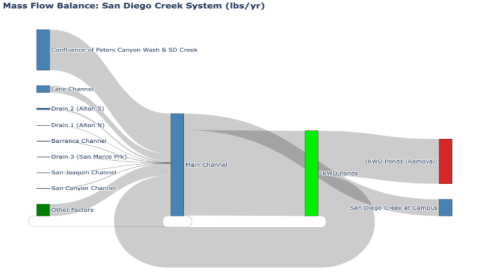
The San Joaquin Marsh (SJM) is a constructed wetland located in Irvine, California within the Newport Bay watershed. A prominent feature of the habitat is the natural wetland treatment system, where urban runoff and groundwater travels through a series of ponds with vegetation, and the effluent (clean water) makes its way towards upper Newport Bay and the ocean. One major pollutant of emerging concern present in the marsh is selenium (Se), a naturally occurring element in the surrounding foothills around the area. At high levels, Se can be toxic to native aquatic plants and animals present in these ecosystems. This project quantifies the amount of Se removal via volatilization. Acrylic chambers were designed, assembled, and deployed clear at Pond 3 in the SJM to capture volatilized Se from bulrush and cattail utilizing carbon filters via a vacuum pump. The constructed chambers enclosed water and plants, allowing data collection over a...

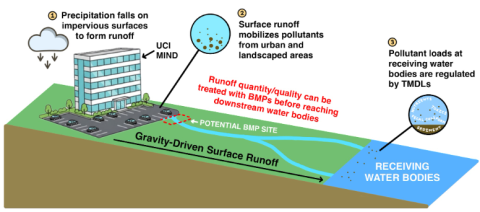
Diagram illustrating the increased introduction of constituents into receiving water bodies through stormwater runoff after the development of impervious surfaces. BMPs (best management practices) are permanent infrastructures that intercept the runoff and remove the constituents.
CEE 2025-2026 - Winter, Spring

Stormwater Runoff Management for UCI Site Redevelopment

Impervious surfaces introduced by site developments generate higher flows and volumes of surface runoff during storm events compared to undeveloped conditions, where precipitation would be more likely to percolate into underlying, native soils. This excess surface runoff mobilizes constituents such as sediments or nutrients along its path, ultimately discharging into receiving water bodies. The University of California, Irvine’s Department of Campus Planning & Sustainability has requested consulting services to develop best management practices (BMPs) for treating surface water runoff quality and managing runoff volumes associated with campus redevelopments. The requested BMPs will be designed to accommodate the runoff generated by the construction of new amenities for the UC Irvine Institute for Memory Impairments and Neurological Disorders (UCI MIND). The UCI MIND site plan currently consists of two 0.36-acre buildings that will function as mixed-use research facilities and office spaces and will be located on the UCI campus by the...

E3 Engineering
CEE 2025-2026 - Winter, Spring

Techno-Economic Analysis of Advanced Solids Treatment by Anaerobic Co-Digestion and Hydrothermal Liquefaction

The solids treatment options in wastewater treatment facilities are at a crossroad. While recent technological advances provide opportunities to increase resource recovery concerns about emerging contaminants pose challenges for beneficial use. For example, addition of non-sludge organic wastes to the anaerobic digesters has the potential to increase biogas production while diverting organic wastes from disposal in landfills where they produce greenhouse gases. However, there are emerging concerns about the presence of per- and polyfluoroalkyl substances (PFAS) that can render land application of biosolids unviable. The biosolids would then have to be disposed of in landfills which is associated with a large hauling costs with no beneficial use. To address these concerns, existing WWTP can be retrofitted with new technology that can minimize solids production and produce alternate beneficial products.

Co-digestion is an anaerobic digestion option where food waste is added into the sludge feed to the digester...

 Structure Model
CEE 2025-2026 - Winter, Spring

Three Story School Building Design

The capstone design project involves the creation of a schematic design for a three story school building to be built on the UCI Campus. The team was hired to design gravity and seismic structural components for this three-story building based on Architectural constraints. By following ASCE 7-22 and ACI 318-25 building codes, and using steel specifications from AISC 360-22 and 341-22, the building was designed as a steel structure, with steel decking on the roof level, and a composite beam with concrete-filled decking on the 2nd and 3rd stories. The framing of the entire structure was built using A992 steel with a strength of 50 ksi. The building is designed with isolated concrete spread footings. All concrete elements of the building consist of normal-weight concrete with a strength of 3 ksi. For its Lateral Force Resisting System, Special Moment Frames were designed with pre-qualified Side Plate connections. Seismic resistance...

An image of the design site layout
CEE 2025-2026 - Winter, Spring

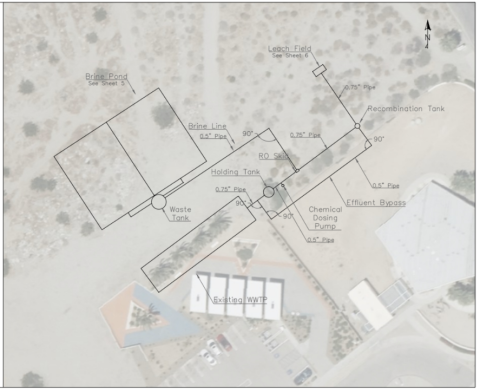
Total Dissolved Solids (TDS) Mitigation and Advanced Treatment Evaluation for the Palm Springs Visitor Center

The Palm Springs Visitors Center operates an on-site wastewater treatment facility that is currently in noncompliance with upcoming effluent Total Dissolved Solids (TDS) concentration regulations, which take effect in June 2026. The current on-site wastewater treatment facility does not account for TDS removal. The Palm Springs Regional Water Quality Control Board established a new TDS limit of 500 mg/L for 2026. 

The focus of this project is to determine the best available treatment technology to lower TDS levels within compliance of these upcoming regulations. Multiple treatment technologies were analyzed and an effluent fate analysis was conducted in order to decide the best design strategy. Moreover, regional constraints such as permitting and environmental regulations were researched to verify compliance. Finally, a mass balance was conducted to calculate how much effluent water needs to be treated to meet the MCL.

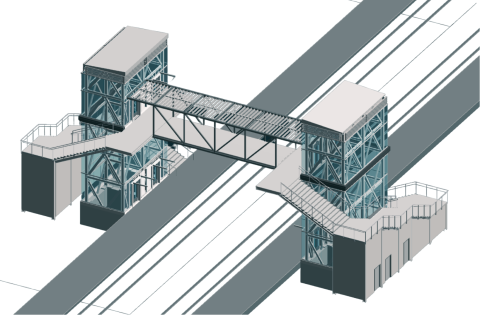
Transit Station Pedestrian Overcrossing Structural and Architectural Model
CEE 2025-2026 - Winter, Spring

Transit Station Pedestrian Overcrossing

Students designed a new transit station that enables pedestrians to safely cross the train tracks at the Tustin Metrolink Station Area. The new station consists of three structural components: an elevator tower on either side of the train tracks, a pedestrian bridge spanning between the elevator towers, and a set of stairs wrapping around the exterior of each tower that descend to ground level.

Students completed preliminary gravity, wind, and seismic designs, conceptual 3D models, and conceptual detail drawings for all three structural components.

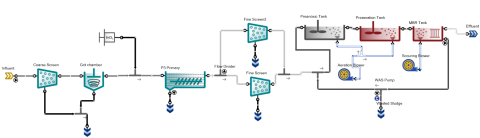
Sumo Process Model
CEE 2025-2026 - Winter, Spring

Wastewater Reclamation Facility Expansion Project

The expansion of this wastewater treatment plant involves the addition of a new wastewater treatment train capable of 10 MGD. During the process of evaluating the expansion alternatives, our team considered three methods of achieving this expansion: conventional activated sludge treatment, an MBR train, or the conversion of existing tanks to SBRs. Ultimately, KELG Consulting selected the MBR train because of the high effluent quality and low land usage, because we had to consider the site constraint of 550 by 170 ft. The MBR train consists of primary clarifiers, which leads to fine screening just upstream of the MBR. We chose to include these two pretreatments before the MBR to remove any solids upstream of the MBR to prevent fouling and damage within the aeration and membrane tanks. The MBR effluent is then directed to a chlorine contact basin where it receives a dose of chlorinee to provide residual...

Pages