Advanced Quality Ultrapure Abstraction (via) SOLar energy (AQUASOL)
2024-2025 - Fall, Winter
AQUASOL is a project that studies the use of solar energy and other clean energy sources to purify seawater and produce freshwater. This project aims to restore more drinkable and clean freshwater in the future of the Earth. The solar energy supply system and reverse osmosis membrane system will form the main components of the system, and the reverse osmosis purification of seawater will be achieved through pressure difference.
Ankle Exoskeleton
2024-2025 - Winter
Our project aims to develop a lightweight and modular ankle exoskeleton to assist stroke patients in rehabilitation. Existing solutions are often bulky, difficult to use, and not adaptable to various shoe sizes. Our design integrates a quick-release mechanism to ensure easy, equipping and donning off, improving user experience for patients and physical therapists. The exoskeleton will provide supportive yet lightweight force assistance, enhancing mobility without adding excessive strain. The final prototype will be tested to validate comfort, force application, and user adaptability.
Goal and Objectives
- Develop a compact, lightweight, and ergonomic exoskeleton
- Integrate a quick-release mechanism to improve ease of use
- Optimize force capabilities and manufacturability
- Accommodate foot sizes from 7 to 13
- Ensure the total weight does not exceed 300g
- Finalize prototype testing and documentation for future manufacturing
Sponsor/Advisor
- Kaushal Patel: kaushahp@uci.edu
- Mark Walter: m.walter@uci.edu
- David Copp: dcopp@uci.edu
Anteater Baja Racing Rolling Chassis
2024-2025 - Fall, Winter
Background
The 2025 Baja SAE Arizona competition is an off-road automotive event in which collegiate teams compete to design, build, and test a mini ATV style vehicle. The vehicles must pass a technical inspection to make sure they are adherent to the rules and regulations set out by SAE, and are then allowed to compete in dynamic events that test the vehicle's acceleration, maneuverability, off-road capabilities, and strength. We will be designing and manufacturing a rolling chassis, which includes the frame of the vehicle along with the suspension and brakes, that is to be entered into the Baja SAE competition next year after powertrain integration. Our design will focus on having a frame that is rules compliant and having a suspension and braking system that is lightweight and handles well in order to pass technical inspection and perform strongly at the competition.
Goals and Objectives
The team's...
Anteater Dynamics
2024-2025 - Winter, Spring
Anteater Dynamics is a mechanical engineering senior design project team working with the robotics company ROBOTIS to design a low-cost 7-degree-of-freedom robotic arm targeted for personal robotics enthusiasts, capable of collecting data to be used in machine learning. The final product should be under $1000 to fulfill ROBOTIS’ vision of easily accessible robot technology.
Anteater Formula Racing - Drag Reduction System
2024-2025 - Winter
Background
Anteater Formula Racing is a FSAE team at UCI that is dedicated to designing, building, and competing with an open-wheel, internal-combustion race car inspired by Formula 1 and IndyCar racing. The DRS project team is working closely with the Aerodynamics, Human Interface, and Electronics subteams within Anteater Formula Racing to design, test, and implement a drag reduction system on the existing rear wing of the vehicle, in order to improve race times and performance.
Goal and Objectives
The objective of Team DRS is to integrate a drag reduction system on the rear wing of the car in order to improve race times. By changing the position of the top two airfoils, the drag coefficient will be modified to adapt to the racing environment. The actuation of the system will have an automatic component, controlled by vehicle speed, and can also be activated manually by the driver. Additionally, the system...
Autonomous Exploration
2024-2025 - Winter, Spring
Our autonomous exploration rover is designed to navigate unknown environments with precision and efficiency. Equipped with a LiDAR scanner and IMU sensors, the rover creates detailed 3D maps and efficiently plans optimal paths to its destination. Using the RRT* (Rapidly-exploring Random Tree Star) algorithm, it navigates complex terrains while avoiding obstacles in real-time.
The rover’s advanced motion control system ensures smooth and accurate movement. Integrated with ROS (Robot Operating System) and built on the Waveshare JetRacer platform, the system delivers excellent performance and adaptability.
Designed for versatility, this autonomous rover has military applications with a powerful solution for exploring challenging environments safely and efficiently.
BAJA Powertrain Driveline
2024-2025 - Winter
Background
BAJA SAE is a national collegiate competition that is held every year which includes a hill climb event, endurance race and obstacle course. In the past, our team has experienced technical and driver issues, resulting in incompletion of the race. This year, the goal is to finish and place in the top 20.
Goals and Objectives
Last years car, Scoundrel, had uneven power delivery, excess vibrations, and component failure. To combat these issues, we are replacing the rear differential with a transfer case and reducing overall weight by 30%.
As a result of the redesigns, the powertrain driveshaft is now angled 6 degrees horizontally. The scope of this project is to test the performance of the angled driveshaft, ensuring safety, minimal vibrations, efficiency and competition regulations. Important metrics that will be tested include vibrations, temperature torque delivery and constant angular velocity. The driveshaft will initially be tested in...
BAJA SAE Powertrain
2024-2025 - Fall, Winter, Spring
Baja SAE is a national colligate competition where teams compete to build and race an off-roading race vehicle. In this project the team is tasked to design, build, and test the powertrain subsystem of the 2025 Baja SAE vehicle. The powertrain subsystem must be capable of AWD by delivering power to all 4 wheels, as well as being lightweight and robust enough to make Anteater Racing a feared competitor. The proposed powertrain design features a fully custom transfer case, outputting to a driveshaft and front differential. Designs must adhere to all rules listed in the Baja SAE rulebook, while maintaining critical safety factors to prevent failures operating in extreme off-road conditions. The vehicle must be built and tested prior to the Arizona competition in May 2025.
BoardBox — Anti-Theft Device for Personal Electric Vehicles
2024-2025 - Winter, Spring
Summary:
Our project focuses on enhancing the security and storage of personal electric vehicles (PEVs) on campus. With rising theft rates of electric scooters and skateboards, as evidenced by UCIPD reports, students often bring their PEVs into lecture halls, violating fire codes and causing unnecessary congestion. Existing campus infrastructure lacks a secure and convenient solution, creating frustration for students and faculty alike.
To address this issue, we propose a secure locker system called BoardBox that allows students to temporarily store their PEVs using a mobile application. These lockers will feature a sophisticated locking mechanism—a multi-surfaced, linear-sliding, servo-powered system—along with integrated charging through solar panels and mobile phone compatibility. By providing a safe storage option, our system could encourage greater use of PEVs, alleviating campus parking challenges and promoting sustainable transportation. Additionally, this project presents an opportunity for the university to enhance campus amenities while exploring potential revenue streams.
Breathe Ez
2024-2025 - Winter, Spring
Our project focuses on developing a breathing device that delivers controlled airflow while promoting a positive user experience. Designed with durability and scalability in mind, this device ensures long-term reliability and cost-effective manufacturing, making it both practical and accessible.
By utilizing high-quality materials and an ergonomic design, we aim to create a seamless, user-friendly solution that integrates effortlessly into daily life. The device will withstand regular use without compromising performance, maintaining both safety and efficiency. Additionally, the design will be optimized for mass production, ensuring affordability without sacrificing quality.
Careful material selection and engineering will enhance usability, comfort, and longevity, making the device intuitive and maintenance-free. Our goal is to develop a reliable and effective solution that meets the highest standards of functionality while providing a smooth and controlled inhalation experience.
Background:
Access to safe and effective inhalation devices is a growing concern, as many existing products on the market...
Coastal Currents
2024-2025 - Winter, Spring
The goal of our project is to design and develop a device that can be used by coastal residences to generate electricity utilizing the waves in the ocean. Approximately 71% of the earth's surface is water, making this a very promising and bountiful resource. Large scale wave energy generators are already in commission but are unfeasible to use for individual households. To accommodate small-scale power generation needs, Coastal Currents is developing a compact wave-energy generator that is intended for residential use on the coastline to provide power directly to homes by utilizing the energy and geometry of the ocean’s waves.
Daun Bot
2024-2025 - Winter, Spring
We are designing a robot to collect solid samples for small gardens and greenhouses efficiently. Typically, soil sampling is done manually, which often results in inconsistent data. These inconsistencies lead to inaccurate information, limiting farmers' ability to manage their crops effectively. Our robot will collect composite samples made of smaller soil samples using an auger drill to penetrate the ground, extract the samples, and store them in a designated sample box. Additionally, it will feature multi-terrain wheels powered by four DC motors, allowing it to navigate various terrains with ease. This automation improves accuracy, efficiency, and overall crop management.
Design Build Fly
2024-2025 - Fall, Winter
We are designing an autonomous glider to compete with the UCI DBF team for the 2024 AIAA Design Build Fly competition. The glider we build will deployed from the main RC plane DBF builds at altitudes between 200-400 feet above sea level and must independently execute a controlled 180-degree turn, achieve stable flight, have a light blinking upon release, and land precisely within a designated 200x200 foot target area, while weighing less than 0.55 pounds. The glider will have an autonomous flight controller in order to direct flight and allow the glider to land in the box without damage or outside assistance.
Design-Build-Vertical Flight
2024-2025 - Fall, Winter, Spring
The DBVF (Design-Build-Vertical Flight) competition is an eVTOL (electric-powered remote-control vertical take-off and landing) vehicle competition where university students have the opportunity to gain hands-on experience and familiarize themselves with eVTOL and AAM (advanced air mobility).
Student teams annually design, build, and test an eVTOL aircraft to meet specific objectives and attend a flyoff in Maryland, where they are scored on their ability to meet those objectives.
UCI’s DBVF team AeroZot currently consists of members who are split into subteams to develop the airframe, hardware, software, and the financing of the eVTOL.
Dyno - Quadruped Robot
2024-2025 - Fall
This is Project Dyno, a senior design project with the objective of designing, building, and prototyping a quadruped robot dog capable of serving as a disaster search and rescue aid in a low-cost package. We were inspired to make a search and rescue robot in response to the recent hurricanes on the East Coast. The needs of a would-be disaster relief robot drive our major objectives: traverse adverse terrain, overcome small obstacles, and support integration with a claw. We were also inspired by Boston Dynamic’s SPOT robot, a quadruped robot that is extremely capable, but also extremely expensive, making it less accessible to local authorities. Dyno will be scaled down in size and capability but still be able to serve in search and rescue operations.
Dyno Snatcher
2024-2025 - Fall, Winter
In search and rescue operations, hazardous environments with debris and tangled wires often block access to critical areas. To address this challenge, we are developing a flexible, portable, remote-controlled claw to assist our quadruped robot, Dyno. This claw is designed to efficiently clear obstacles, ensuring a safer and more accessible path for responders and the robot.
Our solution focuses on enhancing Dyno’s capabilities in navigating and manipulating its environment, making it a versatile tool in high-risk situations. The RC claw features precise control for handling objects of varying sizes and complexities, all while maintaining portability for ease of deployment.
This innovative approach reduces the need for direct human intervention in hazardous zones, minimizing risk to personnel while improving the efficiency of search and rescue missions. By integrating this tool with Dyno, we aim to redefine robotic assistance in disaster response scenarios, prioritizing safety and adaptability in challenging environments.
Electric Vehicle Dynamics
2024-2025 - Fall, Winter
- Background
- In the development of a Formula Society of Automotive Engineers (FSAE) racecar, for Anteater electric racing the design of the steering and suspension systems is critical to achieving optimal vehicle performance, handling, and driver feedback. The current challenge lies in creating a steering system that provides precise control and responsive handling, while minimizing weight and maintaining structural integrity. Additionally, the suspension system must effectively absorb road irregularities, maintain tire contact with the track, and ensure stability during high-speed maneuver.
- Goals and Objectives
- Determine ways to select and geometrically configure suspension and steering components within the preexisting vehicle architecture.
- Steering System: To provide precise control and feedback to driver while ensuring quick response time and stability.
- Shock Absorption System: To optimize tire contact with the road surface, enhancing handling, stability, and ride comfort while absorbing shocks from uneven terrain.
- Milestones
- CAD model
...
Equitable Design Solutions: Adjustable Backrest Attachment for Lab Stools
2024-2025 - Winter, Spring
The Adjustable Backrest Attachment is designed to improve comfort and ergonomics for users of standard lab stools. By incorporating an adjustable height range of 4”–6”, the backrest provides essential lumbar support while accommodating different users’ needs. The stool mount ensures stability and durability, featuring thigh support, a rigid base for structure, and foam padding to distribute weight evenly and reduce tailbone pressure. The clamp mechanism allows for secure attachment while maintaining easy adjustability with minimal effort. Designed with cost-effectiveness, durability, and ease of manufacturing in mind, this attachment is a practical solution for improving posture and comfort in lab environments. User feedback through interviews and testing will be incorporated to refine the design and enhance usability.
Background
Standard lab stools often lack proper back support, leading to discomfort and poor posture for students and researchers during extended work sessions. Many users have expressed a need for better ergonomics, cushioning, and...
EV Driver Cockpit Subsystem Prototype
2024-2025 - Winter, Spring
The Driver Cockpit Subsystem focuses on improving driver comfort, control, and safety in Kilozott, Anteater Electric Racing's newest car for the 2024-2025 season. The project includes the design, CAD modeling, and manufacturing of the seat, headrest, firewall, and steering system.
Testing revealed wrist strain from steering angles, inadequate lateral seat support, and inconsistent pedal resistance. To address these, the team is refining seat bolsters, steering ergonomics, and pedal feedback while ensuring seamless chassis integration.
Key improvements include a redesigned seat with extended bolsters, an optimized steering position, and an adjusted firewall for better helmet clearance. The team will finalize the prototype based on driver feedback and conduct static and dynamic testing before competition.
EV Drivetrain
2024-2025 - Fall, Winter
EV Drivetrain is a senior design project dedicated to designing subsystems within the 2025 Anteater Electric Racing vehicle, such as the accumulator (lithium-ion battery) and motor mount. The goal of this project is to construct an optimized system for the accumulator and motor mount. This is done by producing prototypes and performing FEA to ensure proper function during static and high-performance events at the FSAE competition. Failure to properly design these systems can result in disqualification or driver injury.
Fire Extinguishing System
2024-2025 - Fall, Winter
Current fire sprinkler systems often fall short in effectiveness, adaptability, and efficiency, particularly in modern building designs. These systems occupy considerable space, can cause significant water damage, and typically respond too slowly in the event of a fire. Our project focuses on designing an innovative fire extinguishing system for residential areas that overcomes these challenges. The new system is compact, highly responsive, and utilizes advanced technology to suppress fires before they spread. It integrates seamlessly with mobile devices, allowing users to receive real-time updates and control the system remotely. By prioritizing safety, minimizing property damage, and offering a faster response time, this system aims to revolutionize fire protection in residential settings, ensuring both peace of mind and effective fire suppression.
Firefly
2024-2025 - Winter, Spring
Background
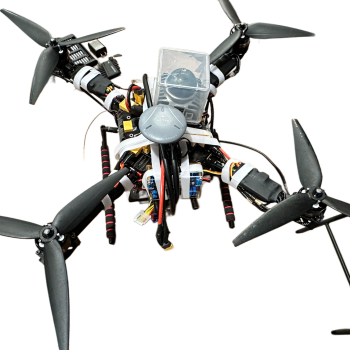
This project focuses on the development of an autonomous drone system designed to survey an area, detect wildfires or fire outbreaks, and intervene with fire retardant to mitigate the spread of flames. The drone is equipped with sensors and cameras, to identify fire hotspots in real-time. Using color-filtering algorithms in addition to sensors, the system can accurately distinguish between fire and non-fire events, ensuring high precision in detection.
Once a fire is detected, the drone autonomously navigates to the location and deploys a fire retardant payload, such as dry agents or water-based solutions, to suppress the flames. The system is integrated with GPS and mapping technologies to optimize flight paths and ensure efficient coverage of the survey area. Additionally, the drone can transmit real-time data and alert ground station, enabling rapid response.
Goals and Objectives
Our main goal is to design an autonomous drone system that is capable of...
Fluid Power Vehicle Challenge (2024-2025) - Zotdraulics
2024-2025 - Fall, Winter
The NFPA Fluid Power Vehicle Challenge is an engineering competition where teams design a human-input vehicle that makes use of hydraulics and pneumatics as a means of propulsion. This competition is an opportunity for students to sharpen their understanding of the fluid power industry, cultivate team-based engineering skills, and network with industry professionals.
Our project, Zotdraulics, marks UCI's first ever entry into that competition. We have united mechanical, electrical, and hydraulic subsystems with the vision of building a vehicle that can contend for high placement in the competition's sprint and endurance races. We hope to cultivate a deeper understanding of fluid power, make a strong impression for UCI's debut entry, and establish a strong foundation for our future teams to advance.
Formula SAE Electric - Brakes
2024-2025 - Winter, Spring
The brakes sub team aims to design a reliable and well-organized braking system for Anteater Electric Racing’s KiloZott, ensuring optimal performance, safety, and efficiency. To achieve this, the system will integrate regenerative braking to enhance energy recovery and feature configurable pedals for improved adaptability and driver preference. Whenever feasible, existing components will be incorporated to optimize cost and compatibility. A comprehensive CAD model will be developed prior to prototyping and assembly to ensure precision and minimize design iterations. This approach will result in an effective braking system that seamlessly integrates into the vehicle’s overall functionality, supporting the team's objectives in electric racing performance.
FUSION Engineering Project: Remote-Controlled Precision Cargo Drone
2024-2025 - Winter, Spring
Background
The FUSION Engineering Project, as an integral component of FUSION, offers extensive learning opportunities that extend beyond the confines of traditional classroom education. This project fosters professional growth, catering to students at various stages of their educational journey—be it novices learning software applications like SolidWorks or TinkerCAD, or more seasoned engineering students seeking to grow their leadership capabilities through team management and mentorship. The FUSION Engineering Project (FEP) represents an intermediate-level project designed to impart crucial engineering skills to students at various stages of their academic journey.
Goal and Objectives
This year's project structure includes both mechanical and hardware components. The mechanical team is responsible for the design and prototyping of the frame and pick-up mechanism, while the hardware team is responsible for the wiring of the drone and selecting correct motors for the drone. The objective of each team is to create a drone capable of precise movement...
FUSION Engineering Project: Remote-Controlled Precision Cargo Drone
2024-2025 - Winter, Spring
The FUSION Engineering Project is a student-run engineering project that is managed by the club organization FUSION (Filipinx Undergraduate Scientists-Engineers In an Organized Network). The year-long project for the 2024-2025 academic year is a Remote-Controlled Precision Cargo Drone. This drone will have the capability to pick up a 2x2x2 in. wooden block and precisely deposit it at a landing zone. The drone will be controlled via remote control, and each team will implement their own creative designs including cameras, sensors, and other components to achieve this goal. At the end of the year, each team will use their drones to complete challenges in a competition. Each team will also be given the opportunity to present their work at our yearly conference FUSIONCon.
Gel imaging system for biomedical research of novel fluorophores
2024-2025 - Fall, Winter
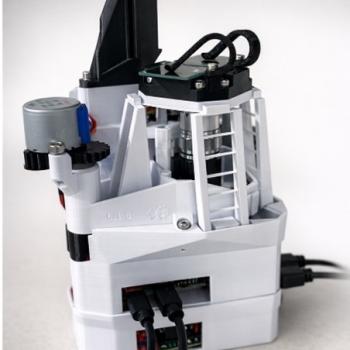
Current gel imagers on the market are expensive and not customizable leading to increased lab expenses. To address this we will design a gel imager that allows for customizable filter swapping and standard smartphone image capture, saving the sponsor’s lab space and funding. The gel imager will be adjustable to various transilluminator models and smartphones. Additionally, the filter exchanger will be utilize user controlled tuning to swap and stack optical filters for gel electrophoresis analysis.
HeliCraft
2024-2025 - Winter, Spring
This project focuses on the design of a Tiltwing VTOL drone that combines fixed-wing efficiency with vertical takeoff and landing flexibility. The rotating wings enable smooth transitions between hover and cruise, improving maneuverability. The goal is stable flight, reliable performance, and payload capacity. The final design integrates aerodynamics and control systems into a compact, high-performance UAV.
HyperXite 10
2024-2025 - Fall, Winter, Spring
Summary
HyperXite is a multidisciplinary undergraduate student team at UC Irvine dedicated to creating sustainable transportation technology through innovative research and development. Our project aims to revolutionize high-speed travel by designing and building a small-scale, self-propelled train pod that validates system models, incorporates important sustainable technologies, and proves the feasibility of Hyperloop and magnetic levitation concepts.
Background
The Hyperloop, introduced in 2013, represents a revolutionary mode of transportation, utilizing magnetically levitated pods propelled by electromagnetic forces within a near-vacuum tube. This design minimizes air resistance and eliminates friction, enabling speeds of up to 760 mph. HyperXite, a team dedicated to advancing Hyperloop technology, focuses on developing a small-scale monorail version of the pod. Since its establishment nine years ago, the team has worked to align its research with full-scale Hyperloop applications, emphasizing friction reduction through electromagnetic technologies and optimizing mechanical and electrical systems for efficiency.
HyperXite has gradually transitioned from...
HyperXite: Pod Maintenance & Transport Vehicle
2024-2025 - Fall, Winter
The HyperXite team needs a new way to transport their 250 kg hyperloop pod from location to location for demonstrations and a mobile workstation to repair and maintain the pod outside of the lab space. This iteration of the transport vehicle is dubbed the “Pod Maintenance and Transport Vehicle” which is a redesign of the original “Pod Transport Vehicle” made the previous year. The team will utilize feedback from the HyperXite team to build off of the old design to tackle issues such as difficulties maneuvering the vehicle, injuries resulting from blunt extrusions and sharp corners on the vehicle, and no ease of maintenance of the pod. This project will help to ensure the team and pod both arrive safely and swiftly to any event they find themselves at and present their technological findings to the world.
Innovative Cold Plate
2024-2025 - Winter, Spring
Background
The rapid growing field of AI and high-performance computing has led to small-form factor chips (CPUs/TPUs) with exceedingly high heat fluxes. Traditional air cooling struggles to dissipate these thermal loads efficiently. The research from our team at UC Irvine proposes an innovative liquid-vapor phase change cooling plate to address the need for high-performance cold plates that integrate seamlessly with new generation server hardware.
Goal and Objectives
The team seeks to accomplish the following:
Q1 2025 (first half of winter quarter): Market research on industry chip cooling tech and academic literature on heat transfer fundamentals
Q2 2025 (second half of winter quarter): Finalize a design matrix via trade studies, providing complete design proposals for internal/external components, testing/data collection, and ANSYS fluid simulations
Q3 2025 (first half spring quarter): Validate manufacturing process and achieve target metrics in prototype testing
Q4 2025 (second half spring quarter): Revise design, scale for certain server motherboards and...
JellyfishBot
2024-2025 - Winter, Spring
The UCI JellyfishBot team aims to develop a bioinspired underwater robot that mimics jellyfish movement for marine exploration within two academic quarters (Winter and Spring 2025). As the first project of its kind at UCI, the design features three subsystems: a linkage-based propulsion system, chassis, and electronic/control component.
Off-grid Desalination System - Brine Busters
2024-2025 - Winter, Spring
Background:
Many communities around the world struggle with water scarcity, relying on unsafe sources that pose serious health risks. Traditional desalination methods often require large-scale infrastructure and significant energy input, making them impractical for remote or underserved regions where access to reliable electricity is limited. The purpose of the Brine Busters is to provide a sustainable, off-grid desalination system for families of 3-4 who lack access to clean drinking water and dependable power sources. Our system is designed to be portable, energy-efficient, and easy to operate, ensuring that even those in the most isolated areas can produce safe drinkable water without relying on traditional utilities.
Goals and Objectives:
- Reduce sodium content to safe, drinkable levels in accordance with WHO drinking water guidelines.
- Compact and lightweight design for easy transportation and deployment in remote areas.
- User-friendly interface with simple controls for effortless operation, even with minimal technical knowledge....
Pulse Protectors
2024-2025 - Fall, Winter
Pulse Protectors:
Dr. Tang MicroBiomechanics Lab
Introduction:
There has been an increase in the use of pacemakers—devices used to regulate irregular heartbeats through electrical stimulation— with implantation rates from 55.3 to 72.6 per 100,000 from 2008 to 2017 [1]. Conventionally, these demands would be met with a leaded pacemaker, which is implanted within the left pectoral region with a lead running through the veins into the heart. However, recently there has been a shift in the market towards leadless pacemakers. One such device, the Medtronic Micra, is placed within the right ventricle such that the device is able to directly stimulate the heart without having the more traditional design of leads from the pacemaker to the ventricle. The wires flowing through the heart are one of the major causes of failures in pacemakers traditionally with Dr. Udo’s ~6 year follow up study citing 5.54% of the population having lead...
Resilient Mobile Space Launch System
2024-2025 - Winter, Spring
We are designing a mobile rocket launch system that can be transported across all U.S. highways, complying with Department of Transportation regulations in every state. The system consists of two main subsystems: the Transporter, Erector, Launcher (TEL) and the launch vehicle (rocket). The TEL includes a hydraulic erector system capable of lifting the rocket to a full 90 degrees while providing full support with a strong back. The launch vehicle can deliver a minimum 200 lb payload to a 500 km polar orbit (270 Nmi/Polar) and features a reusable first stage designed to land on any surface after launch. The rocket will use existing models of rocket engines and will be powered by liquid propellants. The launch platform will secure the rocket during the initial launch at 100% thrust utilizing a ground drilling mechanism. The entire system can be fully set up within 8 hours of arriving at the launch site. This mobile launch system can be deployed anywhere across America, which eliminates the limitations of being confined to the two current launch sites in Vandenberg, California, and Kodiak, Alaska.
Robotic Playground Swing
2024-2025 - Winter, Spring
SwingCraft is our project in which we will research, design, and fabricate an autonomous robotic swing that demonstrates the principles of parametric resonance and conservation of angular momentum. Starting from an initial displacement, the swing will be able to autonomously increase its amplitude by effectively lengthening and shortening the length of its pendulum/swing. By correctly timing the length changes of the swing, energy can be pumped into the system resulting in an increasing amplitude. Much like how a child on a swing uses their legs to increase the amplitude of their swinging motion, our design will utilize a double pendulum to mimic this motion. Our end goal is to have successfully designed a 1:10 scale model swing that can be used as a source of entertainmentthat which demonstrates parametric resonance.
SLS 3D Printer for Magnets
2024-2025 - Fall, Winter
Project Background:
There is a technology gap concerning the additive manufacturing of magnetic materials on the nanometer scale. Current solutions are limited by their material strength and modulus, or by the precision in their technology. We aim to develop a 3D (SLS) printer for magnets under the sponsorship of Professor Camilo Cuervo and the U.S. Army Research Laboratory (ARL). Our final design will integrate the motion system of a selective laser sintering (SLS) printer with a magnetization head. These two components will work congruently to sinter and magnetize the ferromagnetic polymeric material simultaneously. The rotation gantry will provide the means to attach the magnetization head to the motion system and allow for unique pole pattering capabilities within the desired printing shape.
Preliminary Design
Review: https://drive.google.com/file/d/12YOxWRrPmDaRGGw6MzYn569Ja5SJpyZo/view?usp=drive_link
Goals:
- Design, Order, and Assemble Magnetization Head
- Optimize coil size for magnetization head
- Integrate laser engraver with magnetic head gantry
- Configure electronics and design user interface for printer operation ...
SnapVolt: Modular Low-Voltage Distribution Box
2024-2025 - Winter, Spring
SnapVolt is a student-led project with the ambition to design, test, and prototype a low-voltage distribution box (fuse box) that is compatible across different electric vehicles. Inspired by current vehicles with fuse boxes that are unique to a particular model, our design will allow users to create different combinations of fuses and relays to match their personal vehicle. A priority of this project is to allow simple and tool free assembly and disassembly with snap in components, similar to Lego pieces. Additionally, SnapVolt aims to create a cost effective design with the intention of making the product competitive in the market.
Solar Car: Braking System
2024-2025 - Fall, Winter
Background
The goal of UCI Solar Car is to build a solar car to compete in the Formula Sun Grand Prix (FSGP) to qualify for the American Solar Challenge (ASC). This will be our first time competing in the competition, and we plan to do so with a 3-wheel car. Our role in the brakes team is to complete the human interface components of the car which includes: parking brake, brake light switch indicator, dashboard, brake lines, and driver equipment
About ASC/FSGP
The solar car race has an emphasis on reliability and endurance over speed. The FSGP is a three day track event held annually, where qualification is determined by the number of laps. The ASC which is held every other year, is also multi-day, taking place on the public road on a route that is about 1,500-2,000 miles, which exposes the car to various driving and weather conditions.
Goal...
The TVC Project
2024-2025 - Fall, Winter
Background
Thrust Vector Control (TVC) is the manipulation of the direction of a vehicles thrust to provide steering control throughout flight, improve stability, and allow for precision maneuvers. The lander challenge is a competition that motivates collegiate groups to develop self landing rockets. One challenge they offer is a $15,000 prize for a TVC static hot fire. For the competition, an engine above 500 lbf must be fired for at least 10 seconds as the TVC manipulates the thrust vector a minimum of 7 degrees in all directions. Build a TVC system for a 100 lbf engine that could be scaled up in the future to compete in the Lander Challenge.
Goal and Objectives
- System is able to withstand 100 lbf of thrust through the burn time of the engine
- Engine mount designed needs to securely hold a ~3in diameter engine
- System needs to ...
Thumb up
2024-2025 - Fall, Winter
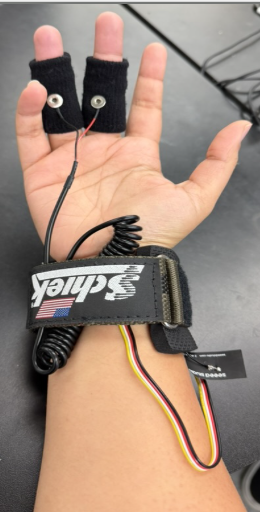
Existing finger rehabilitation devices typically use exoskeletons to facilitate movement in disabled fingers. However, these devices are often large and costly, limiting their use to fixed locations, which restricts patients from using them in home environments. In this project, we aim to design a compact, portable robotic device specifically for home-based, thumb rehabilitation, addressing the need for a more accessible solution. This device is intended for stroke patients, helping them rehabilitate their affected thumbs through interactive exercises and simple games, enhancing mobility and engagement in their therapy.
UAV FORGE
2024-2025 - Fall, Winter, Spring
UAV Forge constitutes a multidisciplinary engineering design team with a specific focus on the comprehensive development cycle of autonomous aerial vehicles, encompassing design, manufacturing, programming, and rigorous testing. The paramount objective of this design endeavor is to adhere to the stipulated constraints, thereby enabling active participation in the SUAS 2024-2025 competition season.
The SUAS competition mandates that the UAV system possesses autonomous flight capabilities, proficient object avoidance capabilities pertaining to both stationary and dynamic entities, and adeptness in object detection, localization, and classification. Furthermore, the system is required to execute an airdrop delivery mechanism, ensuring the precise delivery of a payload object to a designated GPS location without incurring any damage.
While the immediate focus of this year’s team centers on achieving commendable performance within the competitive arena, the overarching goal is to provide undergraduate participants with a practical application of their engineering acumen toward a consequential real-world challenge. UAV Forge’s...
UCI RoboSub
2024-2025 - Fall, Winter
The UCI RoboSub team designs an Autonomous Underwater Vehicle (AUV). Our AUV features autonomous localization, ultrasound detection, and a magnetically actuated appendage for the retrieval of debris off of the seabed. This project fosters innovation in underwater robotics, emphasizing autonomy, precision, and teamwork while addressing real-world maritime and environmental challenges.
UCI Solar Airplane (2024-2025)
2024-2025 - Fall, Winter, Spring
Our purpose:
The purpose of the UCI Solar Airplane project is to prove the viability of solar energy as a substitute for nonrenewable fuel and to provide aid in search and rescue missions during natural disasters where drones and other methods would not be effective. Climate change has progressed at an alarming rate, especially in recent years, making it evident that a drastic change in energy use is necessary. Even so, today’s most commonly used energy source globally is still fossil fuels. While the renewable energy market continues to expand, it is vital to concentrate efforts into promoting applications of clean energy.
The Solar Airplane team works to prove that solar energy is a viable alternative to fossil fuels in aviation in hopes that it will spur an increase in solar energy applications for other energy needs as well. Our project will conducts extensive research into solar panels and aviation to...
UCI Solar Car Front End
2024-2025 - Fall, Winter
We are the UCI Solar Car Project (ZotSun), a student-run interdisciplinary team of 60 undergraduates from the University of California, Irvine with a passion for innovative engineering and sustainability. Our mission is to revolutionize zero-emission transportation. Currently, we are building a solar car to compete in the Formula Sun Grand Prix of 2025, a race designed to determine the most efficient and aerodynamic solar-powered vehicles.
Unmanned Autonomous Submarine
2024-2025 - Fall, Winter
Our purpose:
The purpose of Unmanned Autonomous Submarine team is to create a device that can perform underwater tasks in place of humans. Surveying, exploration, and underwater repair are a only few of many necessary jobs that ensure safe sea travel and to protect marine life. However, extreme ocean conditions and the risk of malfunctioning equipment make these jobs dangerous for humans.
The Unmanned Autonomous Submarine team works to prove that a submarine can be a viable alternative to human labor for underwater work roles. Our team conducts research on simple yet energy-efficient submarine designs and tracking systems to develop a fully autonomous submarine.
By the end of Winter 2024, the project team will have fabricated a submarine that can navigate freely underwater and autonomously track and follow a moving tennis ball. Our goal is to create a device that demonstrates functionality and efficiency so that future iterations may be used to improve underwater safety.
Objectives:
Quarter...
Unmanned Ground Vehicle (UGV)
2024-2025 - Fall, Winter
Background:
Keeping public areas such as parking lots clean is a pressing challenge due to their large size and frequent activity. With small items like empty soda or water bottles, it especially can be tedious, since traditional manual trash collection is labor-intensive, costly, time-consuming, and requires constant human involvement. Therefore, this project is offering an alternative solution that will streamline, and automate litter and trash collection. By utilizing advanced robotic and camera detection concepts paired with mechanical design, an Unmanned Ground Vehicle (UGV) will efficiently and independently locate, retrieve, and return empty soda cans or water bottles in public parking lots.
Goals and Objectives:
- A goal is to reduce the constant human involvement that is often in litter collection.
- Promote cleanliness in public spaces, and reduce manual labor.
- The objective is to design and build a UGV that autonomously locates, retrieves, and returns an ...
Wheel of Whatever I Want
2024-2025 - Winter, Spring
The purpose of the project is to create a wheel spinner that can be secretly manipulated by the user. The spinner will land on any specified section of the wheel, smoothly enough that the selection appears to be natural, and the manipulation can’t be detected by anyone unaware of the wheel’s mechanical properties.
Wildfire Prediction and Mitigation System using Drones
2024-2025 - Fall, Winter
Background:
In high-risk environments, wildfires can occur quickly and without warning. There is a need to monitor these areas, but many are difficult to access and traverse, and there is a limited amount of personnel capable of repeatedly surveying these areas. Therefore, we plan to design a UAV system capable of monitoring and navigating these high-risk locales. In the case of a fire, the UAV will be able to recognize it and take mitigating action, as well as interface with other systems with the data it has received.
Mission Statement:
We plan to demonstrate a prototype drone to show the capabilities of this system. The demo will take place over a 50x50 feet area on a field with a red square, representing a fire. On the sheet, a small lit candle will be placed randomly. The drone, from a designated starting point, will be tasked to fly to the sheet,...
Zot Waves
2024-2025 - Fall, Winter
In many coastal regions around the world, communities without reliable access to electricity face significant barriers to economic development, education, healthcare, and overall quality of life. Traditional energy solutions, such as diesel generators or extensive power grid infrastructure, are often inaccessible or unsustainable for small, remote communities, particularly due to high costs, logistical challenges, and environmental impacts. This project aims to design a compact, affordable, and user-friendly wave energy converter for personal use, empowering individuals and households in underserved coastal areas to harness wave energy as a clean, renewable source of power. The device will provide a sustainable electricity solution that is adaptable to varied coastal conditions, enhancing energy independence and resilience while minimizing ecological impacts.
ZotCart Autonomous Golf Cart
2024-2025 - Fall, Winter
ZotCart is a fully autonomous golf cart that will be roaming around Ring Road in the near future. This is achieved by designing drive, brake and steer by wire mechanisms to allow for autonomous control of the golf cart, with the ability for a human to take control in case of an emergency. Several sensors such as cameras, radars, and IMUs along with control algorithms will allow for autonomous driving around static obstacles.
As of now, there are many different ways to get around campus such as by walking, scooter, or bike. However, these all require investment whether it be in the form of money or time. ZotCart allows for multiple people to enjoy quick transport all around campus, all while allowing a comfortable ride and an opportunity to get some extra work done due to the autonomous nature of the vehicle.
We aim to have a functional vehicle roaming...
ZotQuatics
2024-2025 - Winter, Spring
About Us
The UC Irvine ZotQuatics team works towards designing and manufacturing an Autonomous Underwater Vehicle (AUV) to compete in the annual RoboSub Competition hosted by RoboNation. Teams from around the world come together to test their AUVs through a series of underwater objectives and present their work through technical documentation. Our AUV will also have applications in environmental remediation.
Our ultimate goal for 2024-25 is to establish ZotQuatics as a permanent pillar of the UCI Engineering community. We will do this by designing and fabricating Mark I of the ZotQuatics AUV as a platform for future teams to build off on and evolve. The Mark I shall adhere to RoboSub regulations regarding functionality, performance, constraints, and design attributes we identify to meet these requirements.