Non-alcoholic beer is a popular alternative to good ol' beer for people who are trying to kick their addiction, enjoy social events without getting drunk, or simply just enjoy the taste of beer. This project presents the design and techno-economic analysis of a non-alcoholic beer plant designed to produce 240 metric tonnes (MT) per day of non-alcoholic beer. The beer meets FDA requirements by being < 0.5% ABV. The beer production plant utilizes mashing, boiling, fermentation, and distillation to produce non-alcoholic beer. This project was estimated to have an initial investment of $11 MM, with a return on investment (ROI) of 1013% over the span of 10 years. Process simulations and safety, environmental, and economic analyses were performed to highlight the feasibility and profitability of non-alcoholic beer production.
Non-Alcoholic Beer Production
Spring Industry Sponsored
OASIS: Direct-Potable-Reuse
This project aims to design a Direct-Potable-Reuse (DPR) treatment to convert secondary effluent from an existing Regional Treatment Plant into potable water. The treated wastewater would be readily available for potable use directly after treatment. In addition to this treatment design, a distribution system is needed in order to transport the potable water to the optimum location for water distribution. The Moulton Niguel Water District heavily relies on the importation of potable water from external sources, which exposes the system to drought conditions, climate variability, and increasing supply costs. By converting treated wastewater into potable water using advanced processes, this project provides a locally controlled, drought-resistant water source. Long-term water security and regional resilience are strengthened for the 170,000+ residents served by the Moulton Niguel Water District.
Winter Internally Mentored (faculty, staff, TA)
Omni-Pedal: A Multi-Effects Pedal
“Omni-Pedal” is a digital multi-effect guitar pedal, that is accessible and affordable for guitarists or music enthusiasts of any skill level. The guitar pedal is built from the ground-up off of a Raspberry Pi to perform digital signal processing (DSP). Through DSP, seven guitar effects can be applied to the input signal from the guitar to change the sound of the guitar to the user's choice. The interactive GUI of the pedal also allows for accessible switching between the different guitar effects and also adjusting the volume, mix, and other parameters of the effect over the guitar's sound.
Spring Industry Sponsored
Ortega Highway & I-5 Interchange Improvement: Redesign and Feasibility Analysis of San Juan Capistrano's Compact & High-Volume Interchange
The interchange between Ortega Highway (SR-74) and I-5 in San Juan Capistrano has long experienced operational and geometric deficiencies, with documented issues dating back to 2006. The existing facility includes substandard 10-11 ft travel lanes, missing shoulders on SR-74, limited spacing between ramp terminals and nearby intersections, and recurring queue spillbacks that exceed available storage capacity. As a result, the interchange currently operates at Level of Service (LOS) F during both peak periods, with conditions expected to worsen under a no-build scenario. The project is further constrained by its surrounding environment, including San Juan Elementary School, Old Mission Cemetery, Horno Creek, and the historic Mission San Juan Capistrano. These features significantly limit available right-of-way (ROW) and restrict alignment and grading options, making improvements both necessary and complex. The project primarily serves commuters, local residents, and regional freight traffic using SR-74 and I-5.
Spring Industry Sponsored
Orthon - Dynamic Insole with Pressure Offloading for Gait Optimization
ORTHON’s purpose is to create a proof of concept for a dynamic orthotic system capable of treating severe foot conditions that concern painful flat foot and ulcer prone diabetic foot issues. This dynamic orthotic looks like a wearable shoe insert that can detect pressure and/or temperature in order to react with the necessary support for the user’s foot. For such conditions, the current medical orthotic solution is a rigid, static shoe insert originally invented in the 1950s. Meanwhile, the human foot is one of the most dynamic mechanical structures in the body with 33 joints and 26 bones. Although they may be clinically effective, many users find their rigid inserts to be uncomfortable, discontinuing the prescribed use and resulting in surgery.
20% of the world's population have some degree of flat feet, which essentially means that the medial arch in their foot is less than 10mm off...
Spring Industry Sponsored
ORTHON- A Dynamic Orthotic Device
ORTHON’s purpose is to create a proof of concept for a dynamic orthotic system capable of treating severe foot conditions that concern painful flat foot and ulcer prone diabetic foot issues. This dynamic orthotic looks like a wearable shoe insert that can detect pressure and/or temperature in order to react with the necessary support for the user’s foot. For such conditions, the current medical orthotic solution is a rigid, static shoe insert originally invented in the 1950s. Meanwhile, the human foot is one of the most dynamic mechanical structures in the body with 33 joints and 26 bones. Although they may be clinically effective, many users find their rigid inserts to be uncomfortable, discontinuing the prescribed use and resulting in surgery. As for those with diabetic neuropathy, there is currently no prevention options only devices that are applied to the wound after they occur, an example of this is...
Winter
Spring Industry Sponsored
PartiClear
Winter Internally Mentored (faculty, staff, TA)
Passive Analog Beamforming Drone Monitor
The FAA now requires all drones to be compliant with Remote ID, requiring an on-drone device that transmits information about itself over Blutetooth or WiFi. However, these signals can be weak and may not be picked up by user devices alone. Traditional methods of increasing reception range involve high cost and complex fully-coherent sampling digital beamformers. By leveraging a hybrid digital-analog beamforming strategy, this project achieves a similar result a remarkably lower cost, complexity, and footprint.
The goal of this project is to increase the reception range of 2.4GHz Bluetooth/WiFi signals by using an antenna array fed into a passive RF network allowing multiple different directional beams to be monitored at the same time using low cost microcontrollers. The collected data is sent over Bluetooth to a user device where the information is displayed on a custom React Native app.
Winter Internally Mentored (faculty, staff, TA)
PeterBot - Autonomous 4-Legged Walking Robot
PeterBot is an autonomous walking robot developed by MAE 151 Team 7 under the sponsorship of Professor J. Michael McCarthy. Building upon Professor McCarthy’s MAE 183 mechanical walker design, this project focuses on transforming the existing walking platform into an intelligent system capable of autonomous navigation. The project’s main challenge is reliably integrating the electronics to control stiff geared mechanisms.
This work is relevant to students, researchers and roboticists interested in implementing autonomous mobility on unconventional non-wheeled platforms. By developing PeterBot, Team 7 created a foundation for future students to create autonomous walking robots that can complete higher-leveled tasks.
Winter Internally Mentored (faculty, staff, TA)
Photon Flight: Fiber-Optic Autonomous UAV
The Photon Flight (Autonomous UAV) project focuses on creating a high-performance tethered drone capable of sending two real-time video streams and complete flight telemetry through a single fiber optic cable. Using a lightweight fiber tether instead of conventional RF connections, the platform demonstrates how advanced networking, optical communications, and embedded systems can be merged within an aerial vehicle. Throughout the process, the team gains experience with IP video streaming, low-latency video encoding, network design, Embedded Linux integration, and connecting entire system with a flight controller (MATEK F405). The main objectives are to build a reliable, high-bandwidth communication system, show consistent fiber-based command and control, and assess the advantages of optical tethering for secure, interference-resistant drone operations. In the end, this drone acts as a test platform for new communication technologies in robotics, monitoring, and environments where electromagnetic interference is an issue.
The main goal of this project...
Spring Internally Mentored (faculty, staff, TA)
Pipe Rack System
This project involves the structural redesign of a segment of a larger steel pipe rack system in an oil refinery in Carson, California. The pipe rack system originally has two levels of 10 pipes and a third level of electrical cable running through the entirety of it. The client wants to support an air cooler addition and its respective maintenance platform and access ladders necessary for technicians to access the air cooler. The design is required to safely resist gravity (dead and live loads) and lateral (wind, seismic, and thermal) forces while meeting industry standards and serviceability requirements. The final design utilized steel framing with concrete fireproofing, engineered connections, and isolated concrete footings in compliance with professional (American Society of Civil Engineers) and material (American Institute of Steel Construction & American Concrete Institute) standards.
Winter
Spring Industry Sponsored
Plethy Pals
Validating Photoplethysmography Across Every Skin Tone
Mission Statement
Our mission is to ensure that photoplethysmography technology delivers accurate, reliable results for people of all skin tones by developing rigorous, melanin-responsive validation standards that eliminate bias at the source.
Winter Internally Mentored (faculty, staff, TA)
Portable Ankle Measuring Proprioceptive Device (PAMPD)
"Proprioception," often described as the human body's "6th sense," describes one's ability to know where their body is relative to itself without additional sensation. Proprioception has been proven to be a powerful predictor of the effectiveness of physical therapy, and further, that it is a trainable attribute. For patients recovering from strokes, measuring and training proprioception is a powerful new supplementary tool to use on the road to recovery. While there is one device (the Ankle Measuring Proprioceptive Device) capable of assessing and quantifying ankle proprioception, it is large and difficult to transport, preventing clinical viability. Prospective benefactors and/or test subjects are forced to come to where the device is located to assess and research ankle proprioception. The Portable Ankle Measuring Proprioceptive Device (PAMPD) is a smaller, lighter medical device meant to be brought to clinics to train and assess a patient’s ankle proprioception.
Winter Internally Mentored (faculty, staff, TA)
PoseMotive
PoseMotive is a wearable posture-monitoring system designed to help users improve their posture and body language through continuous feedback and data analysis. The system consists of 5 inertial measurement unit (IMU) sensors embedded in a wearable garment that measure body orientation and motion. A microcontroller gathering all the data from these sensors and aggregating the information and forwards it to a web application via bluetooth. The application communicates to a backend system through wireless communication which processes the sensor data and classifies the user's posture into interpretable categories such as slouched, straight, leaning left, leaning right, and arm positioning such as open or closed. The overall goal of the project is to promote better ergonomic habits by helping users become aware of posture issues and correct them through consistent monitoring and feedback.
Winter Internally Mentored (faculty, staff, TA)
Preventing Vial Waste Using a Multi-Modal Edge Computing System
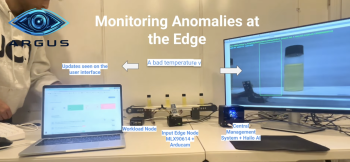
This project addresses the need for fast and reliable defect detection in pharmaceutical manufacturing, where traditional inspection methods often rely on human oversight or cloud based processing that introduces latency and inconsistency. Defects such as micro cracks, improper sealing, or temperature anomalies in vials can compromise drug safety, leading to costly recalls and potential risks to patient health. By leveraging edge computing, the system performs real time, on device analysis that reduces latency while also lowering data transmission requirements and overall carbon footprint compared to cloud dependent approaches. This work directly impacts pharmaceutical manufacturers, quality assurance engineers, and ultimately patients who depend on safe and properly handled medications.
Spring Internally Mentored (faculty, staff, TA)
Project 9B: The Anteatairs
A tiltrotor tri-coptor VTOL fixed-wing UAV engineered for search-and-rescue — currently undergoing airframe surface coating and final systems integration before flight testing.
The Mission
Modern search and rescue (SAR) operations face a critical tradeoff: ground teams are slow, and conventional fixed-wing aircraft require runway infrastructure that doesn't exist in disaster zones or remote terrain.
The Anteatairs solves this by engineering a tiltrotor VTOL UAV — a hybrid platform that takes off and lands vertically like a multirotor, then physically rotates its motors forward to transition into efficient fixed-wing cruise flight. No runway. No infrastructure dependency.
Built on a COTS fixed-wing airframe retrofitted with custom tiltrotor propulsion, with a scale fuselage modeled in Fusion 360, a purpose-designed payload delivery bay, FPV telemetry, and autonomous navigation — this platform is designed to rapidly deploy, survey large search areas, and deliver emergency first-aid supplies to...
Winter
Spring Internally Mentored (faculty, staff, TA)
PROMPTly
Clinical Certainty, Delivered at Home!
An integrated diagnostic pad for the immediate detection of Premature Rupture of Membranes (PROM), empowering expectant mothers with a reliable, non-invasive safety net.
The Problem
1 in 10 pregnancies suffer from PROM. Currently, mothers are forced to rely on inaccurate "look and smell" tests or face $1,800+ unnecessary ER visits for false alarms.
What is PROM?
Premature Rupture of Membranes (PROM) is a medical complication affecting over 1 in 10 pregnancies (over 360,000 women annually in the U.S.). It occurs when the amniotic sac ruptures before the onset of labor. Because the leaked amniotic fluid looks and feels strikingly similar to common urinary incontinence or standard discharge, it is incredibly difficult to confidently identify at home.
The Anxiety of the "Look and Smell" Test
Currently, there are no accurate at-home tests...
Winter
Spring Internally Mentored (faculty, staff, TA)
RapInject
RapInject Redesigning epinephrine delivery for faster emergency
About Our Project
A safer and more intuitive epinephrine auto-injector redesign
Anaphylaxis is a life‑threatening emergency, and epinephrine auto‑injectors are the only proven first‑line treatment. Yet despite their importance, they’re often not used when they’re needed most. With 1 in 20 Americans experiencing anaphylaxis and early epinephrine shown to reduce hospitalizations by 26%, it’s deeply concerning that 62% of patients never receive the injection during the reaction. At the same time, more than 6,800 accidental injuries occur each year due to confusing device orientation, difficulty knowing when the injection is complete, and limited safety features that leave users exposed to needles. These issues highlight a critical gap: epinephrine auto‑injectors can only save lives if people can use them safely, confidently, and correctly.
Unmet Need Statement
Current epinephrine auto-injectors are difficult...
Spring Internally Mentored (faculty, staff, TA)
Redesigning the Carlsbad Desalination Plant Intake Screening Structure
The Carlsbad Desalination Plant is the largest saltwater desalination plant in the Western Hemisphere. The project’s primary goal is to redesign the intake system capacity to increase from 50 million gallons per day (MGD), which is 10% of San Diego’s daily potable water demand, to 299 MGD. The design must fulfill the California Ocean Plan Amendment (OPA), specifically the Desalination Amendment, which was added in 2015. The Amendment requires that new or expanded seawater desalination facilities implement the best available site selection, design, technology, and mitigation measures to minimize the intake and mortality of all forms of marine life.
Design components include the large organism exclusion devices, travelling band screens, spray wash pumps, and a debris sorting station. This project will decrease San Diego County’s reliance on imported water that must be transported from long distances and remove strain from the limited groundwater supply. Currently, San Diego...
Winter
Spring Internally Mentored (faculty, staff, TA)
ReForm
ReForm
A science-backed wearable designed to reprogram movement
Knowing The Fix Does Not Mean Being Able To Fix It
The problem is not effort.
The problem is execution.
Sports are built on complex movements. Athletes learn those movements through thousands of repetitions. When the movement is trained incorrectly, the body can repeat stress patterns it was not meant to withstand.
In volleyball, poor swing mechanics can lead athletes to rely too heavily on the shoulder instead of using the full body. Over time, repeated poor mechanics can contribute to pain, frustration, performance plateaus, and overuse injuries.
The hardest part is that every rep strengthens the pattern. Once a movement becomes automatic, athletes can understand the correction and still fail to apply it during full-speed play.
Athletes Need Two Things to Improve...
...
RepHlux: A Wireless, Batteryless Acid Reflux Monitor
The RepHlux project aims to develop an improved, minimally invasive medical device for diagnosing Gastroesophageal Reflux Disease (GERD), helping to prevent long-term health complications through more effective monitoring.
Current acid reflux monitoring methods rely on either battery-powered capsules or wired catheter systems. Battery-powered devices tend to be bulky and have limited operational lifetimes, while catheter-based systems can cause significant discomfort for patients. These limitations create a need for a more patient-friendly and reliable solution.
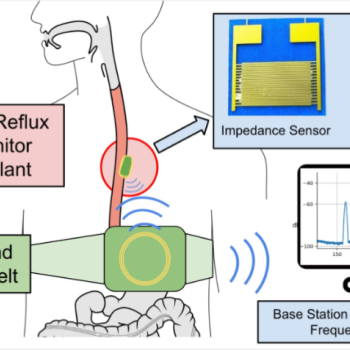
RepHlux addresses this gap via a belt-and-capsule transceiver system that uses radio frequency communication to transmit data between the capsule and an external belt reader. By eliminating the need for batteries and wires, the device enables real-time monitoring while improving patient comfort.
This project features an improvement in signal retention and upgraded specifications from previous works on a battery-less acid reflux monitor paper.
Winter Internally Mentored (faculty, staff, TA)
REX0: Dual Glove Stroke Therapy System
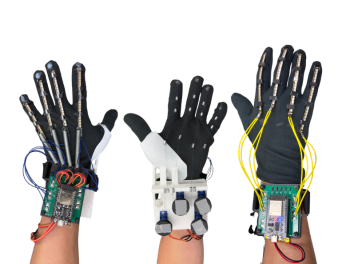
Stroke survivors frequently experience upper-limb impairment, with 55–75% losing fine motor control, and recovery often plateaus within six months, highlighting the need for accessible, high-repetition rehabilitation tools. Because proprioception—the body’s sense of limb position and movement—is commonly impaired after stroke, improving it is critical for restoring hand function. This project addresses that need by developing REX0, a dual-glove wearable rehabilitation system that enables motion mimicry, allowing movements from a patient’s healthy hand to be replicated on the impaired hand for proprioceptive training. The system aims to improve long-term rehabilitation outcomes for stroke survivors who require effective and engaging therapy for hand motor recovery.
Roadway Design Modernization: Rancho Mission Viejo
Rancho Mission Viejo is a master-planned community in southern Orange County spanning 20,868 acres, established in 2005 on a former family ranch. Under the Southern Subregion Habitat Conservation Plan (SSHCP), 75% of the land is preserved as open space, with the remaining 25% designated for residential and commercial development. This project assumes the community is in its early stages of development, where a roadway network has yet to be established. As development progresses, traffic demand is projected to increase significantly, placing strain on Ortega Highway (SR-74) as the primary route through the area. Without a planned roadway network, continued growth will result in increased congestion, reduced levels of service, and safety concerns for future residents and commuters.
Anteater Transportation Engineering, sponsored by HDR, was tasked with designing a roadway network to provide an alternative route to Ortega Highway, improve internal traffic circulation, and support the community's long-term...
Winter Competition/Extracurricular Project Sub-team
Rocker-Bogie Stair Climber
Stairways are a fundamental barrier for autonomous ground vehicles. While wheeled robots excel on flat terrain, navigating multi-step staircases remains one of the most mechanically demanding challenges in mobile robotics. Team 28 set out to address this by designing and building a fully autonomous, six-wheeled stair-climbing robot capable of carrying a payload up the 19-step Engineering Gateway staircase at UC Irvine.
Our design utilizes the rocker-bogie suspension system, which is a solution first developed by NASA for their Mars Sojourner rover to maintain continuous wheel contact across uneven surfaces without the need for active stabilization. The project was driven by a practical need: demonstrating that a compact, low-cost ground vehicle can reliably navigate real-world stair environments, with potential applications in search and rescue, building inspection, and last-mile delivery in infrastructure-limited settings.
Winter Internally Mentored (faculty, staff, TA)
Scrappy
Additive manufacturing has greatly improved rapid prototyping and small-scale production, but post-processing steps such as support removal, surface finishing, and print-bed cleaning remain largely manual and labor-intensive. These tasks introduce inefficiencies, inconsistencies in product quality, and potential safety risks due to exposure to chemicals like acetone used in vapor smoothing. Scrappy addresses this problem by developing a robotic system capable of automating these post-processing operations. By reducing manual labor and human exposure to hazardous materials, the project aims to improve safety, repeatability, and overall efficiency within additive manufacturing workflows.