CEE
2025-2026
Winter
Spring
Internally Mentored (faculty, staff, TA)

Redesigning the Carlsbad Desalination Plant Intake Screening Structure

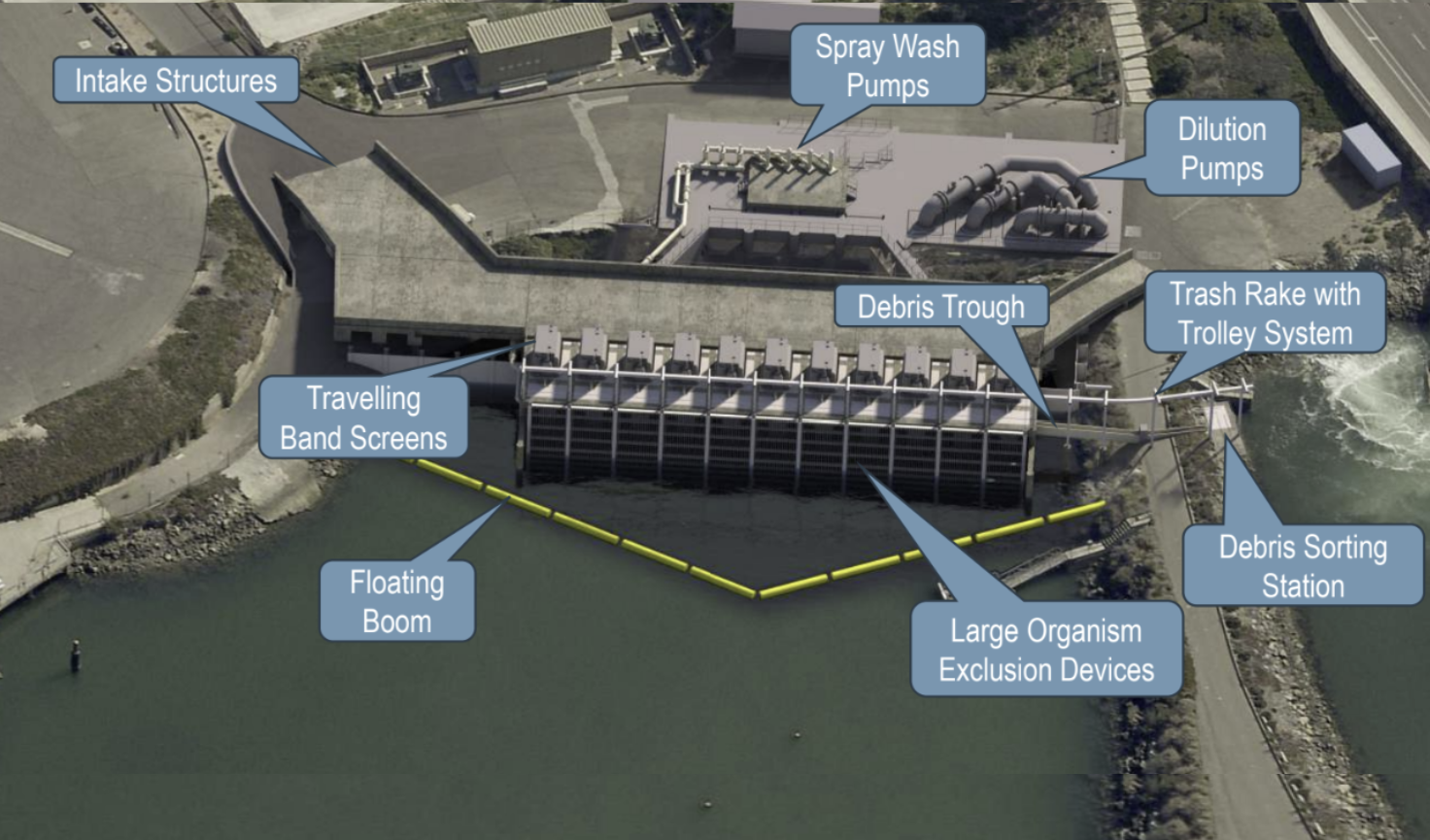
Site overview and structure components

Summary

The Carlsbad Desalination Plant is the largest saltwater desalination plant in the Western Hemisphere. The project’s primary goal is to redesign the intake system capacity to increase from 50 million gallons per day (MGD), which is 10% of San Diego’s daily potable water demand, to 299 MGD. The design must fulfill the California Ocean Plan Amendment (OPA), specifically the Desalination Amendment, which was added in 2015. The Amendment requires that new or expanded seawater desalination facilities implement the best available site selection, design, technology, and mitigation measures to minimize the intake and mortality of all forms of marine life. 

Design components include the large organism exclusion devices, travelling band screens, spray wash pumps, and a debris sorting station. This project will decrease San Diego County’s reliance on imported water that must be transported from long distances and remove strain from the limited groundwater supply. Currently, San Diego County purchases up to 90% of its water from imported sources. Desalination will provide a local, reliable, direct source of potable water in a region that regularly deals with drought.

Technical Approach/Methodology

Some main constraints dictated the design. The most notable constraint was the OPA, which states a maximum through-screen velocity of 0.5 ft/s for all screens and maximum mesh opening of 1 mm for traveling band screens. These measures protect animals from getting hurt and sucked into the screens. All designs were based on the design flow of 299 MGD, and critical equipment had an additional unit added for redundancy and easier maintenance. Material and coating suitable for saltwater applications were used to minimize corrosion. Travelling band screens were chosen to have a design life of 10 years and assumed to have 15% fouling, while large organism exclusion devices were assumed to have 0% fouling. Dimensions of design components were minimized to decrease material costs. 

Various programs were used, including Civil 3D, Excel, and Gantt Project. The Manning Equation was used to design the debris trough, and the Darcy-Weisbach equation was used to calculate major head losses from the pipes. An alternative analysis was conducted for the TBS, debris boom type and configuration, debris sorting station location, and debris trap method. 

Outcomes

All design components of the screening structure were completed with a cost estimate and design schedule. The designed screening structure will contain 11 LOEDs and 10+1 dual flow traveling band screens to uphold the requirements of the OPA. Eleven, although an odd number, maintains a velocity that falls below the OPA’s 0.5 feet per second maximum velocity. A 3+1 pump configuration and 2+1 strainer configuration will operate nonstop to clean the traveling band screens. Screenings will be transferred with the debris trough and disposed of in the discharge lagoon or trash. A hybrid and angled debris boom will be placed in front of the LOEDs to trap large debris. The total redesign will cost about $95 million. The design phase is estimated to last a year and eight months, and is recommended to occur concurrently with construction to maintain an efficient timeline. With this design, the Claude “Bud” Lewis Carlsbad Desalination Plant increases intake from 50 to 299 million gallons per day (MGD) benefits San Diego County by reducing the amount of imported water. The design complies with the Ocean Plan Amendment and provides residents with a local, drought-proof potable water resource. Currently, the 50 MGD of potable water accounts for 10% of the county’s demand. Following construction, the plant can supply up to 60% of the county’s potable water demand.

Project Media

Project Poster