
Kiwi Logistics aims to design and build an autonomous warehouse robot capable of navigating a structured indoor environment, detecting obstacles, and operating within an inventory management workflow. Current warehouse operations depend significantly on extensive physical labor to lift and transport inventory, often leading to a high risk of workplace injury or long-term health problems. The goal of our design is to present a scalable, easy-to-use autonomous inventory management system that tackles the risk of manual labor without eliminating human jobs in warehouse operations.

MAE
2025-2026
Spring
Internally Mentored (faculty, staff, TA)
KIWI Logistics: Autonomous Warehouse Robot
CEE
2025-2026
Winter
Spring Industry Sponsored
Spring Industry Sponsored
Leahy Well Ion Exchange System Design for Bellflower Somerset Mutual Water Company
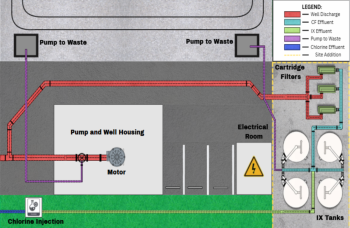
Team E2 collaborated with AKM Consulting Engineers to redesign the Leahy Well to achieve a 3,000 GPM water capacity and to develop on-site treatment for perfluoroalkyl and polyfluoroalkyl substances (PFAS) via Ion Exchange (IX) for the Bellflower Somerset Mutual Water Company (BSMWC) in Bellflower, CA.
PFAS is a broad term used to describe the thousands of variants of the man-made, synthetic chemicals that are used in everyday products such as non-stick pans, hydrophobic clothing, and consumer goods. When presented in high concentrations and ingested through drinking water, PFAS can be associated with adverse health effects such as cancer, high blood pressure, and liver damage.
The project incorporates 3 on-site cartridge filters to remove Total Suspended Solids (TSS) from the water influent before it is treated through 4 Ion Exchange tanks to reduce PFAS concentrations via anionic exchange to undetectable levels that comply with current Environmental...
EECS
2025-2026
Fall
Winter Internally Mentored (faculty, staff, TA)
Winter Internally Mentored (faculty, staff, TA)
Light Show Drones
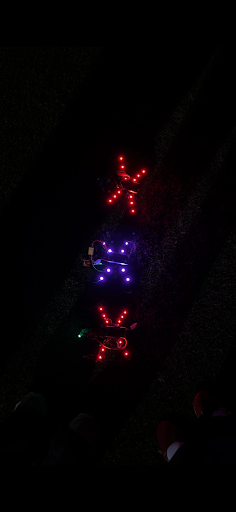
The Light Show Drones project was developed as an affordable and environmentally friendly entertainment system for personal events and small gatherings. The system consists of three drones that perform synchronized light displays and simple autonomous flight maneuvers, providing an engaging visual experience while remaining easy to operate for users with little or no prior drone experience.
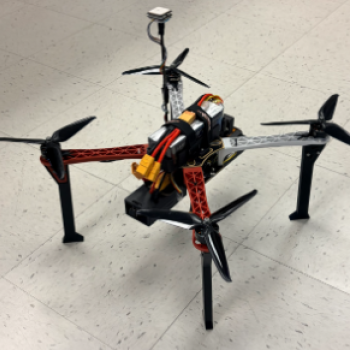
Each drone was custom-built using a MOD-L frame, a Matek F405-WMN flight controller, T-Motor F1404 3800KV motors, and a Raspberry Pi Zero W co-processor. The Raspberry Pi runs Python-based software that coordinates flight operations and controls the attached WS2812B RGB LED strips. Navigation is supported by BE-880 GPS modules, while communication is handled through 2.4 GHz Wi-Fi for telemetry and 802.15.4 wireless links for rapid light-control signaling. The total replication cost for each drone was kept below $700.
Testing showed that the drones could maintain autonomous hovering within a...

BME
2025-2026
Fall
Winter
Spring Industry Sponsored
Winter
Spring Industry Sponsored
Lipo Link
Clinical Need
Autologous fat grafting is widely used in reconstructive, cosmetic, and regenerative medicine due to its biocompatibility and regenerative potential from adipose-derived stem cells (ADSCs) and stromal vascular fraction (SVF) populations. However, current fat washing methods are highly manual and operator-dependent, contributing to inconsistent graft retention rates of 20-80% and reported cell viability losses of up to 30-50% during preparation and handling. These inefficiencies can prolong operating room time, increase healthcare costs, and reduce clinical outcomes by compromising adipocyte and stem cell survival. Therefore, there is a clinical need for an automated, scalable, and standardized adipose tissue washing and processing system capable of rapidly preparing large tissue volumes while preserving cellular viability and producing reproducible, high-quality graft material.
The current Sayenza platform can only process approximately 50 mL of adipose tissue per wash cycle, which is sufficient for small procedures and nanofat applications but...
EECS
2025-2026
Fall
Winter Internally Mentored (faculty, staff, TA)
Winter Internally Mentored (faculty, staff, TA)
LoRa Communication System
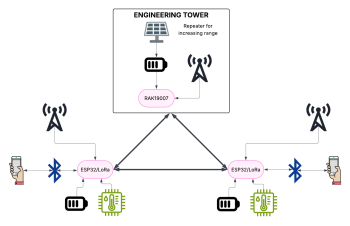
Our project address the need for reliable, low-cost communication in areas where traditional networks (cellular or internet) are unavailable, unreliable, or compromised (such as during natural disasters, remote outdoor activities, or infrastructure outages). The project's goal is to create a decentralized, off-grid messaging networks using low-power LoRa radios, enabling users to communicate over long distances without centralized infrastructure. This project can be impactful for a wide range of individuals who depend on consistent access to communication in challenging or unpredictable environments, which can include outdoor enthusiasts, emergency responders, rural communities, and anyone requiring secure, infrastructure-independent communication.

MAE
2025-2026
Winter
Spring Internally Mentored (faculty, staff, TA)
Spring Internally Mentored (faculty, staff, TA)
MAE 151B: E-SONIC Bubble Box
Bubble Box is an interactive musical instrument that turns visible fluid motion into sound. The project was developed for the E-SONIC new instrument competition, where engineering design is used to create original instruments that are playable, expressive, and visually engaging. Bubble Box addresses the challenge of making a fluid-based instrument that is not only interesting to watch, but also repeatable enough for a performer to control during a live demonstration.
The final design uses water pulses to generate vortex rings inside a transparent chamber. These vortex rings travel through the water and perturb a flexible membrane connected to a sensor. The sensor signal is processed by an Arduino-based electronics system and converted into musical notes. The result is an instrument where the performer can “play” vortex rings, creating a direct connection between fluid motion, visual rhythm, and sound.

MAE
2025-2026
Fall
Winter Internally Mentored (faculty, staff, TA)
Winter Internally Mentored (faculty, staff, TA)
Mag-Vengers
Mag‑Vengers is a senior design project in collaboration with a local defense company that focuses on remote data collection at impacted areas using drones. The team aims to advancing drone functionality through the use of electropermanent magnets and has developed a lightweight, durable drone attachment system embedded with EPMs to create a strong, switchable magnetic latch. Controlled electronically, the latch can be turned “on” or “off” to securely hold and individually release six (or more) sensor pucks during high‑speed flight.
The project’s goal is to deliver a fully functional prototype that is reliable, aesthetically clean, and easy to modify for future teams or organizations. Through the utilization of EPMs, the team aims to reduce size, weight, and power (SWaP) requirements. Over the course of two academic quarters, the team has applied skills in CAD modeling, simulation, prototyping, and documentation to design, test, and refine the system. Milestones...

MSE
2025-2026
Fall
Winter
Spring Industry Sponsored
Winter
Spring Industry Sponsored
Mass-Reduced Lightning Strike Protection in Aircraft Panels
Lightning strikes pose a threat to aircraft structural integrity as well as the pilots and people aboard aircraft, due to structural damage and electromagnetic interference from the lightning strike. Lightning strike protection (LSP) is a critical requirement in modern aircraft structures, particularly for carbon fiber reinforced polymer (CFRP) composites, which exhibit low electrical conductivity compared to metallic materials. During a lightning strike event, intense localized Joule heating occurs and rapid temperature gradients within the material form. Due to the anisotropic conductivity of CFRP, where carbon fibers are conductive but the polymer matrix is insulating, current flow becomes highly non-uniform, leading to localized hotspots. Delamination, in particular, occurs due to rapid thermal expansion of the matrix and vaporization of entrapped gases, which generate internal pressure between plies and weaken interfacial bonding. To mitigate these effects, conductive pathways must be incorporated into CFRP laminates to safely dissipate electrical energy and prevent catastrophic...

MAE
2025-2026
Spring
Internally Mentored (faculty, staff, TA)
Microfluidic Cell Engineering Platform: Spring 2026
The BioMiNT Lab at UC Irvine has developed a microfluidic platform that uses AESOP technology to deliver genetic material into cells, which engineers them to fight diseases like cancer. Ex vivo cell and gene therapy has the potential to save lives. Despite having a successful prototype, the problem is that the platform is currently made from Polydimethylsiloxane (PDMS), a silicone polymer that has an operation time of 10 minutes and cannot be mass-produced quickly or at a low cost. In addition, FlexDym, another industry-standard material in biomedical engineering, has been used and is faster than PDMS, but it comes at a higher cost. Team FloBoss’s objective is to transition this platform from PDMS and FlexDym to the Polypolypropylene thermoplastic. This material extends the operation time, increasing the throughput, lowering manufacturing costs, and enabling large-scale production. In addition, new designs by Team FloBoss are creating higher throughputs and extending the...
BME
2025-2026
Fall
Winter
Spring Industry Sponsored
Winter
Spring Industry Sponsored
MicroJAMBRs
Over 2 million cancer cases are projected in the United States in 2026.
While we aren’t inventing a cure, our team is helping accelerate cancer research to make future breakthroughs possible.
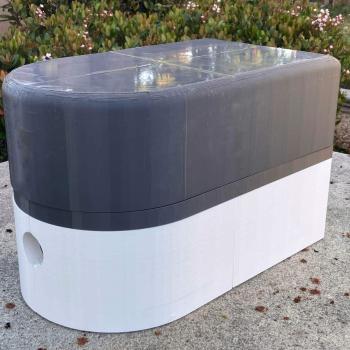
In collaboration with Kino Discovery, MicroJAMBRs' goal is to explore a more efficient pathway to isolating single cells for research through an innovative injection-molded microfluidic device.
Why is isolating cells so important?
Isolating cells for study, or single-cell analysis, is used in cancer research to examine gene expression, protein signaling, and mutations of cells in a tumor, allowing researchers to track treatment resistance and develop more targeted therapies.
In addition to oncology, single-cell analysis is useful in immunology, regenerative medicine, and pharmaceutical research markets.
The single cell analysis market is projected to exceed 1 billion dollars globally over the next decade.
With the help of Kino...
EECS
2025-2026
Fall
Winter Internally Mentored (faculty, staff, TA)
Winter Internally Mentored (faculty, staff, TA)
MicroMola
The United Nations estimates that 400 million tons of plastic are produced annually leading to 4.83 trillion microplastic (MP) particles floating in the ocean. When ingested by humans, MPs cause inflammation, endocrine disruption, and DNA damage. MicroMola is a semi-autonomous floating near-surface robot designed to reduce microplastic density and support ocean health monitoring efforts by agencies like the EPA and Orange County Water Board. The main objective of the robot is to reduce the microplastic density in a body of water with minimal maintenance. The key impact is filtration of MPs as MicroMola possesses the potential to help reduce the risk of MPs to human health and ocean ecosystems. During fall quarter, the initial design of the MicroMola was completed by determining a bill of materials, calculating the necessary power budget, and discussing the protocols for communication. In the following Winter Quarter, the objectives achieved were: completing a working...

MAE
2025-2026
Fall
Winter Internally Mentored (faculty, staff, TA)
Winter Internally Mentored (faculty, staff, TA)
Multiport Emissions Sampling Probe
The Multi-Port Exhaust Emissions Sampling Probe was built to improve the accuracy and versatility of exhaust gas sampling in H₂–NG combustion testing. It has multiple independently controlled sampling ports so that emissions can be sampled at various positions within the exhaust stream without having to move the probe. The design uses modular fittings (Swagelok), which allow the system to be easily assembled or disassembled and to be scaled up to accommodate different experimental test rigs. Each port is attached to a solenoid valve system that is controlled by an Arduino and DAQ interface to automatically switch between sampling positions. The probe is also able to be moved in three dimensions to provide complete coverage of the measurement area and to allow for adaptation to different combustor geometries. This system is more efficient and repeatable and has higher spatial resolution than previous systems for emissions diagnostics. It will serve as...
MAE
2025-2026
Fall
Winter Internally Mentored (faculty, staff, TA)
Winter Internally Mentored (faculty, staff, TA)
Narcotic Network: Autonomous Medical Delivery Drone
Narcotic Network aimed to design a lightweight device that provides quick and accurate medication delivery to patients living within 0.5 km of a pharmacy. Although Amazon Prime and FedEx Overnight offer one-day delivery, current commercial methods remain costly, inconsistent, and impersonal, especially outside urban areas. Therefore, underserved patients in suburban and exurban regions need novel medical delivery methods. The Narcotic Network Autonomous Delivery Drone, a 1.9 kg quadcopter, autonomously carries up to 0.5 kg of medication of various forms to patients who are unable to leave their homes. By transporting medication directly from pharmacies to elderly and terminal patients who need frequent medication refills, Narcotic Network enhances the customer experience by ensuring personalized, prompt delivery of high-priority medicine.

BME
2025-2026
Fall
Winter
Spring Internally Mentored (faculty, staff, TA)
Winter
Spring Internally Mentored (faculty, staff, TA)
Natavue
The Problem
Labor, measured by hand.
Manual cervical exams remain the standard for tracking labor progression.
Cervical dilation and effacement are still assessed much as they were a century ago: manually, subjectively, and intermittently. A clinician performs a physical exam, interprets findings based on experience, and records a discrete value in the chart. These exams are inherently uncomfortable for patients, carry a risk of infection with repeated assessments, and exhibit meaningful variability between providers.
Between assessments, there is little to no visibility into how labor is progressing. Exams are typically spaced one to four hours apart, creating extended gaps where changes go unobserved. During these intervals, clinicians must rely on indirect signs or wait for the next exam to reassess progression. Opportunities for timely intervention can be delayed, contributing to avoidable complications.

BME
2025-2026
Fall
Winter
Spring Internally Mentored (faculty, staff, TA)
Winter
Spring Internally Mentored (faculty, staff, TA)
Neovi Medical
NeoFusion — a fully mechanical syringe pump for neonatal care in low-resource settings
Introduction
Neovi Medical is a team of engineers dedicated to developing innovative medical solutions for low-resource countries. Our flagship product, NeoFusion, is a fully mechanical syringe pump designed to address neonatal mortality in regions with limited infrastructure and unreliable electricity.
Needs Statement
There are approximately 6,500 newborn deaths every day. Although many of these deaths are preventable with proper access to quality healthcare, the world continues to see a health crisis that disproportionately impacts low-resource countries, with 98% of newborn deaths occurring in these regions. The WHO has identified syringe infusion pumps as necessary medical devices in low-resource countries. Syringe pumps are able to deliver precise amounts of medications, fluids, nutrients, and electrolytes to neonates, and they are critical in helping preterm babies...
CBE
2025-2026
Spring
Industry Sponsored
Non-Alcoholic Beer Production
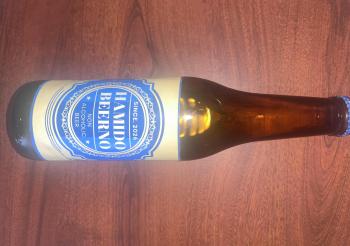
Non-alcoholic beer is a popular alternative to good ol' beer for people who are trying to kick their addiction, enjoy social events without getting drunk, or simply just enjoy the taste of beer. This project presents the design and techno-economic analysis of a non-alcoholic beer plant designed to produce 240 metric tonnes (MT) per day of non-alcoholic beer. The beer meets FDA requirements by being < 0.5% ABV. The beer production plant utilizes mashing, boiling, fermentation, and distillation to produce non-alcoholic beer. This project was estimated to have an initial investment of $11 MM, with a return on investment (ROI) of 1013% over the span of 10 years. Process simulations and safety, environmental, and economic analyses were performed to highlight the feasibility and profitability of non-alcoholic beer production.
CEE
2025-2026
Winter
Spring Industry Sponsored
Spring Industry Sponsored
OASIS: Direct-Potable-Reuse
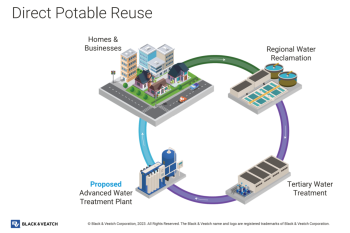
This project aims to design a Direct-Potable-Reuse (DPR) treatment to convert secondary effluent from an existing Regional Treatment Plant into potable water. The treated wastewater would be readily available for potable use directly after treatment. In addition to this treatment design, a distribution system is needed in order to transport the potable water to the optimum location for water distribution. The Moulton Niguel Water District heavily relies on the importation of potable water from external sources, which exposes the system to drought conditions, climate variability, and increasing supply costs. By converting treated wastewater into potable water using advanced processes, this project provides a locally controlled, drought-resistant water source. Long-term water security and regional resilience are strengthened for the 170,000+ residents served by the Moulton Niguel Water District.

EECS
2025-2026
Fall
Winter Internally Mentored (faculty, staff, TA)
Winter Internally Mentored (faculty, staff, TA)
Omni-Pedal: A Multi-Effects Pedal
“Omni-Pedal” is a digital multi-effect guitar pedal, that is accessible and affordable for guitarists or music enthusiasts of any skill level. The guitar pedal is built from the ground-up off of a Raspberry Pi to perform digital signal processing (DSP). Through DSP, seven guitar effects can be applied to the input signal from the guitar to change the sound of the guitar to the user's choice. The interactive GUI of the pedal also allows for accessible switching between the different guitar effects and also adjusting the volume, mix, and other parameters of the effect over the guitar's sound.
CEE
2025-2026
Winter
Spring Industry Sponsored
Spring Industry Sponsored
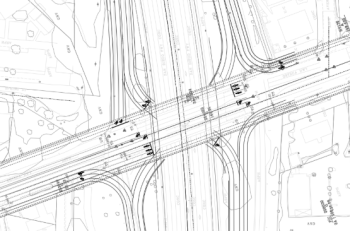
Ortega Highway & I-5 Interchange Improvement: Redesign and Feasibility Analysis of San Juan Capistrano's Compact & High-Volume Interchange
The interchange between Ortega Highway (SR-74) and I-5 in San Juan Capistrano has long experienced operational and geometric deficiencies, with documented issues dating back to 2006. The existing facility includes substandard 10-11 ft travel lanes, missing shoulders on SR-74, limited spacing between ramp terminals and nearby intersections, and recurring queue spillbacks that exceed available storage capacity. As a result, the interchange currently operates at Level of Service (LOS) F during both peak periods, with conditions expected to worsen under a no-build scenario. The project is further constrained by its surrounding environment, including San Juan Elementary School, Old Mission Cemetery, Horno Creek, and the historic Mission San Juan Capistrano. These features significantly limit available right-of-way (ROW) and restrict alignment and grading options, making improvements both necessary and complex. The project primarily serves commuters, local residents, and regional freight traffic using SR-74 and I-5.

MAE
2025-2026
Winter
Spring Industry Sponsored
Spring Industry Sponsored
Orthon - Dynamic Insole with Pressure Offloading for Gait Optimization
ORTHON’s purpose is to create a proof of concept for a dynamic orthotic system capable of treating severe foot conditions that concern painful flat foot and ulcer prone diabetic foot issues. This dynamic orthotic looks like a wearable shoe insert that can detect pressure and/or temperature in order to react with the necessary support for the user’s foot. For such conditions, the current medical orthotic solution is a rigid, static shoe insert originally invented in the 1950s. Meanwhile, the human foot is one of the most dynamic mechanical structures in the body with 33 joints and 26 bones. Although they may be clinically effective, many users find their rigid inserts to be uncomfortable, discontinuing the prescribed use and resulting in surgery.
20% of the world's population have some degree of flat feet, which essentially means that the medial arch in their foot is less than 10mm off...

BME
2025-2026
Fall
Winter
Spring Industry Sponsored
Winter
Spring Industry Sponsored
PartiClear
EECS
2025-2026
Fall
Winter Internally Mentored (faculty, staff, TA)
Winter Internally Mentored (faculty, staff, TA)
Passive Analog Beamforming Drone Monitor
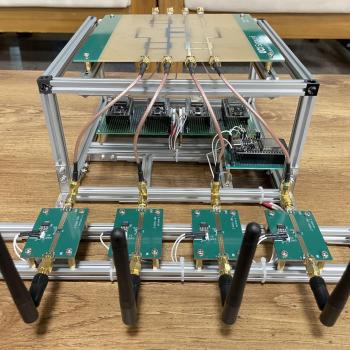
The FAA now requires all drones to be compliant with Remote ID, requiring an on-drone device that transmits information about itself over Blutetooth or WiFi. However, these signals can be weak and may not be picked up by user devices alone. Traditional methods of increasing reception range involve high cost and complex fully-coherent sampling digital beamformers. By leveraging a hybrid digital-analog beamforming strategy, this project achieves a similar result a remarkably lower cost, complexity, and footprint.
The goal of this project is to increase the reception range of 2.4GHz Bluetooth/WiFi signals by using an antenna array fed into a passive RF network allowing multiple different directional beams to be monitored at the same time using low cost microcontrollers. The collected data is sent over Bluetooth to a user device where the information is displayed on a custom React Native app.
MAE
2025-2026
Fall
Winter Internally Mentored (faculty, staff, TA)
Winter Internally Mentored (faculty, staff, TA)
PeterBot - Autonomous 4-Legged Walking Robot
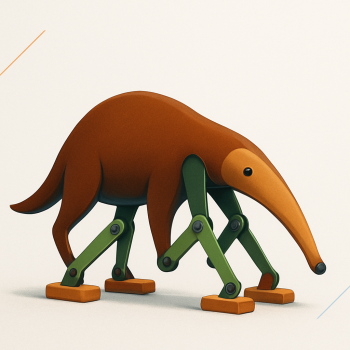
PeterBot is an autonomous walking robot developed by MAE 151 Team 7 under the sponsorship of Professor J. Michael McCarthy. Building upon Professor McCarthy’s MAE 183 mechanical walker design, this project focuses on transforming the existing walking platform into an intelligent system capable of autonomous navigation. The project’s main challenge is reliably integrating the electronics to control stiff geared mechanisms.
This work is relevant to students, researchers and roboticists interested in implementing autonomous mobility on unconventional non-wheeled platforms. By developing PeterBot, Team 7 created a foundation for future students to create autonomous walking robots that can complete higher-leveled tasks.
EECS
2025-2026
Fall
Winter Internally Mentored (faculty, staff, TA)
Winter Internally Mentored (faculty, staff, TA)
Photon Flight: Fiber-Optic Autonomous UAV
The Photon Flight (Autonomous UAV) project focuses on creating a high-performance tethered drone capable of sending two real-time video streams and complete flight telemetry through a single fiber optic cable. Using a lightweight fiber tether instead of conventional RF connections, the platform demonstrates how advanced networking, optical communications, and embedded systems can be merged within an aerial vehicle. Throughout the process, the team gains experience with IP video streaming, low-latency video encoding, network design, Embedded Linux integration, and connecting entire system with a flight controller (MATEK F405). The main objectives are to build a reliable, high-bandwidth communication system, show consistent fiber-based command and control, and assess the advantages of optical tethering for secure, interference-resistant drone operations. In the end, this drone acts as a test platform for new communication technologies in robotics, monitoring, and environments where electromagnetic interference is an issue.
The main goal of this project...

CEE
2025-2026
Winter
Spring Internally Mentored (faculty, staff, TA)
Spring Internally Mentored (faculty, staff, TA)
Pipe Rack System
This project involves the structural redesign of a segment of a larger steel pipe rack system in an oil refinery in Carson, California. The pipe rack system originally has two levels of 10 pipes and a third level of electrical cable running through the entirety of it. The client wants to support an air cooler addition and its respective maintenance platform and access ladders necessary for technicians to access the air cooler. The design is required to safely resist gravity (dead and live loads) and lateral (wind, seismic, and thermal) forces while meeting industry standards and serviceability requirements. The final design utilized steel framing with concrete fireproofing, engineered connections, and isolated concrete footings in compliance with professional (American Society of Civil Engineers) and material (American Institute of Steel Construction & American Concrete Institute) standards.