
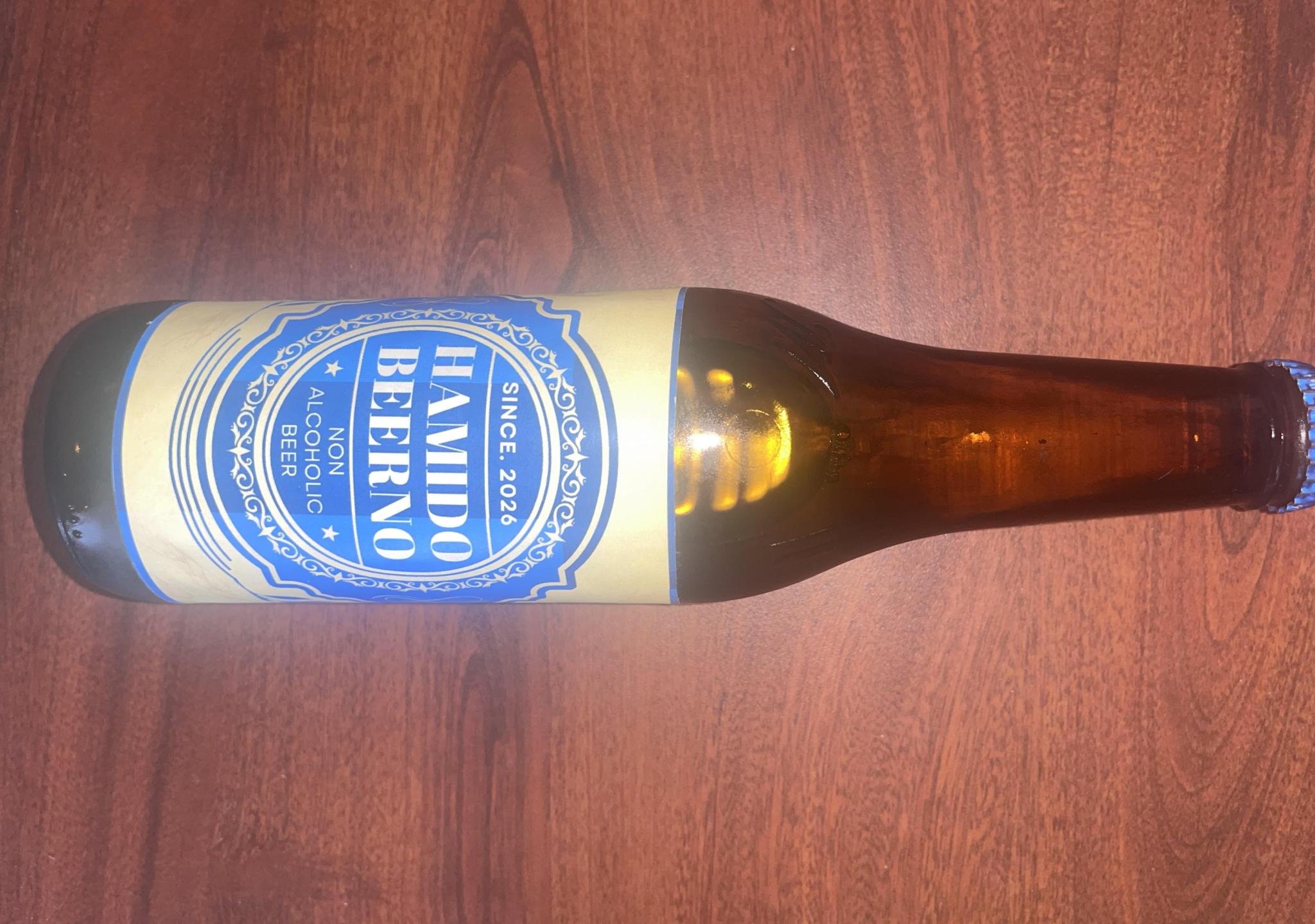
Non-alcoholic beer is a popular alternative to good ol' beer for people who are trying to kick their addiction, enjoy social events without getting drunk, or simply just enjoy the taste of beer. This project presents the design and techno-economic analysis of a non-alcoholic beer plant designed to produce 240 metric tonnes (MT) per day of non-alcoholic beer. The beer meets FDA requirements by being < 0.5% ABV. The beer production plant utilizes mashing, boiling, fermentation, and distillation to produce non-alcoholic beer. This project was estimated to have an initial investment of $11 MM, with a return on investment (ROI) of 1013% over the span of 10 years. Process simulations and safety, environmental, and economic analyses were performed to highlight the feasibility and profitability of non-alcoholic beer production.
Non-Alcoholic Beer Production
Summary
Technical Approach/Methodology
The production of non-alcoholic beer is composed of four main stages. The first stage involves mixing germinated barley, known as malt, with hot water to produce a sweet liquid mixture called wort and later filtering out organic solids. This stage occurs in two vessels: a mash tun and lauter tun, respectively. The second stage of the process involves adding a specific type of dried flower, called hops, to the sweet liquid wort. Hops add the bitterness flavor associated with beer. Excess organic matter is then filtered out again. The second stage occurs in two other vessels: a wort kettle and whirlpool. The third stage of the process is fermentation, where yeast and sweet liquid wort react to form alcohol and carbon dioxide. This happens in a large tank called a fermenter unit. The final stage of the process involves distilling off alcohol from the beer and bubbling in carbon dioxide to get the final bubbly non-alcoholic beer product. This stage occurs in a vacuum distillation column and a saturated vessel, respectively. This process was rigorously modeled in AVEVA PRO/II, a process simulation software. With a solid feed of 15 MT per day of malt and 550 MT per day of water, most of which was used for heat integration, 240 MT per day of non-alcoholic beer was produced.
Simulation software such as AVEVA PRO/II was specifically used to create a heat, material, and mass balance for the non-alcoholic beer production process, taking into account unit and stream compositions and heat exchanger, vessel, and tower duties to understand process-wide energy distribution. Pumps were also added in the process to account for the movement of species throughout the beer production process. Another software called Aspen Energy Analyzer was used to conduct pinch analysis. Pinch analysis is a systematic technique used to optimize the energy efficiency of a process. Results from Aspen Energy Analyzer provided a pinch where the hot side and cold side of the process could be isolated, allowing for heat integration. A major result from pinch analysis concluded that it was optimal to use the heat from the whirlpool unit to heat up process water for the mash tun. This was done via a heat exchanger. Utility streams were also heavily implemented throughout the process, with steam for heating and cold water for cooling. Aspen Exchanger Design and Rating (EDR) software was used to size plate-and-frame heat exchangers for the process. Due to the smaller scale of the beer production process, plate-and-frame heat exchangers were optimal for beer production due to their ability to handle cold process streams, high pressure drops, and viscous fluids such as beer. Lastly, Aspen Cost Estimator software was used to estimate the cost of the entire non-alcoholic beer production plant by taking into account all process equipment and operating conditions, such as individual unit temperatures, pressures, and flow rates. The total capital investment of the non-alcoholic beer production plant was estimated to be $11.03 million (MM) dollars with a payback period of only 2 months by selling non-alcoholic beer for $1780 per MT.
Process safety, site location, and environmental regulations were also taken into consideration. San Antonio, Texas was ultimately chosen as an ideal place for the non-alcoholic beer plant due to low taxes, low utility costs, a large labor pool, and strong industrial infrastructure. A downside to this location is the weather, where the average temperature can be between 95 and 100 degrees Fahrenheit, potentially leading to additional process cooling costs. The plot layout of the plant was designed to prioritize safety and easy access to pumps, heat exchangers, and process units (the mash tun, lauter tun, column, etc.). Sufficient space and controllers were implemented to improve safety. Materials used in the equipment throughout the process were not classified as hazardous by the US OSHA Hazard Communication Standard 2024. No carbon dioxide was released into the environment at any time during the process, obeying the Clean Air Act. All the carbon dioxide made in the process of fermentation was bubbled into the beer downstream to produce fizz. The solid waste from the lauter tun was used as livestock for cows! Other solid organic waste and trace amounts of ethanol distilled off from the column were sent off-site for processing.
An economic analysis was conducted to evaluate the financial viability of the proposed non-alcoholic beer production process. The total initial investment was estimated at approximately $11.0 MM, including $9.6 MM in fixed capital and $1.4 MM in working capital. The process is projected to generate $142 MM in annual revenue, with an estimated production cost of $3.3 MM per year and a positive annual cash flow of $80.5 MM after taxes and depreciation. Over a 10-year project life, the facility achieved a net present value of $381.3 MM and a return on investment of 914%, indicating strong profitability and economic potential under the assumptions used in this study.
Outcomes
By the end of the project, we produced a complete technical and economic design for an industrial-scale non-alcoholic beer production process. The final process converts malt, water, hops, and yeast into non-alcoholic beer through mashing, lautering, boiling, whirlpool separation, fermentation, and vacuum distillation. The proposed facility produces approximately 240 MT/day of non-alcoholic beer.
Specific deliverables included a process flow diagram, heat and material balance, equipment list, pump and vessel sizing calculations, vacuum distillation column design, and mechanical specification information for major equipment. We also completed a heat integration/pinch analysis to evaluate energy use in the process. For the economic portion, we developed a cost of production worksheet, capital cost estimate, project cash flow diagram, and economic analysis spreadsheet including revenue, production cost, cash flow, payback period, ROI, and NPV. The non-alcoholic beer plant designed in the project produces roughly 80,000 MT of non-alcoholic beer annually. The total capital investment expected is $11.03 MM. Fixer operating costs come down to $3.3 MM per year. The Net Present Value (NPV) of the process concludes that a 10-year project has an NPV of $381.1 MM and a 20-year project has an NPV of $577.6 MM. The cash flow of the process is roughly $80.55 MM per year, and the simple payback period is about 2 months. The results from the report and massive amounts of positive returns seen by the economic analysis prove that this process would make strong results on any investment. Further financial modeling could take into account selling organic waste from the lauter tun to farms and processing distilled ethanol from the distillation column.