
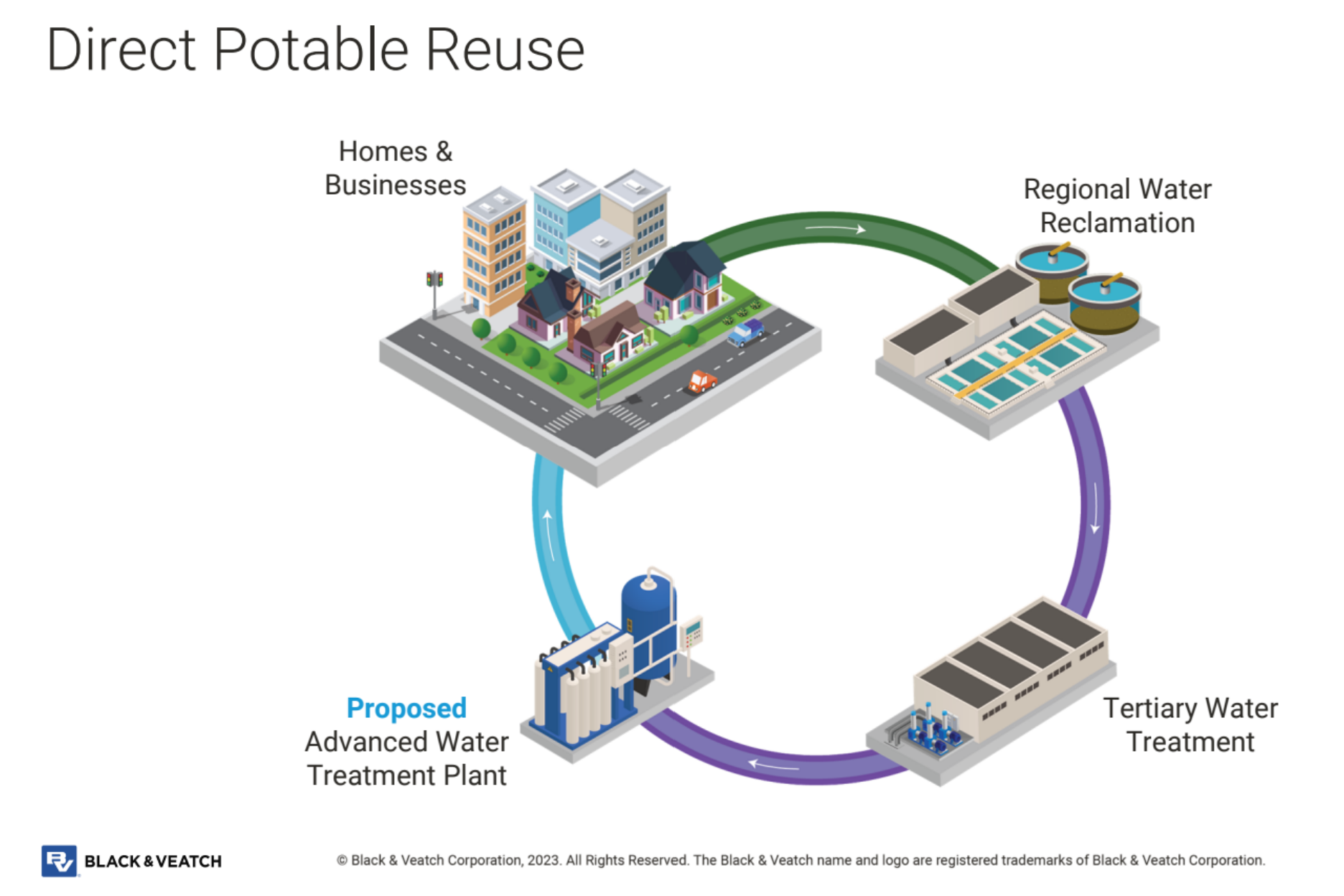
This project aims to design a Direct-Potable-Reuse (DPR) treatment to convert secondary effluent from an existing Regional Treatment Plant into potable water. The treated wastewater would be readily available for potable use directly after treatment. In addition to this treatment design, a distribution system is needed in order to transport the potable water to the optimum location for water distribution. The Moulton Niguel Water District heavily relies on the importation of potable water from external sources, which exposes the system to drought conditions, climate variability, and increasing supply costs. By converting treated wastewater into potable water using advanced processes, this project provides a locally controlled, drought-resistant water source. Long-term water security and regional resilience are strengthened for the 170,000+ residents served by the Moulton Niguel Water District.
OASIS: Direct-Potable-Reuse
Summary
Technical Approach/Methodology
The project utilizes Treated Water Augmentation, a system where treated wastewater is not returned to the influent but is instead made readily available for potable use directly after treatment. The team selected a multi-barrier advanced water purification train consisting of an Equalization Basin, Ozonation, Biologically Activated Carbon (BAC), Ultrafiltration, Reverse Osmosis (RO), UV Advanced Oxidation Process (UV/AOP), Chlorination, and Stabilization. This specific methodology was chosen because it directly abides by California Title 22 Regulations, ensuring the system meets or exceeds all minimum log removal requirements for viruses and pathogens.
Outcomes
JKT Incorporation successfully designed a Direct-Potable-Reuse treatment facility that would support 3 million gallons of potable water per day. The final project produced a comprehensive suite of deliverables, including the treatment process design, precisely sized advanced treatment technology, site layouts, and detailed cost estimates. Specific technical accomplishments include the creation of CAD site layouts, distribution pipeline plans, and P&IDs for the entire treatment train. The design ensures the facility fits within allotted site limits while meeting the quality standards necessary to protect public health.