
Low visibility caused by fog presents a significant safety challenge for drivers on the road. This project presents FogHacks, an AI powered hazard detection system designed to detect road hazards in foggy environments using image detection ML models and defogging algorithms. The system integrates a Raspberry Pi 5 with a Pi Camera to capture real world images then utilizes defogging techniques to improve visibility before performing object detection. A customized YOLOv10 model was trained on road sign and foggy driving datasets to identify key road hazards such as cars, buses, bicycles, pedestrians, and traffic signs. To improve detection performance under foggy conditions, two defogging techniques, Contrast Limited Adaptive Histogram Equalization (CLAHE) and Dark Channel Prior (DCP), were implemented in the preprocessing pipeline. Testing on this custom model found improvements in accuracy as compared to the base YOLOv10 model, with some variation in results due to factors such as glare...

Winter Internally Mentored (faculty, staff, TA)
FogHacks

Spring Internally Mentored (faculty, staff, TA)
Formula Friction: Brake Rotor Dynamometer
The braking system of an FSAE Electric Vehicle operates under highly transient thermal and mechanical conditions, where frictional heating, material behavior, and heat dissipation strongly influence performance and reliability. During repeated or high-energy braking events, rotor and pad temperatures can rise rapidly, altering the effective coefficient of friction and therefore modifying brake torque generation, stopping distance, and vehicle deceleration. Understanding these temperature-dependent effects is essential for accurate brake modeling, safe design margins, and competition performance.
Winter Internally Mentored (faculty, staff, TA)
Fuel Blending System Control and Demonstration
The UCI Combustion Laboratory tasked our team with updating their currently outdated hardware and control program for their gas mixing station.
The laboratory was previously using twenty-year-old FieldPoint hardware and software to control their gas mixing station, which is used to mix different gas compositions for combustion research. These experiments are critical for understanding fuel behavior, improving energy efficiency, and supporting safer and more sustainable combustion systems in industrial and aerospace applications.
Due to the entirety of the gas mixing station being outdated, a complete overhaul of both the hardware and software was required to ensure that the system would remain operable into the future. Additionally, new functionality was needed to ensure accurate gas mixing under high-pressure conditions (approximately ten atmospheres), including implementing an internal validation check to ensure the specific gravity of the gas composition matches the theoretical...

Green Ammonia Plant
Ammonia is a globally indispensable chemical commodity because it serves as the foundational building block for agricultural fertilizers. Without it, commercial farming operations could not sustain the food supply required for the general population. It is also becoming a vital, carbon-free energy carrier used to transport hydrogen cleanly across the world. Traditional "grey ammonia" relies on burning fossil fuels, like natural gas or coal, to extract the hydrogen needed for the process. Because this current method is so heavily dependent on hydrocarbons, it releases massive amounts of carbon dioxide, making the chemical industry a huge contributor to global greenhouse gas emissions. This project designs a "green ammonia" facility that completely eliminates fossil fuels from the production lifecycle. Instead of reforming hydrocarbons, the plant uses clean thermal and electrical energy from small modular nuclear reactors to power high-temperature steam electrolysis, splitting water into clean hydrogen. This hydrogen is then combined...

Green Ammonia Plant
Ammonia is a widely used industrial chemical, primarily in fertilizer production, and is also gaining attention as a potential carbon-free energy carrier due to its high hydrogen content and established global distribution infrastructure. However, conventional ammonia production is heavily dependent on fossil fuels, particularly through steam methane reforming, which results in significant greenhouse gas emissions. As a result, there is growing interest in alternative low-carbon production pathways.
This project focuses on the design and simulation of a green ammonia production process powered by renewable electricity. Hydrogen is produced through water electrolysis and subsequently combined with nitrogen in a Haber-Bosch-based catalytic synthesis loop to produce ammonia. The objective of the work is to develop a technically consistent and economically evaluable plant design that can be used for preliminary investment assessment.

Spring Industry Sponsored
Gridley Road Bridge
The Gridley Road Bridge project focused on developing a replacement design for an existing bridge located in Cerritos, California, that spans Interstate 91. The goal of the project was to evaluate the existing bridge plans and create a simplified structural design that demonstrates the engineering principles used in modern bridge design. The proposed replacement bridge was widened to accommodate increased traffic demands and improved pedestrian accessibility while maintaining structural safety and efficiency. The project addressed the need for aging infrastructure upgrades and provided insight into how bridges are analyzed, designed, and modified to meet changing transportation needs. Communities that rely on this bridge, including motorists, pedestrians, and local agencies responsible for transportation infrastructure, are directly affected by the performance and reliability of structures such as the Gridley Road Bridge. Through this project, our team gained practical experience applying industry design standards and understanding the challenges associated with real-world bridge...

Winter Internally Mentored (faculty, staff, TA)
Grocery Store Robot: Arm Manipulation
Modern grocery stores and warehouses still rely heavily on manual labor to fulfill item retrieval tasks from shelves. This process is time-consuming, labor-intensive, and prone to inefficiencies as order volumes continue to grow. There is an increasing demand for automated systems that can improve operational efficiency while maintaining safety and precision in retail and warehouse environments.
This project focuses on the development of an autonomous robotic arm capable of retrieving items from shelves in a grocery store setting. The system aims to perform precise, collision-free grasping of target items while operating in a constrained shelf environment. By automating repetitive picking tasks, the project seeks to improve efficiency and reduce the reliance on manual labor in grocery fulfillment operations.
The project is sponsored by Professor Solmaz Kia and developed by a student team in the MAE capstone design program. The primary stakeholders include grocery store operators,...

Winter Internally Mentored (faculty, staff, TA)
Grocery Store Robot: Base Team
The goal of the project is to create a proof-of-concept for an autonomous robot to aide in grocery/retail stores. This robot would be would be assigned items to grab, and it would plan an optimized path to retrieve the items. This project is split into two teams; our team focuses on the robotic base that allows for movement and navigation. The base of the robot must be able to localize itself and plan a path to and from the target. If during operation the robot should detect an obstruction, the robot needs to recalculate a path around it while leaving adequate space to avoid collision. In addition to the functions above, the robot must be able to detect when it is within arms reach of a target item using the dimensions of each arm linkage and distance (including height) from the target. This project can make the shopping process...

Winter
Spring Industry Sponsored
HDAC - High Damping Aluminum Composites
Vacuum robotics used for high-precision chip handling requires materials that minimize vibration and settling time without sacrificing stiffness or compatibility with high-vacuum environments. This project investigates high-damping aluminum-based material solutions for Persimmon Technologies’ robotic arms to improve dynamic performance beyond the current Aluminum 6061 design baseline. Improvements would decrease cycle time, leading to better productivity. Three candidate pathways were evaluated: aluminum metal matrix composites, additively manufactured lattice structures, and cold-spray processing. Cantilever damping tests, tensile testing, three-point bend testing, and scanning electron microscopy were used to compare damping ratio, natural frequency, stiffness, and microstructure across the sample sets. Initial results show that damping behavior depends strongly on microstructure and fabrication route, with cast A356 aluminum alloy outperforming baseline 6061 in damping, while the fly-ash composite underperformed expectations. Ongoing work focuses on identifying the most promising material architecture for maximizing damping while maintaining the mechanical performance required for robotic arm...

Winter
Spring Industry Sponsored
Hema Weave
Hema Weave
Weave got you covered.
Electrospun Chitosan Nanofiber Scaffold for Wound Dressing and Hemostatic Applications.
Spring Industry Sponsored
Here's the Catch
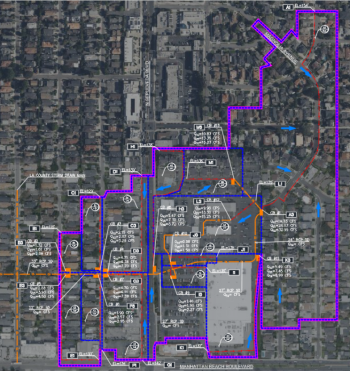
A hydrology study is performed in accordance with the Los Angeles County Hydrology Manual Standards for the hydraulic analysis of the existing catch basin located at 14th & Magnolia in Manhattan Beach, CA. The city has experienced frequent flooding in the area and would like to identify the deficiencies in the storm drain system. The study is to recommend improvements to address the frequent flooding that occurs.
Winter Internally Mentored (faculty, staff, TA)
HERMES: Hazardous Environment Reconnaissance and Mapping Exploration System
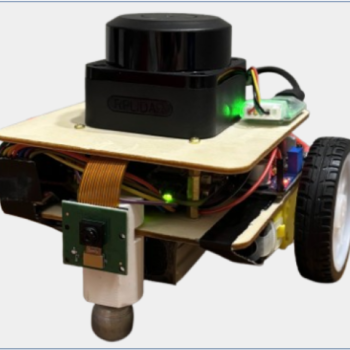
Disaster situations require a swift and agile response to identify all victims in hazardous environments, but human efforts may be limited due to environmental severity. HERMES is an autonomous robotic system composed of a compact robot and a centralized server that will aid rescue operations. Rather than relying on a static map, the server utilizes behavior trees to drive autonomous decision-making. This framework enables the robot to systematically explore unknown spaces by dynamically balancing thorough area coverage with victim identification. At deployment, the controller synthesizes sensor data to localize the robot, map victim positions, and ensure autonomous, collision-free navigation.

Spring Internally Mentored (faculty, staff, TA)
Heterogeneous Multi-Agent Containment Control : Reviving Turtlebot2 for Escort Mission
The TurtleBot2 was release to the public in 2012 and while capable, outdated software makes them unable to be used for ROS2 research, and although some methods exist to make certain functions possible, there are no readily available examples combining both camera and motor functionality. Our project proves the feasibility of cooperative operation across different robotic platforms and provides a functional foundation for future escort mission research with the TurtleBot2s. With additional sensing and navigation capabilities, the framework we set can be expanded into a more advanced autonomous escort system and greatly benefit issues beyond the university setting.
Our project can influence future teams and graduate students working under our sponsor as well as others currently working with TurtleBot2s. They are now able to build off a functioning physical system of a heterogeneous robot team. Beyond the university environment, our project has potential applications in autonomous escort...

Winter Internally Mentored (faculty, staff, TA)
High Frequency Trading Project
The global financial markets process trillions of dollars daily, making microsecond-level order execution critical for high-frequency trading (HFT) profitability. Standard CPU-based trading engines often struggle with performance bottlenecks due to sequential execution and memory access limitations. This project addresses the need for ultra-low-latency, high-throughput computing to execute large volumes of trades in real time. By overcoming software limitations, the system provides a scalable solution that benefits modern financial institutions and traders relying on speed and reliability. The system utilizes a hybrid hardware-software architecture, employing an FPGA-based Tensor Processing Unit (TPU) to run a lightweight neural network for intelligent order placement. A novel FPGA-based MultiQueue BRAM architecture is used for deterministic, parallel order matching. Meanwhile, the host computer manages over 100,000 orders using lock-free Red-Black Trees for cache-efficient, large-scale storage. The machine learning component leverages a Proximal Policy Optimization (PPO) reinforcement learning agent to dynamically rank trades for caching in...

Winter
Spring Industry Sponsored
High Performance Dental Ceramics Through Additive Manufacturing
Nearly half of all Americans are dissatisfied with the color or appearance of their teeth, yet the path to a confident smile remains lengthy and highly inefficient. Dental veneers offer one of the most effective and straight forward options, with around 8% of Americans opting for veneers. Traditional approaches such as milling are time-consuming, and waste a significant amount of material. Additionally this route requires multiple office visits and additional time for labs to process and produce the final product. For patients with more complex definitions, these timelines can stretch even further putting additional pressure on dentists and suppliers.
This project aims to address this issue by exploring the feasibility of additive manufacturing, specifically DLP, for the production of dental veneers. Rather than cutting/milling down a block of material, DLP builds the part layer by layer, enabling greater geometric precision, reduced material waste, and potential for same...
Winter Internally Mentored (faculty, staff, TA)
High Tech Art Exhibit - The Interactive World of Anteaters
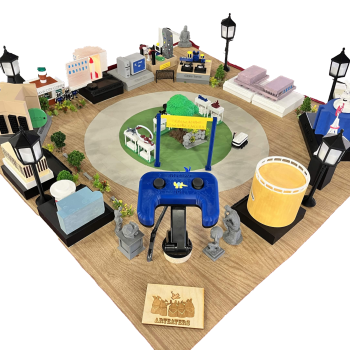
The job of an engineer is to solve problems that occur within society whilst minimizing costs and maximizing the efficiency, safety, and applicability of their solutions. Where most other design projects aim to solve quantifiable problems, our project aims to expand engineering by working to solve the growing problem of fleeting creativity and joy through an artistic approach in addition to rigorous engineering analysis. In the digital era, screens and passive consumption dominate our attention, defining a societal need for tangible, interactive experiences that reconnect people with their sense of wonder. The High-Tech Art Exhibit aims to reframe the UC Irvine community's view of engineering as more than sterile technology and profit, instead focusing on the inherent creativity and joy that is deeply embedded within the design process itself.

Spring Industry Sponsored
Hillside Land Development Senior Design Project
Our project takes a vacant 3.38-acre hillside parcel at 5800 Carbon Canyon Road in Brea, developing the complete preliminary civil design needed to subdivide it into seven single-family lots. We covered street layout, grading, storm drainage, sewer, and water. The site has sat undeveloped for a reason, however. It carries 40 to 50 feet of elevation change, has a single feasible access point off Carbon Canyon Road, and every street and pipe built on it has to work with that slope.
Parcels like this are increasingly what remains in north Orange County, where housing demand is strong: but flat, easily developed land is gone. The need we are addressing is practical. Our team wants to show that a steep infill site can support a code-compliant, financially realistic subdivision.
The outcome affects future homeowners, the City of Brea, which would...

Winter Internally Mentored (faculty, staff, TA)
HoloPhase
HoloPhase is a projection system designed to render clear images through dynamically changing turbid media such as fog, where Mie scattering would otherwise blur and distort the projected content. Our approach combines computational optics, a Digital Micromirror Device (DMD)– based wavefront shaper, and a camera-in-the-loop optimization pipeline that iteratively updates the projected wavefront to compensate for scattering. By jointly designing the optical setup, fog chamber, and control software, we can recover higher-contrast, sharper images through fog than conventional, uncorrected projection.
Hoover Street Bikeway and Signal Redesign
Our project focuses on redesigning Hoover Street between Westminster Boulevard and Hazard Avenue to improve safety and comfort for bicyclists, pedestrians, and drivers. The existing corridor mainly supports vehicle traffic and only has limited bicycle protection through Class III bike facilities. This creates safety and comfort concerns for people who want to bike or walk through the area. Our project matters because a safer street design can encourage active transportation, reduce conflicts between cars and cyclists, and make the corridor more accessible for the surrounding community. The people most affected are cyclists, pedestrians, nearby residents, students, drivers, and anyone using Hoover Street to reach local homes, schools, businesses, and nearby destinations. Our final design proposes a safer corridor with a Class IV two-way protected bikeway, improved pedestrian crossings, updated signal timing, and new traffic signal equipment.

Hybrid Mechanical Energy Storage
Background and Project Scope
The Problem
Modern electrical grids face a fundamental challenge: energy supply and demand rarely align. Renewable energy sources such as solar and wind are inherently intermittent, generating power when conditions allow rather than when consumers often need it. To bridge this gap, grid operators, remote facilities, and industrial users depend on energy storage systems that can absorb excess supply and release it on demand, a practice known as electrical load shifting.
Today, electrochemical batteries dominate this market. While effective, they carry significant drawbacks that limit their suitability in certain contexts: they degrade with each charge cycle, rely on toxic and expensive materials, present fire and chemical hazard risks, and impose ongoing replacement and disposal costs. For long-duration or emergency storage applications, these limitations are critical failures.
The Need
There is a clear need for an...
Winter Internally Mentored (faculty, staff, TA)
HydraShift - RC Boat to Submarine
RC boats are widely commercially available, while RC submarines remain a costly, niche product. Therefore, the objective of this project is to transform an off-the-shelf 1:18 scale RC boat into a submersible submarine capable of underwater and surface maneuverability, and can dive to a depth of at least three meters before reliably resurfacing. Some goals in this include developing a ballast system to resist hydrostatic pressure and achieve buoyancy, sealing electronics to ensure waterproofing at high depths, and underwater propulsion.

Winter
Spring Industry Sponsored
InfraMed
InfraMed
Empowering post-stroke recovery with NIR.
THE PROBLEM
Reperfusion
without repair.
Ischemic stroke:
#1Cause of long-term disability.
#2Cause of death worldwide.
Current ischemic stroke thrombectomy procedures successfully remove the occluding blood clot but do not address or restore the downstream tissue and cellular damage caused by prolonged ischemia.
Spring Industry Sponsored
Intersection Improvements Along California Ave
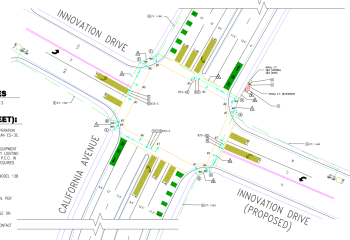
This project forecasted and analyzed the traffic impacts at two intersections along California Ave, which is expect to increase due to two future developments: a 2500+ housing unit area and a research park. Overall, the team recommends to build a traffic signal at California Ave/Innovation Dr and install a right turn overlap at California Ave/Academy Wy because without these improvements, they are both projected to fail to meet City of Irvine’s minimum level of service (LOS) when those developments open to the public in 2028. With these improvements, the intersections are projected to exceed the minimum LOS required, implying that these improvements will alleviate heavy traffic congestion at both intersections.
**Disclaimer: The housing development is real and is currently in development. However, the research park is a hypothetical scenario. The both the residential project and the research park have some hypothetical assumptions made - This study is...

Spring Industry Sponsored
Keeping San Bernardino Moving: Taxiway Alpha Reconstruction
A full-depth reconstruction of Taxiway Alpha at San Bernardino International Airport, designed to FAA standards and delivered as a complete bid set. Our team rebuilt the airport's main taxiway, along with parts of Taxiway Echo and A2, so it can carry a heavier future fleet for a 20-year design life.

Winter Internally Mentored (faculty, staff, TA)
Key Vending Machine
The UCI engineering facilities and students rely on a large number of room keys including things for labs, workshops, and specialized project spaces. Currently, key distribution is handled manually by staff members who must approve requests, check out keys, and track returns. This process is often slow, inefficient, and difficult to keep organized. A more efficient and automated solution is needed to streamline the key checkout and return system, reduce staff workload, and improve overall organization. This project addresses this need by developing an automated key vending machine that securely stores and dispenses keys through a digital request and approval system, improving accessibility, efficiency, and trackability for all students, staff, and faculty who rely on these facilities.