Design Build Vertical Flight

Background

DBVF is a student-run engineering team at UC Irvine that competes in the Vertical Flight Society’s annual Design-Build-Vertical Flight competition. Each year, university teams design, build, and fly electric vertical takeoff and landing eVTOL(electric-powered remote-control vertical take-off and landing) aircraft based on a real mission scenario.

SubZero: RC Boat to Submarine

This project focuses on converting a commercially available 1:18 scale RC boat into a fully functional RC submarine to address a gap in the remote-control vehicle market. Most RC boats are limited to surface operation, while existing RC submarines are costly, specialized, and restricted in depth capability. By redesigning an off-the-shelf RC boat, this project aims to achieve both surface and underwater operation, with the ability to submerge to a depth of 9 ft, travel 25 yards across a pool, and resurface. The design focuses on addressing challenges in waterproofing, buoyancy, and propulsion through the integration of a ballast system, sealed hull, and control system.

UCI Rocket Project - Liquids Team: Latterally Actuated Technical Test Environment (L.A.T.T.E.)

Laterally Actuated Technical Test Environment

Successful launch operations for the UCI Rocket Project Liquids Team’s rocket, MOCH4, depend on performing pre-launch procedures efficiently and consistently at the Friends of Amateur Rocketry (FAR) site. Delays in setup increase exposure to rising wind speeds and propellant boil-off, both of which reduce launch success and altitude performance. To maximize performance and prevent the waste of money and time on the trip for an unsuccessful launch at the FAR site, the team is developing a modular launch rail that matches the FAR setup, enabling full-scale cold flows in the actual launch configuration and providing a realistic environment for assembly practice. This system reduces setup variability, improves data accuracy, and helps ensure reliable and repeatable launch operations.

Zot-Under-Pressure: Fluid Powered Vehicle Challenge

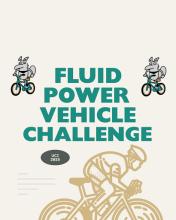
Fluid Power Vehicle Challenge UCI 2025

The Zot-Under-Pressure team is UC Irvine’s second-generation entry into the National Fluid Power Association’s Fluid Power Vehicle Challenge (FPVC). This competition requires engineering students to design a hydraulic-powered vehicle capable of competing in sprint, endurance, efficiency, and regenerative braking events. Our design integrates a pedal-driven hydraulic pump, high-pressure accumulator, efficient charging/discharging system, and regenerative braking capable of storing braking energy for reuse. This year's goal for the vehicle is to reach the top three among the nationally competing teams. The project advances sustainable energy storage by converting human power into hydraulic propulsion while exploring innovative regenerative techniques.

HydraShift - RC Boat to Submarine

HydraShift aims to convert an off-the-shelf 1:18 scale RC boat into a functional submarine. The submarine will be capable of underwater maneuverability and diving to a depth of at least five meters before reliably resurfacing. As RC boats are typically designed exclusively for surface operation, this transformation will require developing a ballast system to resist hydrostatic pressure and achieve buoyancy, sealing electronics to ensure waterproofing at high depths upon full submersion, and underwater propulsion. 

Mag-Vengers

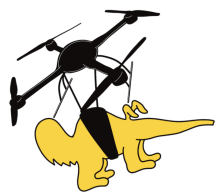
Mag‑Vengers is a senior design project in collaboration with a local company that focuses on advancing drone functionality through the use of electropermanent magnets (EPMs). The team is developing a lightweight, durable drone attachment system embedded with EPMs to create a strong, switchable magnetic latch. Controlled electronically, the latch can be turned “on” or “off” to securely hold and individually release six (or more) sensor pucks during high‑speed flight.

The project’s goal is to deliver a fully functional prototype that is reliable, aesthetically clean, and easy to modify for future teams or organizations. Over the course of two academic quarters, the team will apply skills in CAD modeling, simulation, prototyping, and documentation to design, test, and refine the system. Milestones include initial coil and component prototypes in Fall 2025, a second prototype for presentation at the Winter Design Fair, and a final prototype by Winter 2026.


ARISE

ARISE Drone Team logo

Our team, ARISE, is working on designing and building a fully autonomous quadcopter capable of delivering a 1-pound payload a 50-meter mission distance with 1-meter precision and reliability. Our team is developing a system that combines mechanical design, electronics, sensing, and control. The drone features a lightweight but rigid frame, brushless motors, and a 4S LiPo power system sized through thrust and endurance calculations. Autonomy is achieved through the Pixhawk 6C flight controller, supported by ESCs, a power distribution board, and a UBEC to ensure stable power delivery. For obstacle detection and target recognition, we are using a OpenMV Cam H7 Plus for color detection to detect the target drop off location. The release mechanism is a servo latch to hold the one pound payload. The project is following a structured engineering design process, including functional decomposition, stakeholder needs analysis, and subsystem trade studies, to ensure safety, manufacturability, and mission success.

Stair Climber Robot

Our senior design project focuses on developing a small robotic vehicle capable of autonomously or remotely carrying a standard water bottle up the 19-step staircase outside the UCI Engineering Gateway. The staircase’s steep incline (≈ 28–30°) and uniform geometry make it an ideal test environment for evaluating robotic stability, traction, and torque control. The main design challenges include maintaining balance on steep risers, generating sufficient torque to lift a 5 kg total mass, achieving autonomous step detection, and limiting system weight to under 10 lb for safe outdoor operation. The goal is to produce a simple, reliable, and efficient mechanism that can consistently climb all 19 steps without ramps or tethers while maintaining a tilt angle under 10°. A successful design will demonstrate over 90 % climb success rate and stable performance across multiple trials, showcasing the integration of mechanical design, control systems, and power optimization.

Pages