AeroMed

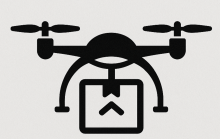
Local businesses and pharmacies require autonomous deliveries to avoid ground traffic and save costs. Patients that would benefit from quick delivery services include the elderly, disabled, and those with busy schedules. Our project aims to utilize an autonomous drone to deliver pharmaceuticals in an urban setting. As a form of simulation, we will be delivering one pound payloads to a location that is marked by a GPS location. We hope to accomplish lowered delivery times, reduce effort, costs, and less energy expended to physically retrieve packages. The project cost is projected to not exceed $600 and will navigate to a target located at least 50 meters away.

Team 28 Stair Climber

Team 28 is developing a flat-plate stair-climbing robot designed to carry a standard water bottle up the Engineering Gateway stairs. The design uses a rigid flat-plate chassis paired with oversized wheels to maintain continuous traction and clearance on 7″ rise × 11″ run steps. The flat-plate structure simplifies manufacturing and keeps weight low, while the large-diameter wheels reduce impact forces and allow smoother transitions between steps. Over Fall quarter we focus on concept validation, chassis strength, and wheel sizing; Winter quarter emphasizes drivetrain integration, speed optimization, and testing. Success will be measured by climbing all steps as fast as possible without tethering or payload loss. The project demonstrates the balance between mechanical simplicity and high-mobility design in stair-climbing robotics.

Undercurrent: RC Boat to Submarine

The project aims to convert a 1:18 scale RC boat into a functional RC submarine that can operate on the water surface and submerge to at least 3 meters, with reliable surface return. Our team will explore design modifications addressing the limitations of existing RC boats, particularly in waterproofing, buoyancy, and propulsion, involving concepts from hydrodynamics and mechatronics.

Grocery Store Robot: Arm Manipulation

This project develops an autonomous robotic arm system capable of collision-free grasping of items from grocery store shelves. The ArmY team integrates kinematic modeling, ROS 2 control, MoveIt-based motion planning, and Gazebo simulation to design a reliable and safe manipulation platform. The robotic arm operates in coordination with a mobile base developed by Team 1, enabling fully autonomous item retrieval in narrow aisle environments. Key focuses include perception-driven grasping, real-time control, obstacle-aware path planning, and hardware–software integration. By improving efficiency, safety, and repeatability in retail and warehouse settings, this project demonstrates the potential of robotic automation to transform manual picking workflows.

Wheel of Deception

This project details the design and implementation of an interactive wheel engineered for a controlled outcome. The primary objective is to develop a system that appears to function as a standard, unbiased game of chance while allowing an operator to dictate the final position of the spinner secretly. A key design constraint is that this manipulation must be entirely undetectable to the user, preserving the illusion of a fair and random spin. The final prototype is a fully realized, unpolished apparatus where all the electronic components are completely concealed within the housing. The wheel responds to a user's physical spin with natural momentum and damping. However, it is also remotely programmable, enabling an operator to pre-select a winning segment.

Key Vending Machine


Our project focuses on designing and developing an automatic Key Vending Machine that manages access to every room within the UCI School of Engineering. The current system relies heavily on staff to approve requests, distribute keys, and manually track returns, which can be inefficient, slow, and prone to disorganization. Our solution aims to streamline this process by fully automating key requests, approvals, checkouts, and returns through an integrated background database.

The machine utilizes a motorized gantry system, magnetic key blocks, and organized storage slots to securely store, identify, and dispense keys based on verified user authorization. Additional subsystems include a user interface for requesting and retrieving keys as well as automated logging to maintain accurate real-time records. This project ultimately aims to reduce staff workload while improving overall efficiency, reliability, and organization for the engineering school.

Toy Ball Cannon - The BOOM Squad

Conceptualized by the MAE Department's Teaching Staff, this project seeks to design, manufacture, and test a small cannon that is capable of (1) locating and tracking an RC car from a distance of 5-15 feet away as it moves within a 360 degree area of the cannon, and (2) shooting small, non-lethal ball-shaped projectiles to precisely hit the car. With the exception of the initial loading of the balls into an onboard storage container, the system operates entirely autonomously with no further user interaction. 

DialiTEAM

Our project’s goal is to read the hematocrit value in blood using optics, otherwise known as a hematocrit sensor. This device is made to be integrated onto our sponsor’s (Diality) machine and will allow them to read a patient's blood volume rate. Critical design features of the device include: the accuracy of sensing hematocrit; the handling of hazardous material; and the usability of the machine by physicians and at-home caregivers. Stakeholders, including Dialysis Clinic, Technicians, Patients, Caregivers, Dialysis Field Service Technicians, and physicians/Nephrologists.

Pages