Toy Cannon: B.A.L.L.


This project aims to design a cannon system that is capable to detecting, tracking, and hitting moving targets within a 360-degree area at a distance from 5 - 15 feet. With the exception of loading cannon balls, the system should work independently even without any user knowledge. By utilizing ultrasonic sensors and computer vision with OpenCV we accomplished autonomy, creating a system that is trained to hit RC Cars. Upon initial detection, our cannon automatically corrects pitch and yaw values to launch cannonballs at the target's predicted path position.

SmartSweat - Wearable Sweat Chemical Analyte Patch

SmartSweat is a wearable patch that non-invasively and continuously measures lactate and sodium content in sweat. The device functions through a screen-printed electrochemical sensor integrated with microfluidic pads that channel sweat to the electrodes. A custom physical housing and adjustable band provides comfort and ensures the patch remains in contact with the skin, even during exercise/activity. The embedded bluetooth module transmits the data wirelessly to a mobile device, allowing users to view live analysis of health activity. The device enables users to monitor performance, prevent dehydration, and make informed decisions during daily activities. By combining low-cost materials and compact materials, SmartSweat demonstrates a unique access for dual monitoring of sodium and lactate levels. Targeted towards athletes and health-conscious consumers, SmartSweat can provide valuable input on hydration and metabolic performance. 

Multiport Emissions Sampling Probe

Our team is designing and building a multiport emissions sampling probe for Hydrogen and Natural Gas combustion research at UC Irvine's Combustion Laboratory. The probe will be placed at the end of the exhaust and will pull gas from selectable ports to map emissions concentrations across the flow while keeping the internal probe temperatures optimized to prevent catalysis via an annular water cooling loop. Using LabVIEW, our team is in charge of providing fast port switching, recording varied emissions mixtures, and recording temperature changes throughout different subsystems. Early CAD and feasibility work are complete, including flow and thermal estimates and our next step will be the production of a 3D printed prototype to ensure compatibility of our project with the current Combustion Lab's setup. Following this, we will be machining the finalized stainless steel variation and proceeding with testing the capabilities of our design.

UAV Forge (duplicate)

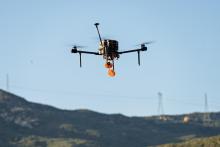
UAV Forge constitutes a multidisciplinary engineering design team with a specific focus on the comprehensive development cycle of autonomous aerial vehicles, encompassing design, manufacturing, programming, and rigorous testing. The paramount objective of this design endeavor is to adhere to the stipulated constraints, thereby enabling active participation in the SUAS 2025-2026 competition season.

Portable Ankle Measuring Proprioception Device (PAMPD)

"Proprioception" is often described as the human body's "6th sense". It describes one's ability to know where their body is relative to itself without seeing or feeling where it is. Proprioception in studies has proven to be a powerful predictor for the effectiveness of physical therapy. These studies have also found that it is a trainable attribute. For patients recovering from strokes or other movement disorders, measuring and training proprioception is a powerful new supplementary tool to use on the road to recovery. The Portable Ankle Measuring Proprioception Device is a medical device meant to train and assess a patient’s ankle proprioception for use in clinics. 

Backyard Bioremediation System 2025-2026

    Teal Flow aims to create a residential-scale bioremediation system that repurposes greywater for safer and reliable irrigation. As part of our goal for sustainability, the system will be completely run on solar energy. Our filtration methods incorporate readily available resources, such as sand, activated carbon, gravel, and aquatic plant life. The programmable control system, powered by an Arduino, automates pump flow regulation, prevents overloading of the filtration stages, and minimizes user intervention. Integrated pH and salinity sensors continuously monitor water quality, ensuring that only water meeting predefined safety thresholds is delivered for irrigation. As an included safety measure, water not meeting standards is automatically recirculated for additional treatment. Overall, Teal Flow aims to provide households with an accessible, environmentally responsible solution that conserves water resources, supports backyard ecosystems, and helps reduce water usage costs.

UAV FORGE

UAV Forge Logo

Background

UAV Forge constitutes a multidisciplinary engineering design team with a specific focus on the comprehensive development cycle of autonomous aerial vehicles, encompassing design, manufacturing, programming, and rigorous testing. The paramount objective of this design endeavor is to adhere to the stipulated constraints, thereby enabling active participation in the SUAS 2025-2026 competition season.

Design/Build/Fly

UCI DBF (Design/Build/Fly) is a student engineering team at UC Irvine that designs, builds, and tests a remote-controlled aircraft to compete in the annual AIAA Design/Build/Fly competition. The competition challenges teams from universities worldwide to create innovative aircraft that meet specific mission objectives, such as payload delivery, endurance, or speed. UCI DBF members work collaboratively on aerodynamics, structures, electronics, propulsion, and manufacturing, gaining hands-on experience in aircraft design and systems integration. The project emphasizes engineering design processes, teamwork, and project management, preparing students for careers in aerospace and related fields while promoting innovation and practical problem-solving.

Grocery Store Robot: Base

The main goal of the project is to create an autonomous grocery shopping robot that can travel to a target item and retrieve it for customers. This project is split into two teams; our team will focus on the robotic base that allows for movement. The base of the robot must be able to localize itself and plan an optimized path to and from the target. If during operation the robot should detect an obstruction, the robot needs to recalculate a path around it while leaving adequate space to avoid collision.

Fuel Blending Systems Control and Demonstration

The Fuel Blending System Control and Demonstration project focuses on modernizing and integrating advanced control and data acquisition technologies for the UCI Combustion Lab’s fuel mixing system. This system supports testing on multiple end-use devices, including gas turbines, fuel cells, and other combustion systems, which are being adapted for operation on low-carbon fuels such as hydrogen and biogas. The project involves reviewing existing system components, developing a comprehensive bill of materials (BOM) for upgraded hardware and software (e.g., LabView, Python, or MATLAB-based control), and ensuring full system compatibility. Once the updated components are procured, the team will integrate and demonstrate the system’s performance on one or more devices. The project aims to enhance flexibility, reliability, and data quality in fuel blending operations, supporting ongoing research in hydrogen and low-carbon fuel applications.

Pages