Semiconductor Chip Design and Fabrication
Background:

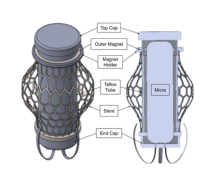
Our multidisciplinary team is working to design and fabricate a semiconductor chip through the use of a cleanroom and the equipment within it. In addition to development, the team aims to create educational content on semiconductor manufacturing to share knowledge and promote understanding. By combining the expertise of multiple engineering fields, in mechanical, electrical, and computer, we are working together to understand the processes and theories behind devices smaller than a millimeter.
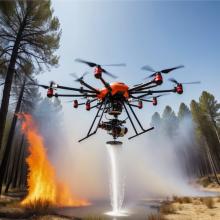

Wildfire Prediction and Mitigation System using Drones

Background:

In high-risk environments, wildfires can occur quickly and without warning. There is a need to monitor these areas, but many are difficult to access and traverse, and there is a limited amount of personnel capable of repeatedly surveying these areas. Therefore, we plan to design a UAV system capable of monitoring and navigating these high-risk locales. In the case of a fire, the UAV will be able to recognize it and take mitigating action, as well as interface with other systems with the data it has received.

Mission Statement:

EV Drivetrain

EV Drivetrain is a senior design project dedicated to designing subsystems within the 2025 Anteater Electric Racing vehicle, such as the accumulator (lithium-ion battery) and motor mount. The goal of this project is to construct an optimized system for the accumulator and motor mount. This is done by producing prototypes and performing FEA to ensure proper function during static and high-performance events at the FSAE competition. Failure to properly design these systems can result in disqualification or driver injury.

Human Powered Vehicle Competition at UCI

HPVC@UCI is a multidisciplinary team of undergraduate engineers at the University of California, Irvine competing in the ASME Human Powered Vehicle Challenge (HPVC). Our mission is to design, build, and race a human-powered vehicle that pushes the limits of sustainability, safety, and performance. HPVC fosters real-world application of mechanical and structural design, aerodynamics, and human-centered engineering. Our team is committed to innovation, teamwork, and hands-on learning beyond the classroom. The team is split into four subteams, Statics, Dynamics, Electrical, and Operations. Currently, our goals are to improve on last year’s design by reducing weight by 25%, incorporating a suspension system onto the vehicle, and ensuring safe operation with an emergency stop should damage to the battery or motor occur.

Thumb up

Existing finger rehabilitation devices typically use exoskeletons to facilitate movement in disabled fingers. However, these devices are often large and costly, limiting their use to fixed locations, which restricts patients from using them in home environments. In this project, we aim to design a compact, portable robotic device specifically for home-based, thumb rehabilitation, addressing the need for a more accessible solution. This device is intended for stroke patients, helping them rehabilitate their affected thumbs through interactive exercises and simple games, enhancing mobility and engagement in their therapy.


Dyno - Quadruped Robot

Quadruped robot

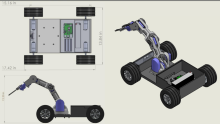
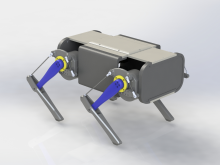
This is Project Dyno, a senior design project with the objective of designing, building, and prototyping a quadruped robot dog capable of serving as a disaster search and rescue aid in a low-cost package. We were inspired to make a search and rescue robot in response to the recent hurricanes on the East Coast. The needs of a would-be disaster relief robot drive our major objectives: traverse adverse terrain, overcome small obstacles, and support integration with a claw. We were also inspired by Boston Dynamic’s SPOT robot, a quadruped robot that is extremely capable, but also extremely expensive, making it less accessible to local authorities. Dyno will be scaled down in size and capability but still be able to serve in search and rescue operations.

Unmanned Autonomous Submarine

Our purpose: 

The purpose of Unmanned Autonomous Submarine team is to create a device that can perform underwater tasks in place of humans. Surveying, exploration, and underwater repair are a only few of many necessary jobs that ensure safe sea travel and to protect marine life. However, extreme ocean conditions and the risk of malfunctioning equipment make these jobs dangerous for humans.

Pages