UCI Rocket Project - Active Pressure Regulator
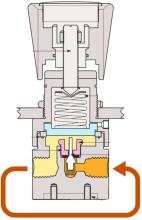
The Under Pressure Team is developing an active pressure regulator for the UCI Rocket Project. The UCI Rocket Project relies on the utilization of gaseous nitrogen to pressurize the propellant tanks of the rocket. In order to effectively manage the pressure within these tanks, pressure regulators are essential components. However, the fixed-pressure pressure regulators that have been employed by the UCI Rocket Project exhibit several inherent characteristics that hinder optimal performance. Factors such as regulator droop, choked flow effects, the influence of supply pressure, and limitations posed by orifice sizes all contribute to deviations from the desired regulator output during flight. To address these shortcomings and enhance engine performance, the integration of a component capable of self-correction to maintain a consistent outlet pressure is necessary.

Bottle Lift and Transfer: Team 17D

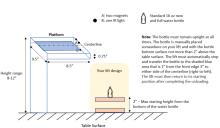
The Bottle Lift and Transfer project is a one-quarter project of MAE 151A. The primary objective of this endeavor is to engineer a mechanism capable of lifting a standard, unopened 16-ounce water bottle vertically and transferring it horizontally onto a predetermined platform. The device is mandated to operate entirely autonomously, powered by batteries, and be able to possess repeatability in its actions.

To meet these stringent criteria, this team devised and fabricated a sophisticated system comprising a scissor lift mechanism for vertical movement and a linear actuator to facilitate horizontal transfer. The intricate motions are orchestrated and controlled by an Arduino UNO board, leveraging IR sensors to signal the controller and dictate halts during the vertical ascent.

Safely Dispensing Radioactive Powder for Spine-Rad™ Brachytherapy Bone Cement

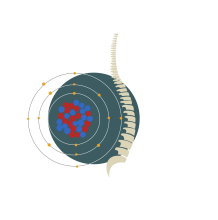
On-market treatment of spinal bone tumors causes spinal cord & organ damage, decreasing quality of life for ~200K patients. Spine-Rad Brachytherapy Bone Cement uses radioactive bone cement to avoid these negative effects. The treatment has been proven to work & needs to be safely manufacturable. We will be creating a system that scores & snaps open a glass vial full of radioactive powder (P-32-HA) used for the treatment and dispense a user-specified amount of the powder into a syringe used for the treatment. Without an automated procedure and process for a technician to score, snap, and dispense the powder, they would be put at risk for radiation because of the beta emissions.

UCI Cargo Plane - Structural Optimization

UCI Cargo Plane is a senior design project aiming to develop a lightweight RC aircraft capable of taking off, maneuvering, and landing with the heaviest payload possible to compete in the International SAE Aero Design competition. Our MAE151 project acts as an auxiliary unit to the team by providing additional analysis of the two major load-bearing structures in the aircraft: the cargo bay fuselage beam and the primary spar structures for next year’s aircraft. With our analysis, UCI Cargo Plane will be able to develop an aircraft with a larger strength to weight ratio for future competitions, allowing for increased payload capacity. 

Automation of Characterization of Hemispheric Resonator Gyroscopes

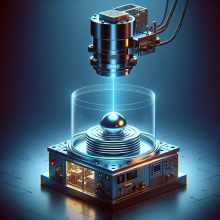
The process of characterizing the vibrational modes of Hemispheric Resonator Gyroscopes (HRGs), such as finding the principal axis of elasticity and damping, is time-intensive and requires manual input. To reduce human involvement, we have developed a method of tracing the inner rim of the HRG with a measurement laser utilizing an image recognition machine learning algorithm. Automated controls collect the data for the trial, reducing the manual involvement to setting up the run. The underpinnings of this project are high-precision controls, computer vision, machine learning, and data acquisition.

Hydrovision

Renewable Hydrogen is a possible alternative fuel to natural gas that can be used in gas turbines without producing greenhouse gas emissions. However, all combustion processes produce NOx, which is a harmful air pollutant and isn’t very well studied for Hydrogen. Our sponsor seeks to better understand hydrogen combustion by examining the interaction between hydrogen flames, but lacks the equipment to fully study every region in the flame. Thus, we are tasked to design a mechanical device that moves a camera around the flames to capture the reaction, protects the device from the high temperature of the flames, and processes those images to create a 3D heat release map of the high temperature regions. This way, the researchers can pinpoint where the regions of NOx will occur based on these images and figure out ways to reduce the regions of high NOx production. 

Bike Frame Project

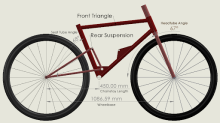
Over the winter and spring quarters, our project focuses on designing and manufacturing an affordable, DIY-friendly full suspension mountain bike for garage-level construction. 

We've finalized decisions on suspension and frame design, emphasizing manufacturability. Currently, we're refining designs for compatibility and performance, initiating proof of concept trials, and developing welding skills. Future steps include completing a comprehensive CAD model, sourcing components, fabricating a welding jig, welding the frame, assembling components, and showcasing finalized design. This project fosters collaborative innovation and empowers makers to shape the future of mountain biking technology

Inertial Compensation Unit - Conservation of Momentum Gimbal

In order for satellites in orbit to maintain its heading to Earth, they utilize gimbals. Gimbals stabilize the payload which allow it to consistently point in the same direction even in motion. ICU is a MAE 151A/B project team in which we are developing a gimbal and counter gimbal mechanism to enable gimbal motion on small spacecraft without affecting attitude. The gimbal will be placed in low earth orbit in a 1U box with a high resolution camera to capture visual data of Earth. We are sponsored by Aaron Freeman and David Reeves of General Atomics who provide us industry knowledge and access to professional hardware.

Electro Permanent Magnet

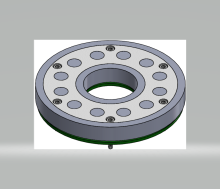
The Army Research Lab (ARL) has been working on wireless charging methods for drones and needs a way to easily attach and detach their drones from the charging point without taking too much power and space on the drone. Electropermanent magnets can be turned on and off but do not require constant power in the on stage which would be too strenuous on the drone. The ARL tasked UCI with developing a way to magnetically connect the drone to the charge surface quickly and have found EPMs to be the most viable option for this.

Pages