The capstone projects in the Department of Mechanical and Aerospace Engineering is run by "faculty member name". Need to add more content specific to MAE.

Solar Car: ZotSun

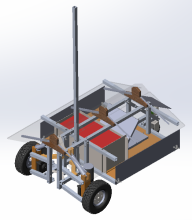
The SolEaters are a group of engineerings that have to design, construct, and raise funds for a fully powered solar racecar that surmounts the scrutineering process of the Formula Sun Grand Prix. After finishing that process, we will then be allowed to go to the American Solar Challenge, a cross-country endurance race for solar cars around the world. As the first established solar car team at UCI, we hope to build a solid foundation for a solar racing team that will continue to not only engineer sustainable vehicles but also help spread the importance of renewable energy for years to come.

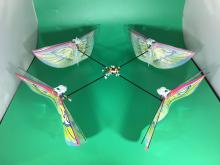
UC Irvine Solar Airplane

UC Irivne Solar Airplane composes of 20-25 undergraduate mechanical and aerospace engineering students who strive to research and design an unmanned air vehicle (UAV) with solar panels completely from scratch.  The UAV will use solar energy to extend the flight time by at least 15% for disaster relief efforts where accessibility is difficult for humans or visibility is limited. The team aims to achieve this goal by utilizing a GPS and camera that will relay constant feedback back to the team during the duration of the flight. 

Autonomous Systems: Unmanned Floating Vehicle


Background

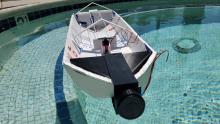
As part of the UC Irvine Autonomous System, students will be in charge of designing and testing a floating vessel that will be able to autonomously navigate through the sea. The vessel will be going to sea unmanned in order to provide updated cyber security patches against new threats. The vehicle has to attach to a buoy and make a physical data connection to a high bandwidth port in order to upload new security patches and receive updated coordinates for its next mission.

Goals & Objectives

  • Design a floating vehicle based on requirements proposed by the US Navy
  • Assembly, fabrication, testing and analysis of preliminary designs to provide the basis for construction of an efficient and durable final product
  • Automate the navigation and steering of the vehicle
  • The vehicle autonomously locates a buoy and inserts a data transfer cable into it

Requirements

  • The navigation, steering, and
  • ...

HyperXite

Established in 2015, HyperXite is a team of undergraduate students endeavoring to build a Hyperloop pod.

HyperXite has competed in the past four Spacex Hyperloop Pod Competitions. In Competition I, HyperXite was one of the semifinalists and placed fifth for their overall design worldwide. Additionally, the HyperXite pod was one of the only air levitated pods to be tested within the Hyperloop itself during Competition II and placed in the top 6. In the past two competitions, HyperXite was one of the top 22 finalists to attend comeptition in Hawthorne, CA.  

This year, HyperXite will not be attending the SpaceX Hyperloop pod competition but will instead build a small-scale pod to be tested on the team's own test track. 

UAV Forge

UAV Forge Logo

UAV Forge is a multidisciplinary engineering senior design project with a focus on designing, building and programming unmanned aerial vehicles. Our goal this academic year is to travel to Maryland to compete in the 18th annual Student Unmanned Aerial Systems Competition (SUAS) hosted by the Association for Unmanned Vehicle Systems International (AUVSI). The competition is held in Webster Naval Air Station, in Patuxent River, MD, from June 17th to 20th.

EDI: Whoopy Wipes

Whoopy Wipes Phase II Prototype Model

Background

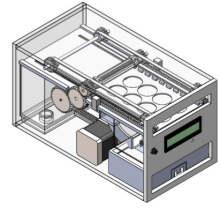
Whoopy Wipes is a project that aims to design a device to deliver hot, damp, and sanitized towelettes to the user for personal hygiene purposes. The current design works by first dispensing the dry, compressed wipes from a pre-manufactured blister pack into a tray. The tray then moves into a watertight sealed position. As the towelettes are being dispensed, water is being pumped into a heating chamber and heated to approximately 165 degrees F. Once the towelettes are in the tray in a sealed chamber and the water is heated, the water is then sprayed onto both of the towelettes. When the towelettes have expanded and are ready, they are ejected out of the device on the tray for the user to retrieve.

Goal and Objectives

There are three phases to this project with each phase lasting one quarter, starting in the fall of 2019. Phase I consisted of...

Design Build Fly

Design Build Fly is an annual international competition hosted by AIAA and Cessna/Raytheon. The goal is to design and build a plane that abides by the year's rules while also performing the best at the competition. The competition will take place in Wichita, Kansas in mid-April. This year the theme of the competition is to build an aerial advertising plane. Specific requirements include being able to deploy, carry, and release a large banner and carry passengers with their luggage.

MAE188: Astrobotics

Since the boom of the smart device era, worldwide demand for smartphones and laptops has increased significantly, from less than a billion in 2010 to over 2.5 billion in 2018. Along with the soar of smart device usage comes the demand for semiconductors and microchips, an essential component for smartphones, computers, and laptops. Every day, microchip manufacturers test about ten thousand chips to select only the functional ones to install into the smart device. Better methods for testing chips are needed.

This is an MAE188 Project

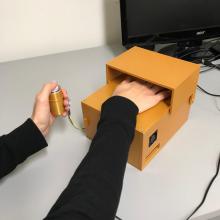
Automated Single Slot Tester

Background

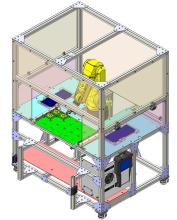
Astronics Test Systems has developed a semiconductor test system, the Single Slot Tester (SST), to meet the demand of low throughput test systems in industry. The current SST requires a technician to individually place DUT’s (Device Under Test) into the BIB (Burn In Board) and remove after testing is completed.

Goal and Objectives

The goal of this project is to integrate Astronic’s existing SST with a FANUC six axis robot to fully automate the testing process.

Contacts

Faculty Advisors:

Dr. Farzad Ahmadknanlou - farzad.a@uci.edu

Dr. Vince Mcdonell - vgmcdone@uci.edu


Student Contact:

Jose Pereida - jpereida@uci.edu

Advance Combustion Technology-Low Emission Scooter

Background:

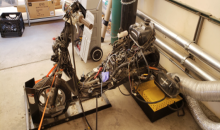
As global carbon emissions from fossil fuel increase every year¹, there is an ever growing demand for renewable energy and a means for low-emission transportation. This project is centered on measuring the emissions from a Yamaha Vino 50cc scooter when using alternative fuels with the overarching goal to develop a low-emission scooter.


Goal and Objectives:

1.Develop a test bed consisting of the Vino 50cc Scooter and a Mustang Dynamometer that measures:

          ●Air intake and exhaust gas temperature

          ●Forward speed and engine torque

          ●Exhaust composition and fuel consumption

          ●Air/Fuel Ratio and head temperature

 2.   Modify system to measure emission data from alternative fuels such as bioethanol


Contacts:

Faculty Advisor(s):

Professor Derek Dunn-Rankin, ddunnran@uci.edu

Dr....

Modular CubeSat

The UCI Modular CubeSat team aims to build a low-cost nanosatellite capable of supporting a variety of payloads that will be launched into low-earth orbit. The CubeSat team’s ultimate goal is to create an open source CubeSat design for future projects to replicate. This design will drive down costs and facilitate the democratization of space. The current two units CubeSat will perform a six-month mission in a low earth polar orbit taking data from the payload, a variable emissivity device, and transmitting that data down to the ground station on campus.

Tensegrity Wing

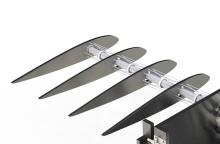
The Tensegrity Wing team aims to design a wing that can change its airfoil shape on demand using an inner tensegrity structure. The team hypothesizes that the wing will be able to decrease flow disturbances, and as a result drag, as compared to conventional wings with rigid control surfaces. 


Wear A Thermoelectric Calorie Harvester (WATCH)

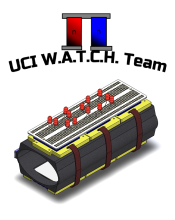
Most of the energy leaves our bodies in the form of heat simply due to existing temperature gradients in the environment. An average human body at rest emits about 350,000 J of energy per hour, which is roughly equivalent to the energy given off by a 100-Watts incandescent light bulb. As a matter of fact, the conversion of human-body-heat into electrical energy using a solid-state thermoelectric generator (TEG) sparks interest in creating wearable self-powered mobile electronics and sensors. We, the UCI W.A.T.C.H team, which stands for "Wear A Thermoelectric Calorie Harvester," are dedicated to designing wearable thermoelectric devices powered by human body heat!

Hot Air Balloon Burner-Engineering

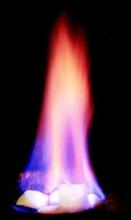
The goal of this design project is to accurately measure the combustion efficiency and emissions from an MK-32 burner that is used for hot air balloons. The design process will focus on improving the data acquisition system already being used, the Enerac 700, and looking for other alternatives for measuring efficiencies of an open system in order to get the most accurate combustion efficiency of the MK-32 burner. Milestones we are hoping to achieve this quarter are: Understanding the Enerac 700’s basis for its combustion efficiency, developing an independent process from the Enerac 700’s built in combustion efficiency calculation for verification, and understanding/verifying, after multiple experimental testing data results, why short flame bursts are more efficient than longer flame bursts.

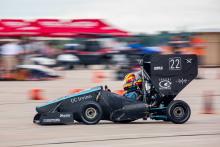
Formula SAE Electric Racecar

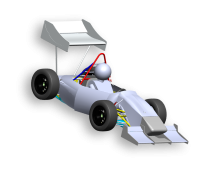
The goal of this project is to design, manufacture, and test a formula-style electric racecar for the Formula SAE Lincoln intercollegiate competition on June 20-22, 2019. Our goal is to place top 5 out of 30 at competition with our 2018-2019 vehicle Lithium. This project allows for cross functional collaboration between students giving them the experience to work with individuals of the different engineering backgrounds ranging from software to aerospace engineering. Having hands on experience implementing industry standards and practices, students develop the skills needed for industry.

Robofish

Robofish.png

Background: 

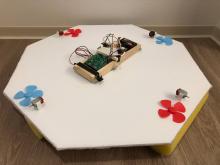
The Robofish competition is typically conducted within MAE 165, Advanced Manufacturing. The competition consists of designing and manufacturing a robotic fish that is capable of traveling underwater. We are tackling this challenge as a design project with the goal of creating a complex design that can travel farther than any other design.

Goal:

Design and Manufacture a robot capable of moving 12ft underwater while being completely submerged

Objectives:

  • Complete all designs and modeling during fall quarter
  • Complete all buoyancy calculations by end of fall quarter 
  • Complete all manufacturing and have a completed robot by mid winter quarter 
  • Finish all testing and revisions by end of winter quarter

Advisor: Marc Madou email: mmadou@uci.edu

Team Contact: Osvaldo Montiel email: montielo@uci.edu


Methane Hydrate Combustion

Background

Methane Hydrates are molecules of methane (CH4) bound within a crystal lattice of ice (H2O). The general formula for this gas hydrate (clathrate) is CH4*nH2O, where n represents the number of water molecules in the lattice structure. The nominal methane hydrate composition is CH4*5.75H2O.

Methane Hydrates are formed at high pressure and very low temperatures. Discoveries in the past decades have brought to light the existence of methane hydrates in marine sediments and under shallow permafrost deposits in arctic regions where these conditions are ideal. Since the discovery, they have been studied for extraction to use as a source of energy. According to the U.S. Department of Energy, it is estimated that the global methane hydrate resource is 20,000 trillion cubic meters which is about 700,000 trillion cubic feet (Tcf). The U.S. currently only has about 2,074 Tcf of methane hydrate resource. Researchers at the University of Texas estimate that given...

Intelligent Ground Vehicle
Background

As part of the UC Irvine Intelligent Ground Vehicle team, students will be in charge of designing and testing a vehicle that will be able to autonomously navigate through an obstacle course for participation in the Intelligent Ground Vehicle Competition (IGVC).

The IGVC offers a design experience that is multidisciplinary, theory-based, hands-on, team implemented, outcome assessed, and based on product realization. It encompasses the very latest technologies impacting industrial development including intelligent transportation systems, military applications, and manufacturing. The deadline of the Intelligent Ground Vehicle Competition creates a real-world constraint that provides potential winning recognition and financial gain.

Goal and Objectives

As a new project at UCI, our ultimate goal is to at least compete and perhaps win the rookie award for the 2019 Autonav Intelligent Ground Vehicle Competition. Our goal for this project is to create a 2.5’ x 3.5’ x 6’ ground vehicle that can complete a...

Solar Airplane

Students address a design challenge proposed by the Faculty Advisor integrating a renewable energy source into a UAV. The goal this year is to get a UAV to fly longer through the integration of solar panels. Students are expected to minimize mechanical and electrical losses and extend the flight time of the UAV by 15%. 

UAV Forge

Summary:

UAV Forge is a multidisciplinary engineering senior design project with a focus on designing, building, and programming unmanned aerial vehicles in order to complete flight missions under a time limit. Through research and hands-on experience, students are able to work towards creating an autonomous aircraft. This project, UAV Forge, aims to allow students to gain technical skills and learn more about the engineering process. We hope to further current UAV technology through image capture and recognition, vertical takeoff and landing, and more. Through inspiring innovation and teamwork between the different students in MAE, EECS, CPE, CSE and CS majors, students are able to come out of the project with a broader knowledge of the different engineering fields.

Fuel Cell Drone

Background

In the United States, more than 80% of its total energy comes from fossil fuels. Fossil fuel products, such as plastic, are essential to our lives, and the demand for this energy increases each year. However, as the rate of fossil fuel consumption rises, the rate of fossil fuel production will fall behind, which will result in fossil fuels depleting. With fossil fuel production decreasing and demand increasing, products such as gasoline will be more expensive and will continue to harm the environment.

As a result, the world has been looking for clean and renewable fuel. The solution developed for this problem is the hydrogen fuel cell. Hydrogen fuel burns with oxygen and produces pollution-free water. Also, hydrogen is the most abundant element in the universe, which means that it is inexhaustible, unlike fossil fuels.

Although hydrogen fuel meets all the demands the world is requiring, it...

Formula SAE Internal Combustion Racecar

Screenshot of master assembly

--- Background ---

The goal of the UC Irvine Internal Combustion Formula SAE (FSAE-IC) Team is to research, design, build, and test a formula-style car to win the 2019 FSAE Lincoln competition. FSAE Lincoln is an annual competition that hosts 80 teams, all consisting of students, from across the globe and they compete against each other in a series of dynamic and static events. Teams are scored based on their performance, with the top teams earning scores of 850+ points. This will be the fifth consecutive year that UCI has developed an internal-combustion car for this competition.

Last year’s car, Phantom, was by far the fastest car the FSAE-IC team has ever produced. The car featured a plethora of improvements over the previous year's car. The most notable improvement being the addition of a high-downforce aerodynamics package, the first in the team’s history. The team finished 4th in the Acceleration...

Smart Home Device

Currently our project is at a point where the mechanical, electrical and computer science aspects of the project are finished and being optimized. Next quater, we will focus on combining the three portions of the project to produce a working prototype.

UCI CanSat

CanSat is an international design-build-fly competition where student teams build a probe (the CanSat) to complete a specified mission.
The CanSat is a science payload enclosed in a container. It is launched to 700 meters and must land safely. Initially, the payload and container descend under a parachute. At 400 meters, the payload and container separate. The container continues under the parachute, while the science payload deploys its delta glider to fly in a helical trajectory for 1 minute. At about 100 meters, the science payload will deploy its own parachute and fall to the ground. During all portions of the mission, the CanSat is recording environmental data from onboard sensors and streaming it in real time to a ground station computer.

Fuel Cell Battery

Motivation

Why study Proton Exchange Membrane Fuel Cells (PEMFCs)?

  1. Only water as a by-product and zero pollutant emissions (NOx, CO, HC)
  2. Fuel cells are more efficient at the same scale; use less fuel and generate more energy
  3. Useful for stationary power, transportation, and backup generator applications

Our Project

The Department of Energy (DOE) 2020 targets for PEMFCs include a cell potential of 0.8V while outputting 300mA/cm2. Most PEMFCs achieve a limiting current density near 1A/cm2 with air as the oxidant. Our goal was to design and manufacture a PEMFC that could meet the DOE target as well as have the fuel cell reach a limiting current density of 1.5A/cm2 with air. Within the academic year, we were able to develop a fuel cell with an unconventional flow field design. Experiments were conducted to study the effects of compression, flow media material, and flow rates on the fuel cell's...

HyperXite

HyperXite was created to meet the challenges of SpaceX’s Hyperloop Competition. This is HyperXite’s fourth iteration, competing in SpaceX’s Fourth Hyperloop Pod Competition in the summer of 2019. Our goal is to build a high speed, self-propelled Hyperloop pod and complete a successful vacuum run during the Fourth SpaceX Hyperloop Competition in the Summer of 2019.

The competition was founded by Elon Musk to find a way to create the fastest land based mode of transportation, in particular, to find an alternative to California’s future “high speed rail.” Musk and his team came up with the idea of a “Hyperloop,” a near vacuum tube that would allow a pod or a capsule to reach high speeds by riding a cushion of air to reduce friction.

The competition itself is based on teams’ pod designs, with an emphasis on maximum speed. This year, HyperXite is modifying our pod used in Competition...

UCI Rocket Project

UCI Rocket Project

Background

The UC Irvine Rocket Project aims to push the boundaries of collegiate rocketry and the development of liquid propellant rockets. Our project strives to prepare students for successful careers in the aerospace and defense industry. In 2017, Base 11 became a partner of the UCI Rocket Project. Their gracious donation enabled the construction of our rocket lab as well as provided enough support to join in the Base 11 Space Challenge.

E-Thermosensor

Background

A thermocouple is an electrical device used to detect the temperature changing. Nowadays, thermocouple, as a kind of thermal sensor, is being used in many fields, for example, hospital, vehicle engines probes, and sensors. With the trend in demand for increased performance and reliability.

We are focusing on how the time response will change regarding the change in the size of the thermocouple in microscale. If the time response is reduced, the efficiency of the temperature sensor system will increase, which would benefit in many fields. 

Goal and Objectives

Our goal for this project is decreasing the time response for an accurate reading from 0.06s to 0.03s by reducing the size of thermocouples. Having a faster response, thermocouples can be more efficient in measuring temperature changes in industrial, medical and daily aspects. Then apply the wireless device to make it into a product.

Fall  2018
       ...

Pages