The capstone projects in the Department of Mechanical and Aerospace Engineering is run by "faculty member name". Need to add more content specific to MAE.

Thrust Chamber Design and Cooling

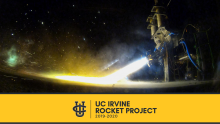
Student engineers working on this project are tasked with producing a preliminary design of the next generation liquid-fueled rocket engine for the UCI Rocket Project. The injector, combustion chamber, and nozzle are designed to achieve a given thrust and specific impulse while also being relatively simple to manufacture. Since these components are experiencing exceedingly high temperatures and heat fluxes, a suitable cooling system must be designed to maintain safe operating temperatures of the combustion chamber walls and nozzle. 

CD-Fluidics Team

In this project, we are utilizing a reciprocating compact microfluidics disk to separate plasma from whole blood. Doing so will allow for the plasma to then be tested for antibodies using an adaption of immunoassay technology. An important application of this technology is that it is able to help test blood samples for COVID-19 samples quickly and accurately.

Design Build Fly

Design Build Fly is an annual competition hosted by the American Institute of Aeronautics and Astronautics (AIAA). Each year, AIAA publishes a new set of rules for the DBF competition. For the upcoming 2021 DBF competition, candidates will be required to design, build, and test an aircraft with a towed sensor.

Rocket Project

Background

                The UC Irvine Rocket Project aims to push the boundaries of collegiate rocketry and the development of liquid propellant rockets. Our project strives to prepare students for successful careers in the aerospace and defense industry. In 2017, Base 11 became a partner of the UCI Rocket Project. Their gracious donation enabled the construction of our rocket lab. During the Fall quarter of 2019, the team has scheduled and completed a successful static test fire to experimentally verify our first engine design. An experimental combustion test is a critical first step in designing a full rocket system as well more efficient, higher performance engines.

Goal and Objectives

            The Rocket Project is currently working towards launching our Preliminary Test Rocket (PTR) in the FAR Dollar per Foot Challenge (DPF) Challenge. In order to reach this goal we have three projects currently in development.

  • Preliminary Test Engine (PTE): PTE
  • ...

UAV Forge: Mechanical Imaging System (M.I.S)


Background 

UAV Forge will be competing in the AUVSI-SUAS 2021 competition. This competition is to simulate how package delivery services are looking to deliver packages without the use of operators. The Unmanned Aerial System (UAS )must be able to avoid other UAS’ in flight, map the operating area to identify any hazards, avoid static objects, identify drop locations, drop off the package in a safe location, and move the package to the customer through the use of an Unmanned Ground Vehicle (UGV).

Goal and Objectives

The optical image stabilization capstone project focuses on redesigning and improving the original UAV Forge 2019-2020 static camera mount. The purpose is to increase the Mapping and Object Detection Classification and Localization (ODCL) capabilities through mechanical methods. Two needs that could be satisfied are vibration isolation and field of view expansion.

Link to your documentation

Link to External Team Website

Team Contacts 

M.I.S Capstone: Matthew...

UAV Forge: Controlled Landing System

UAV Forge is a multidisciplinary senior design project that focuses on using engineering fundamentals to design, build and program an unmanned aerial vehicle (UAV) to complete aviation missions outlined by the AUVSI SUAS 2021. This year the team is focusing on making a hexacopter for the competition. Our main focus for the hexacopter is the landing system. Currently, we have a static landing system that consists of tubing. However, the static landing system affects the UAV’s landing and imaging capabilities. The current static landing system obstructs the vision of our LiDAR and imaging systems, reducing our performance in the ODCL, Mapping, and Moving Obstacle Avoidance tasks. Therefore, our team is focused on designing an adaptive landing gear to improve upon last year’s design. An adaptive landing gear will allow the UAV to adapt to any type of terrain and provide a sufficient amount of tilt resistance. 

Machine Learning Based Thermal Management
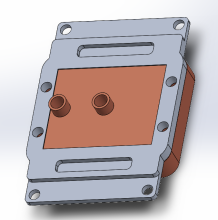
CAD model of TPU cooling block

Background:

CPUs and TPUs generate a lot of heat 

Traditional temperature sensors can not easily acquire temperature data at any given point of the cooling system. They can either:

  •  measure temperature at a single point or

  •  for the overall system 

Goals and Objectives:

  • Develop a model for a TPU chip cooling system that takes advantage of AI vision by measuring various properties of bubbles in the flow of a water cooling system

  • Train an AI model to recognize and interpret bubble/droplet dynamics

  • Gain a better understanding of how AI works

  • Learn how to use AI in real world applications

Sponsor

UCI Rocket Project Fin Design and Integration

The UCI RP Fins Design and Integration works to design and create a plan of manufacturing of fins for the UCI Rocket Project’s Preliminary Test Rocket. For the past several years, the team has had a multitude of successful launches, all with the incorporation of a fin design.  The Fins teams will be continuing the tradition of launching a rocket with fins by designing the fins geometry, selecting the material and components to manufacture, and developing a mounting method to attach the fins onto the fuselage of the rocket. 


Tensegrity Wing

Tensegrity Wing Logo 1.29.21

Integrating the words tension and integrity, tensegrity utilizes adjustable tension among one-dimensional interacting members in order to create different three dimensional structures. This project aims to create the first morphing wing at UCI using a tensegrity mechanism. The wing will be able to change airfoil shape on demand, in order to produce more efficient aerodynamic properties based on flight sections (takeoff, cruise, and landing). Split into two sub-teams, simulations and structural, the team will work toward creating and building a functional prototype of the tensegrity wing, and test the prototype in UCI's wind tunnels to verify results of more efficient lift, drag, and pressure distributions than conventional wings. 

UCI Intelligent Ground Vehicle

The UC Irvine Intelligent Ground Vehicle is a project in order to implement skills learned in university courses by designing and testing a self-automated ground vehicle that can navigate an obstacle course autonomously. The purpose of the project is to be able to develop a vehicle that utilizes multiple sensors to self navigate while carrying a payload. 

UAV Forge - Guidance Navigation and Control

UAV Forge is an interdisciplinary team that competes in the Student Unmanned Aerial Systems Competition (SUAS) hosted by the AUVSI. This competition involves teams programming and designing both an unmanned ground and aerial vehicle to undergo missions laid out by the rules. The Guidance Navigation and Control subteam researches alternative methods to land the ground vehicle as well as program it to navigate to given waypoints. 

Thermal Vacuum and Control of Spacecraft VED's

Thermal Vacuum and Control of Spacecraft Variable Emissivity Devices (VED’s) is an engineering design team focused on designing a vacuum chamber with capabilities such as, thermal conduction and thermal radiation generation, detection, and testing within a moderate to high-vacuum regime. In addition, the team will also design, integrate, and test a control system capable of thermal flux detection and data extraction under both standard atmosphere and moderate to high-vacuum conditions. Successful integration and operation of the designs will enable a cost-effective means of conducting ground-based space validation testing for small-scale spacecraft subsystems. Specifically, testing will be conducted on contending alternative variable emissivity devices, such as an electrochromic cell, Smart Window technology, and an electrophoretic display (EPD). Each of the three components are currently being researched by the teams affiliated research project, Spacecraft Thermal Management Systems.  

Wearable Sensing

Watch with data visuals

The wearable sensing team is creating smartwatch and smartphone applications that interact sensors within a smartwatch to analyze stroke patient rehabilitation. The aim is to provide patient high levels of motivation and understanding of their exercises during the rehabilitation process, all while giving physcial assistants, trainers, and doctors useful data that they can use to monitor their patient at any time. Patients deserve a feeling of independence and easily interpreted data visualizers that encourage continuation of rehabilitation. In time, the project is wanting to expand to more patient populations and release a product available to consumers accross the globe.

Structures Mark II

Background:

UAV Forge is a senior design project hosted by UCI that aims to build an Automated Flying Vehicle, and compete in the Association for Unmanned Vehicle Systems International Student Unmanned Aerial Systems Competition (AUVSI SUAS). The goal of the competition is to have your vehicle follow a route while avoiding obstacles, arriving at waypoints, and delivering an unmanned ground vehicle to a designated point.

This specific subteam, Structures Mark II, was a Capstone project team gathered for the purpose of creating an optimized airframe. It is tasked with closely researching structural allowables, requirements, constraints, material and design choices for a new and better frame. The team will then model an airframe for the rest of UAV Forge to possibly build in the upcoming year. For now, the overall design will be a prototype and can be adjusted to fit any new needs or new design choices when the time comes. ...

RFID-based Cooperative Asset Detection and Localization

The project aims to use a team of mobile robots equipped with a passive RFID system to devise an all-weather, wide-area asset detection and localization system for stationary RFID tagged ground targets that may be behind obstacles or obstructions. The applications include locating and recovery of incapacitated firefighters and other first responders in challenging environments such as wildfires, inventory management, and equipment tracking.

Automated Colorimetric Bioassay - MAE 189

Background:

Our design basis is to make modifications in the previous’ teams design in an effort to make the automated assay more reliable and user-friendly. The general concept of the automated assay is to create a device which autonomously or semi-autonomously administers a malaria test using reagents to a similar extent to a high-priced biometric assay. The assay has to give appropriate responses to an assortment of reagent based test. While also reporting the test results to its test users through a convenient smartphone application. 


Global landscape:

Although the previous teams’ intentions are unknown, from the very beginning our team had one idea in mind. Malaria is a disease rampant in third world countries — similar to a host of many. If doctors are able to test their patients sooner and faster, their treatment would be significantly more effective. For that reason, we use cheap and easily assessable parts which...

CubeSat

BACKGROUND:

The CubeSat team at UCI is a student-led effort to launch a 2U nanosatellite into orbit to test two UCI research payloads. The satellite operates with five subsystems (Power/Payload, Communications, Avionics, Structures/Thermal, and Systems Engineering), in addition to housing two payloads. The first payload is a variable emissivity device (VED) that will be tested as a thermal regulator, and our job is to test its performance in various degrees of solar exposure and at varying adjustable emissivity values. Similar materials to the sample are hoped to be used as a cheap method of thermal management on future spacecraft. The second payload is in collaboration with the ASPIN lab at UCI. The satellite will carry a transceiver meant to function as a transmitter of a “signal of opportunity”, helpful in researching novel navigation methods in the absence of or in place of a traditional GPS signal.

OBJECTIVES:

  • Ensure that payload requirements
  • ...

Anteater Formula Racing (FSAE Internal Combustion)

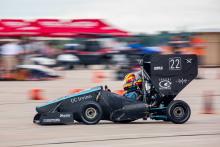
Anteater Formula Racing's 2019 Racecar on the Endurance track at Formula SAE Lincoln 2019

Anteater Formula Racing builds an open-wheel, internal-combustion race car inspired by Formula 1 and IndyCar racing to compete at Formula SAE California, a world-renowned collegiate vehicle design competition. It challenges project engineers to maximize vehicle performance, validate their design choices and methods, and develop professional presentation skills. Forty-five engineering students participate in the design, manufacturing and testing phases to gain the engineering skills needed for industry in a highly-technical, fast-paced and competitive environment. The team collectively spends over 10,000 man-hours each year developing the car and its subsystems alongside engineering coursework.

UC Irvine Solar Airplane

UC Irvine Solar Airplane aims to optimize a low-cost unmanned aerial vehicle (UAV) for which flight time will be extended, powered by solar panels, by 30 minutes after battery-life . The UAV's main goal is to aid with disaster relief efforts using a GPS and a camera to relay constant feedback to the operators during the duration of the flight. UC Irvine Solar Airplane is a team of currently 37 diverse members from various majors and ages.

Solar Car

UCI Solar Car Logo

UCI Solar Car is a team of currently 29 diverse members from various majors and ages working together through a spectrum of subsystems and skillsets in order to reach the goal of competing in the American Solar Challenge (ASC) rate. Our group communicates through a common interest of environment-friendly solutions and compete in race car tournaments in which battery powered cars built by students from various colleges come together and put their finalized work to the test. 

Hoag Bone Plate Fixation Project

The Hoag Bone Plate Fixation Project is a design project sponsored by Hoag Orthopedics consisting of MAE/BME/MSE students that are tasked to identify geometry and material for orthopedic plates that provides imporved fracture fixation. By improving the frictional interface of the bone-plate surface, the re-designed plates hope to reduce shearing and micromotion of plates, and in term decrease the cases of failed fracture fixations in patients. 

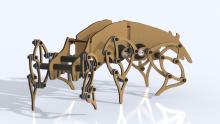
Steerable Mechanical Walker

Steerable Mechanical Walker

Goals & Objectives:

The goal of this project to design, build, and test a steerable mechanical walker.

Requirements:  (i) one drive motor and one steering motor, (ii) RC control to define forward and backward movement and left and right turn to steer, (iii) four or six-legged design, though six-legged is preferred.  (iv) a demonstration of its movement around a circle or in figure-eight in both directions.


Contact Infomation:

Myis Dickens, Project Manager, Fall 2020 - 

dickensm@uci.edu


Advisor:

Professor J. Michael McCarthy, jmmccart@uci.edu

Kevin Chen, kevinc15@uci.edu


Cargo Plane

UCI Cargo Plane participates in the Society of Automotive Engineers (SAE) Aero Design West Competition. This competition provides engineering students exposure to real-life engineering challenges in the aerospace industry. The goal is to create a bush plane design that can operate from short runways while carrying outsized cargo. Students are expected to perform trade studies to find a design solution that will optimally meet the mission requirements. The types of payload these aircraft are required to hold are soccer balls and steel plates. During the competition, teams are expected to load and unload soccer balls and steel plates in under a minute. For this reason, the design should account for easy loading accessibility. These design factors test the team’s ability to exercise time management, stay within budget, and ultimately build a plane to meet the goals of the competition.

LIBRA

Introduction

Aeronautics, Dynamics, and Control Laboratory (ADCL) is an  interdisciplinary lab focusing on the modeling and analysis using the rigorous mathematical tools of both Geometric Control Theory and Unsteady Aerodynamics to develop non-intuitive new engineering applications. ADCL developed new control algorithm which enables the airplane to achieve high rolling maneuverability in stall. This new rolling algorithm will solve a challenging problem in the aerospace industry, where Airplanes lose the rolling controllability in stall.

LIBRA stands for Lie Bracket Rolling Augmentation Mechanism. Lie Bracket is the  geometric control tool which has been used to develop this algorithm. this name inspires the extended freedom by enabling flying in the stall regimes. LieRoll was another name proposed, but was never selected.


Goal

The goal of this project is to demonstrate experimentally the control authority given to the airplane in stall regimes. The experiment is divided into three phases as follows:


Phase...

Robotics Outreach Project (ROP)

Robotics Outreach Project (ROP)

The focus of this project is to design and build a robotics kit that introduces and is inclusive to students typically underrepresented in STEM to engineering.
To achieve this, students will design a cost-effective robotics kit that incorporates many introductory level features and an evidence-based curriculum that a middle/high schooler can safely construct with assistance.


EDI: Hybrid Renewable Energy System

Sustainability is an increasingly important consideration for engineers throughout the world. With the increases in global temperature, engineers are looking at renewable energy generation to combat climate change. California has already enacted the SB-100 Renewables Portfolio Standard Program, which is attempting to transition 100% of California’s electricity to renewable sources by 2045 (SB100).  Solar and Wind Energy are essential components in this fight against climate change. Current utility based renewable energy production demands vast investment in land and capital while inducing irreversible damage to the ecosystem. On the other hand, The Hybrid Renewable Energy System (HRES) aims to reduce land use while it addresses the growing demand in renewable energy.


Touch Trainer

The purpose of ReTouch is to create a device that assists post-stroke patients to regain their sense of touch. The device contains two modules, where one module moves the patients’ index, middle, and ring fingers on their paralyzed hand and the other contains buttons allowing them to use their healthy hand to press and match the fingers that are being pushed. The device additionally contains a musical game corresponding to activity done on the modules to improve patients’ sense of touch over time.  

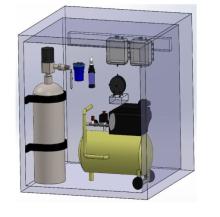
HydroCube

HydroCube is a electrolysis device that can be connected to a residential solar pannel system in order to convert and store any excess electricity in the form of hydrogen. Currently when a homes battery is full the rest of the electricity produced by the photovoltaic cells is not stored and therefore is wasted. With stored hydrogen we could begin to explore the posibility of using hydrogen in a residential setting or to power a generator to feed back to the battery when there is low sun coverage. 

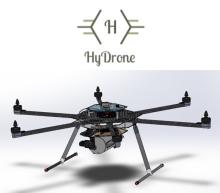
Fuel Cell Drone

Background

New forms of renewable energy have surfaced in the past years.Hydrogen fuel cells are a form of renewable energy that is easily accessible since hydrogen is the most abundant element in the universe, and do not cause pollution or danger to our environment as they do not release greenhouse gases as opposed to burning fossil fuels.The fuel cell drone project uses a fuel cell battery as a source of power for a flying robot that can be remotely controlled or fly autonomously through software-controlled flight. 

For this particular project, we will be researching the fuel cell efficiency in a drone that we will design and build ourselves. Groups will be building a structure for the drone and assembling electronic parts for use throughout the experiment, while keeping the fuel cell as the focal point of this project. The advantages of the fuel cell lie in longer flight times, quick...

Rocket Project

The UC Irvine Rocket Project aims to push the boundaries of collegiate rocketry and the development of liquid propellant rockets. Our project strives to prepare students for successful careers in the aerospace and defense industry. In 2017, Base 11 became a partner of the UCI Rocket Project. Their gracious donation enabled the construction of our rocket lab. During the Fall quarter of 2019, the team has scheduled and completed a successful static test fire to experimentally verify our first engine design. An experimental combustion test is a critical first step in designing a full rocket system as well more efficient, higher performance engines.

Pages