
The BioMiNT Lab at UC Irvine has developed a microfluidic platform that uses AESOP technology to deliver genetic material into cells, which engineers them to fight diseases like cancer. Ex vivo cell and gene therapy has the potential to save lives. Despite having a successful prototype, the problem is that the platform is currently made from Polydimethylsiloxane (PDMS), a silicone polymer that has an operation time of 10 minutes and cannot be mass-produced quickly or at a low cost. In addition, FlexDym, another industry-standard material in biomedical engineering, has been used and is faster than PDMS, but it comes at a higher cost. Team FloBoss’s objective is to transition this platform from PDMS and FlexDym to the Polypolypropylene thermoplastic. This material extends the operation time, increasing the throughput, lowering manufacturing costs, and enabling large-scale production. In addition, new designs by Team FloBoss are creating higher throughputs and extending the...
All mechanical engineering students must undertake a capstone project in their senior year. The capstone projects are part of the 2-quarter Mechanical Engineering Design I & II course that is offered in Fall-Winter or in Winter-Spring. Students are guided by lecture material, mentors, and TAs while they work on their projects in teams of 3-6. The Department is always interested in collaborating with industry and/or community mentors who would like to have students work on an open-ended design project. An introduction to the mechanical engineering capstone projects program is available here. Please reach out to Professors Mark Walter (m.walter@uci.edu) or David Copp (dcopp@uci.edu) if you have any questions.

Microfluidic Cell Engineering Platform: Spring 2026

Multiport Emissions Sampling Probe
The Multi-Port Exhaust Emissions Sampling Probe was built to improve the accuracy and versatility of exhaust gas sampling in H₂–NG combustion testing. It has multiple independently controlled sampling ports so that emissions can be sampled at various positions within the exhaust stream without having to move the probe. The design uses modular fittings (Swagelok), which allow the system to be easily assembled or disassembled and to be scaled up to accommodate different experimental test rigs. Each port is attached to a solenoid valve system that is controlled by an Arduino and DAQ interface to automatically switch between sampling positions. The probe is also able to be moved in three dimensions to provide complete coverage of the measurement area and to allow for adaptation to different combustor geometries. This system is more efficient and repeatable and has higher spatial resolution than previous systems for emissions diagnostics. It will serve as...
Narcotic Network: Autonomous Medical Delivery Drone
Narcotic Network aimed to design a lightweight device that provides quick and accurate medication delivery to patients living within 0.5 km of a pharmacy. Although Amazon Prime and FedEx Overnight offer one-day delivery, current commercial methods remain costly, inconsistent, and impersonal, especially outside urban areas. Therefore, underserved patients in suburban and exurban regions need novel medical delivery methods. The Narcotic Network Autonomous Delivery Drone, a 1.9 kg quadcopter, autonomously carries up to 0.5 kg of medication of various forms to patients who are unable to leave their homes. By transporting medication directly from pharmacies to elderly and terminal patients who need frequent medication refills, Narcotic Network enhances the customer experience by ensuring personalized, prompt delivery of high-priority medicine.

Orthon - Dynamic Insole with Pressure Offloading for Gait Optimization
ORTHON’s purpose is to create a proof of concept for a dynamic orthotic system capable of treating severe foot conditions that concern painful flat foot and ulcer prone diabetic foot issues. This dynamic orthotic looks like a wearable shoe insert that can detect pressure and/or temperature in order to react with the necessary support for the user’s foot. For such conditions, the current medical orthotic solution is a rigid, static shoe insert originally invented in the 1950s. Meanwhile, the human foot is one of the most dynamic mechanical structures in the body with 33 joints and 26 bones. Although they may be clinically effective, many users find their rigid inserts to be uncomfortable, discontinuing the prescribed use and resulting in surgery.
20% of the world's population have some degree of flat feet, which essentially means that the medial arch in their foot is less than 10mm off...
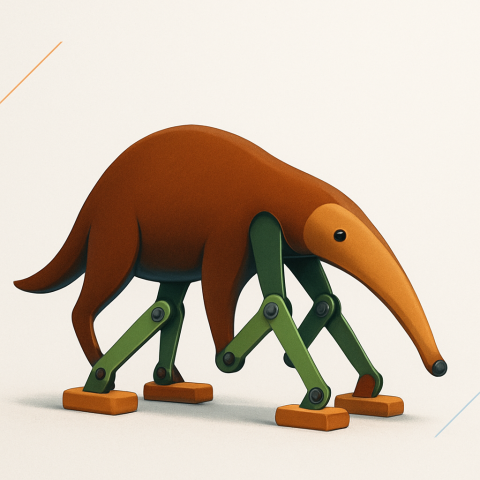
PeterBot - Autonomous 4-Legged Walking Robot
PeterBot is an autonomous walking robot developed by MAE 151 Team 7 under the sponsorship of Professor J. Michael McCarthy. Building upon Professor McCarthy’s MAE 183 mechanical walker design, this project focuses on transforming the existing walking platform into an intelligent system capable of autonomous navigation. The project’s main challenge is reliably integrating the electronics to control stiff geared mechanisms.
This work is relevant to students, researchers and roboticists interested in implementing autonomous mobility on unconventional non-wheeled platforms. By developing PeterBot, Team 7 created a foundation for future students to create autonomous walking robots that can complete higher-leveled tasks.
Portable Ankle Measuring Proprioceptive Device (PAMPD)
"Proprioception," often described as the human body's "6th sense," describes one's ability to know where their body is relative to itself without additional sensation. Proprioception has been proven to be a powerful predictor of the effectiveness of physical therapy, and further, that it is a trainable attribute. For patients recovering from strokes, measuring and training proprioception is a powerful new supplementary tool to use on the road to recovery. While there is one device (the Ankle Measuring Proprioceptive Device) capable of assessing and quantifying ankle proprioception, it is large and difficult to transport, preventing clinical viability. Prospective benefactors and/or test subjects are forced to come to where the device is located to assess and research ankle proprioception. The Portable Ankle Measuring Proprioceptive Device (PAMPD) is a smaller, lighter medical device meant to be brought to clinics to train and assess a patient’s ankle proprioception.

Project 9B: The Anteatairs
A tiltrotor tri-coptor VTOL fixed-wing UAV engineered for search-and-rescue — currently undergoing airframe surface coating and final systems integration before flight testing.
The Mission
Modern search and rescue (SAR) operations face a critical tradeoff: ground teams are slow, and conventional fixed-wing aircraft require runway infrastructure that doesn't exist in disaster zones or remote terrain.
The Anteatairs solves this by engineering a tiltrotor VTOL UAV — a hybrid platform that takes off and lands vertically like a multirotor, then physically rotates its motors forward to transition into efficient fixed-wing cruise flight. No runway. No infrastructure dependency.
Built on a COTS fixed-wing airframe retrofitted with custom tiltrotor propulsion, with a scale fuselage modeled in Fusion 360, a purpose-designed payload delivery bay, FPV telemetry, and autonomous navigation — this platform is designed to rapidly deploy, survey large search areas, and deliver emergency first-aid supplies to...

Rocker-Bogie Stair Climber
Stairways are a fundamental barrier for autonomous ground vehicles. While wheeled robots excel on flat terrain, navigating multi-step staircases remains one of the most mechanically demanding challenges in mobile robotics. Team 28 set out to address this by designing and building a fully autonomous, six-wheeled stair-climbing robot capable of carrying a payload up the 19-step Engineering Gateway staircase at UC Irvine.
Our design utilizes the rocker-bogie suspension system, which is a solution first developed by NASA for their Mars Sojourner rover to maintain continuous wheel contact across uneven surfaces without the need for active stabilization. The project was driven by a practical need: demonstrating that a compact, low-cost ground vehicle can reliably navigate real-world stair environments, with potential applications in search and rescue, building inspection, and last-mile delivery in infrastructure-limited settings.

SmartSweat - Lactate Sweat Analyte Band
According to an article by the American Chemical Society:
"Sports physiology will likely benefit from a technology able to account for high-resolution temporal lactate changes according to the intensity of the physical activity, rather than discrete information from centralized lab-based analysis.”
Lactate is a byproduct of muscular metabolism and an indicator of workout intensity. This market gap exists due to the difficulty in isolating and measuring specific chemicals in sweat, such as lactate. Currently, lactate sensors on the market are usually invasive and require lab analysis. This leaves a large market gap for non-invasive, real time lactate sensors, among athletes as well as the average consumer.
SmartSweat proposes an electrochemical lactate sensor working in combination with a mobile app to provide real-time lactate analysis on the user's sweat.
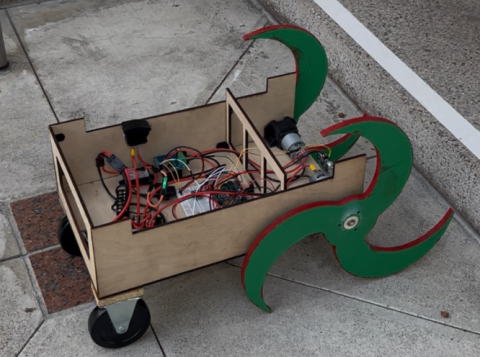
Stair Climber Robot Final Prototype
Stairs remain one of the biggest obstacles for mobile robots, limiting their usefulness in real world environments. While robots excel on flat surfaces, they struggle with the vertical challenge of staircases. Our project addresses this problem by designing a robot capable of quickly and reliably climbing the Engineering Gateway stairs at UC Irvine while transporting a standard 0.5L water bottle. The core challenge is balancing torque, traction, weight, and stability to achieve a controlled ascent without flipping or stalling. This matters because first responders need robots that can access upper floors in collapsed buildings. Delivery companies need robots that can reach front doors beyond ground level. Individuals with mobility impairments could benefit from assistive devices that navigate stairs in their own homes. Our specific task of climbing the Engineering Gateway stairs with a water bottle serves as a testbed for these broader applications. The problem we are tackling affects...
StairForce One
Current delivery devices and services are optimized for flat terrain and struggle with stair-like obstacles. StairForce One is a remotely operated tracked vehicle designed to transport small payloads up steep staircases without physical tethering. The system uses a dual-track drivetrain and distributed wheel and distributed gear support to maintain stability and traction while climbing. StairForce One successfully transported a 0.5 L (16.9 oz) water bottle up UCI Engineering Gateway stairway in less than 30 seconds with 50% power, demonstrating reliable ascent and remote operation. This project highlights the potential for compact stair-climbing vehicles in last-mile delivery, accessibility support, and emergency logistics.
SubSurface Systems: RC Submarine
Most commercially available 1:18 scale RC boats are designed solely for surface operation, lacking the structural integrity, waterproofing, and buoyancy control needed for submersion. While RC submarines are available as niche hobbyist products, they tend to be expensive, specialized, and limited in depth capability. This project aims to bridge that gap by converting an off-the-shelf RC boat into a functional submarine, applying engineering principles to address challenges in waterproofing, ballast design, and underwater propulsion.

The Anteatairs
A tiltrotor VTOL fixed-wing UAV engineered for search-and-rescue — currently undergoing airframe surface coating and final systems integration before flight testing.
The Mission
Modern search and rescue (SAR) operations face a critical tradeoff: ground teams are slow, and conventional fixed-wing aircraft require runway infrastructure that doesn't exist in disaster zones or remote terrain.
The Anteatairs solves this by engineering a tiltrotor VTOL UAV — a hybrid platform that takes off and lands vertically like a multirotor, then physically rotates its motors forward to transition into efficient fixed-wing cruise flight. No runway. No infrastructure dependency.
Built on a COTS fixed-wing airframe retrofitted with custom tiltrotor propulsion, with a scale fuselage modeled in Fusion 360, a purpose-designed payload delivery bay, FPV telemetry, and autonomous navigation — this platform is designed to rapidly deploy, survey large search areas, and deliver emergency first-aid supplies to survivors....

The BOOM Squad - Toy Ball Cannon
The Toy Ball Cannon Project is a mechatronics-focused design that redefines recreational fun. The system launches lightweight projectiles using flywheel technology while coupling RGB-oriented object detection and navigation to track fast-moving targets. This project heavily involves collaborative design, research, prototyping, performance optimization, safety considerations, and extensive testing, allowing us to apply critical engineering principles in a dynamic way to meet our stakeholder needs and expectations.
Inspired by the Nerf Rival Nemesis blaster, our team aimed to create an autonomous turret that sprays a volley of balls to hit a moving target a minimum of one time per firing cycle.

Toy Ball Cannon
This project is designed by UCI MAE department with the goal of creating a cannon system with the ability to discern, track and shoot at RC cars. The system should be able to hit targets in a 360 degree area from a range of 5 - 15 feet, all while in a safe manner. The three step process is autonomous requiring humans only to power the system on and reload after firing. This project addresses the current inability of off the shelf cannon systems to discern the targets it is firing at, while providing a meaningful learning experience for UCI students.

UCI Solar Airplane (2025-2026)
Our purpose:
The UCI Solar Airplane Project is dedicated to exploring the potential of solar-powered aviation as a more sustainable alternative to conventional flight while also developing technology that can support humanitarian aid and disaster relief efforts. As concerns about climate change and reliance on nonrenewable energy continue to grow, our team aims to demonstrate how renewable energy can be integrated into aerospace systems in meaningful and practical ways.
During the 2025–2026 academic year, the team focused on designing and building a solar-powered aircraft from scratch. Through research, prototyping, and subsystem development, team members worked to create an aircraft capable of extended flight through the integration of solar energy, lightweight structures, and efficient propulsion systems. This work required close collaboration across aerodynamics, fuselage, propulsion, and operations to move the project from concept toward a fully realized aircraft....
Undercurrent: RC Boat to Submarine Phase 2
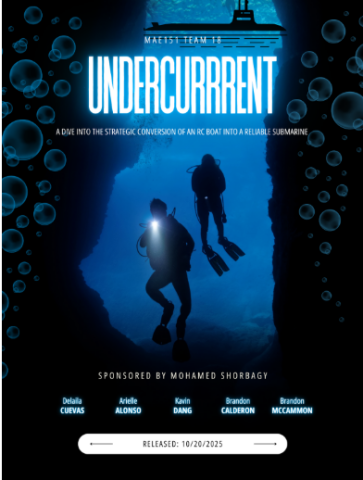
This project addresses that gap by converting an off‑the‑shelf RC boat into a functional, depth‑capable submarine using readily available components, open‑source microcontrollers, and accessible design tools. The scope includes redesigning the hull to support waterproofing, integrating a ballast system for controlled diving, and developing a multi‑Arduino control architecture capable of managing pumps, sensors, and propulsion. SolidWorks is used to model structural modifications and 3D‑printed components, while ThinkerCad provides a virtual environment for simulating electrical circuits before physical assembly.
Commercial RC submarines and underwater robotics platforms are often expensive, limiting access for students, educators, and early‑stage researchers. By demonstrating that a functional, depth‑capable submarine can be built from an affordable RC boat and readily available components, this project lowers the financial barrier to hands‑on learning in marine engineering, robotics, and control systems.

VRTDrone | VTOL Senior Design Project
The increasing demand for autonomous video systems in sports analysis, broadcasting, and recreational activities has created a need for advanced platforms capable of dynamically capturing footage with minimal user input. Current camera and tracking systems are often limited in their ability to capture footage from multiple perspectives or require significant manual operation to function effectively. While drones provide a promising solution due to their ability to track fast-moving objects and capture unique aerial viewpoints, existing platforms have their own limitations. Conventional multirotor drones offer precise hovering and maneuverability but are constrained by limited flight endurance and coverage area. Conversely, fixed-wing aircraft provide greater speed, range, and efficiency but lack the ability to hover and operate effectively in confined environments.
To address these challenges, this project integrates computer vision, autonomous flight control, and hybrid VTOL (Vertical Takeoff and Landing) aircraft design to create a system capable of continuously...

Wheel of Deception
The "Wheel of Deception" project, sponsored by Derek, addresses a gap in the professional entertainment market for compact, high-tech rigging hardware. Existing "off-the-shelf" rigged wheels are typically large, stationary floor units costing upwards of $10,000, making them difficult to transport and unsuitable for close-up environments like bar-top performances. The scope of this project was to engineer a portable, high-performance alternative that maintains all the functionality of a full-sized unit while fitting within a desktop footprint. This project matters because it provides a cost-effective, mobile solution for performers who require professional-grade mechanical deception in versatile, small-scale settings.

Wheelchair Accessibility in Commercial Aviation
Currently, commercial air travel lacks proper accommodations for wheelchair users and presents significant financial and emotional challenges for the individual during the duration of the trip. In 2023 alone, commercial airlines reported damaging or destroying 11,527 wheelchairs and mobility scooters (Smith). Because custom wheelchairs frequently cost upwards of $30,000 (BraunAbility), many wheelchair users report their reservations with flying. Coupled with the current boarding process requiring multiple physical transfers on and off their personal wheelchair, aisle chair, and airplane seat, wheelchair users lack autonomy and dignity throughout this experience. The statistics and lived experiences of wheelchair users point to a clear conclusion: there is a critical need for better accommodations for wheelchair users during air travel.
To address the critical shortcomings in wheelchair accessible air travel, our team has engineered a specialized solution designed to ensure the continuous comfort and safety of wheelchair users throughout their flight. To...
ZOT-ONOMOUS
Zot-onomous is a Senior Design Project focused on building an autonomous drone from the ground up. The goal is to design a student-built unmanned aerial vehicle (UAV) capable of vertical takeoff, forward flight, and a controlled rapid descent for accurate payload delivery. Most delivery drones descend slowly, noisily, and predictably. Zot-onomous takes a different approach: the drone climbs to 100 feet, then dives rapidly, safely pulling out of the descent 5 feet of the ground. This makes it faster, quieter, and harder to detect than conventional designs. That capability opens doors across three real-world applications: rushing medical supplies to hard-to-reach areas, supporting military logistics stealthily, and delivering packages to neighborhoods without the noise and privacy concerns drones typically bring. At its core, this project exists to move a 0.5 to 2 kg payload safely and reliably to its target. Onboard autonomy reduces human error and keeps every delivery consistent and repeatable.