
HydraShift aims to convert an off-the-shelf 1:18 scale RC boat into a functional submarine. The submarine will be capable of underwater maneuverability and diving to a depth of at least five meters before reliably resurfacing. As RC boats are typically designed exclusively for surface operation, this transformation will require developing a ballast system to resist hydrostatic pressure and achieve buoyancy, sealing electronics to ensure waterproofing at high depths upon full submersion, and underwater propulsion.

MAE
2025-2026 - Fall, Winter
HydraShift - RC Boat to Submarine

MAE
2019-2020 - Fall, Winter, Spring
HyperXite
Established in 2015, HyperXite is a team of undergraduate students endeavoring to build a Hyperloop pod.
HyperXite has competed in the past four Spacex Hyperloop Pod Competitions. In Competition I, HyperXite was one of the semifinalists and placed fifth for their overall design worldwide. Additionally, the HyperXite pod was one of the only air levitated pods to be tested within the Hyperloop itself during Competition II and placed in the top 6. In the past two competitions, HyperXite was one of the top 22 finalists to attend comeptition in Hawthorne, CA.
This year, HyperXite will not be attending the SpaceX Hyperloop pod competition but will instead build a small-scale pod to be tested on the team's own test track.
MAE
2020-2021 - Fall, Winter, Spring
Long Range Drone
Background:
Hydrogen fuel cells are a form of renewable energy that is easily accessible since hydrogen is the most abundant element in the universe, and do not cause pollution or danger to our environment as they do not release greenhouse gases as opposed to burning fossil fuels.The long range drone project uses a fuel cell battery as a source of power for a flying robot that can be remotely controlled or fly autonomously through software-controlled flight. For this particular project, we will be researching the fuel cell efficiency in a drone that we will design and build ourselves. Groups will be building a structure for the drone and assembling electronic parts for use throughout the experiment, while keeping the fuel cell as the focal point of this project.
Goals and Objectives:
This year (2020-2021), the team will design and crate a fuel cell battery powered drone that flies and add the application of carrying...

MAE
2025-2026 - Fall, Winter
Mag-Vengers
Mag‑Vengers is a senior design project in collaboration with a local company that focuses on advancing drone functionality through the use of electropermanent magnets (EPMs). The team is developing a lightweight, durable drone attachment system embedded with EPMs to create a strong, switchable magnetic latch. Controlled electronically, the latch can be turned “on” or “off” to securely hold and individually release six (or more) sensor pucks during high‑speed flight.
The project’s goal is to deliver a fully functional prototype that is reliable, aesthetically clean, and easy to modify for future teams or organizations. Over the course of two academic quarters, the team will apply skills in CAD modeling, simulation, prototyping, and documentation to design, test, and refine the system. Milestones include initial coil and component prototypes in Fall 2025, a second prototype for presentation at the Winter Design Fair, and a final prototype by Winter 2026.
CEE
2018-2019 - Fall
Multifunctional Solar Updraft Tower
The purpose of the project is to design a building structure that incorporates an optimum environment for energy generation. Our design incorporates the solar updraft concept, which uses air movements to rotate turbines and generate energy. By optimizing the surface area of the structure, the sun is then used to heat the air causing it to move upward at an increasing velocity, therefore turning the turbines and generating energy. The structure will act as a multifunction facility, consisting of wind turbines for energy generation and occupiable space (i.e. research facility, storage).
MAE
2025-2026 - Fall, Winter
Narcotic Network
We are narcotic network as the word narcotic means to relieve great pain and that’s our goal, we want to create a network of pain relief through our medicine delivery advice, furthermore we want to get rid of the negative stigma associated with narcotics and create something that improves society instead.
Our project goal is to create a network of medication delivery centered around a pharmacy using autonomous drones
There are many problems with the procurement of medication, it takes too long just to speak with staff, medication may not be ready by the time you show up.
This is for individuals that either cannot physically be in person to pick up medication at the pharmacy, those that cannot be at the pharmacy due to a time constraint or impatience, and for convenience.

MAE
2025-2026 - Fall, Winter
SAE Micro Class Plane
Summary
Spanning several years, Aero Design @ UCI (formally UCI Cargo Plane) is a well-renowned project at the University of California, Irvine. This project provides a great opportunity for undergraduate students to learn the fundamentals of aircraft design, as it brings together the foundations of aerospace engineering and combines them with hands-on manufacturing experience. These skills will aid these members in future endeavors where they may design planes that could potentially carry more precious cargo. Given the formidable challenge by SAE, teams are expected to bring together unique perspectives in creating a one-of-a-kind RC aircraft, capable of meeting all constraints. All participating teams are expected to go through the entire design process, create a thorough design report, and present the team’s design to a panel of industry engineers.
Our goal for our project is to design and build a small-scale aircraft that contains a liquid payload with minimal...

EECS
2024-2025 - Fall, Winter
Semiconductor Chip Design and Fabrication
Background:
Our multidisciplinary team is working to design and fabricate a semiconductor chip through the use of a cleanroom and the equipment within it. In addition to development, the team aims to create educational content on semiconductor manufacturing to share knowledge and promote understanding. By combining the expertise of multiple engineering fields, in mechanical, electrical, and computer, we are working together to understand the processes and theories behind devices smaller than a millimeter.
Goal and Objectives:
-
design electrical components including resistor, capacitors, inductors and transistors with a tolerance of 25 um
-
fabricate a semiconductor chip on a wafer
-
comprehensive documentation for each stage of the design and fabrication process
-
comprehensive guide to using KLayout CAD software for chip design
-
standard operating procedure for cleanroom environment
Team Members:
Mufan Zhang, mufanz@uci.edu
Simon Chang, simonc7@uci.edu
Raghav Gate
Kenny...

MAE
2025-2026 - Fall, Winter
SmartSweat - Wearable Sweat Chemical Analyte Patch
SmartSweat is a wearable patch that non-invasively and continuously measures lactate and sodium content in sweat. The device functions through a screen-printed electrochemical sensor integrated with microfluidic pads that channel sweat to the electrodes. A custom physical housing and adjustable band provides comfort and ensures the patch remains in contact with the skin, even during exercise/activity. The embedded bluetooth module transmits the data wirelessly to a mobile device, allowing users to view live analysis of health activity. The device enables users to monitor performance, prevent dehydration, and make informed decisions during daily activities. By combining low-cost materials and compact materials, SmartSweat demonstrates a unique access for dual monitoring of sodium and lactate levels. Targeted towards athletes and health-conscious consumers, SmartSweat can provide valuable input on hydration and metabolic performance.

MAE
2022-2023 - Winter
Steerable Mechanical Walking Robot
The steerable mechanical walking robot is a project that uses a motor-driven Jansen leg mechanism to move, while also using a separate servo motor to steer the robot through a bell crank mechanism. The robot is wirelessly controlled via infrared, having buttons on the IR remote command the robot to turn left or right, go forwards or backward, and also to stop.
An Arduino UNO facilitates the electronics control of the robot, processing IR signal from an IR receiver, which promptly translates it into an action. The Arduino is powered by a rechargeable lithium-ion battery.
A motion study was used with a CAD model to analyze the motion of the physical prototype before building the robot. The final prototype uses a Jansen-style leg mechanism, which uses 11 linkages to mimic the walking motion of a leg.

MAE
2025-2026 - Fall, Winter
Toy Cannon: B.A.L.L.
This project aims to design a cannon system that is capable to detecting, tracking, and hitting moving targets within a 360-degree area at a distance from 5 - 15 feet. With the exception of loading cannon balls, the system should work independently even without any user knowledge. By utilizing ultrasonic sensors and computer vision with OpenCV we accomplished autonomy, creating a system that is trained to hit RC Cars. Upon initial detection, our cannon automatically corrects pitch and yaw values to launch cannonballs at the target's predicted path position.

EECS
2023-2024 - Fall, Winter, Spring
UAV FORGE
UAV Forge constitutes a multidisciplinary engineering design team with a specific focus on the comprehensive development cycle of autonomous aerial vehicles, encompassing design, manufacturing, programming, and rigorous testing. The paramount objective of this design endeavor is to adhere to the stipulated constraints, thereby enabling active participation in the SUAS 2023-2024 competition season.
The SUAS competition mandates that the UAV system possess autonomous flight capabilities, proficient object avoidance capabilities pertaining to both stationary and dynamic entities, and adeptness in object detection, localization, and classification. Furthermore, the system is required to execute an airdrop delivery mechanism, ensuring the precise delivery of a payload object to a designated GPS location without incurring any damage.
While the immediate focus of this year’s team centers on achieving commendable performance within the competitive arena, the overarching goal is to provide undergraduate participants with a practical application of their engineering acumen toward a consequential real-world challenge. UAV...
EECS
2022-2023 - Fall, Winter, Spring
UAV FORGE
Project Description:
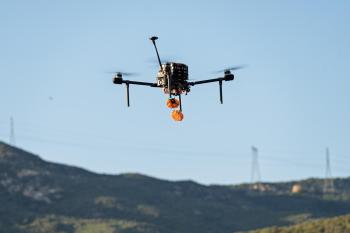
UAV Forge is a multidisciplinary engineering design team focusing on designing, manufacturing, programming, and testing autonomous aerial vehicles. The design aims to fulfill the constraints that allow the team to participate in the AUVSI SUAS 2023 competition season.
The AUVSI competition requires that the system’s UAV have autonomous flight capabilities, the ability to perform object avoidance of stationary and dynamic objects, and the ability to do object detection, localization, and classification. The system must also perform an airdrop task wherein UAV Forge will manufacture an assembly that will interface the UAV with descent and autonomous ground vehicles.
AUVSI SUAS Competition:
The ground vehicle, once landed, will autonomously drive to its set destination to complete payload delivery. Though the emphasis for this year’s team is to perform well in the competition setting, the primary objective is to ensure the undergraduate students participating in the project apply their engineering skills...
MAE
2025-2026 - Fall, Winter, Spring
UAV Forge (duplicate)
UAV Forge constitutes a multidisciplinary engineering design team with a specific focus on the comprehensive development cycle of autonomous aerial vehicles, encompassing design, manufacturing, programming, and rigorous testing. The paramount objective of this design endeavor is to adhere to the stipulated constraints, thereby enabling active participation in the SUAS 2025-2026 competition season.

MAE
2020-2021 - Fall
UAV Forge - Guidance Navigation and Control
UAV Forge is an interdisciplinary team that competes in the Student Unmanned Aerial Systems Competition (SUAS) hosted by the AUVSI. This competition involves teams programming and designing both an unmanned ground and aerial vehicle to undergo missions laid out by the rules. The Guidance Navigation and Control subteam researches alternative methods to land the ground vehicle as well as program it to navigate to given waypoints.
MAE
2020-2021 - Fall, Winter, Spring
UC Irvine Solar Airplane
UC Irvine Solar Airplane aims to optimize a low-cost unmanned aerial vehicle (UAV) for which flight time will be extended, powered by solar panels, by 30 minutes after battery-life . The UAV's main goal is to aid with disaster relief efforts using a GPS and a camera to relay constant feedback to the operators during the duration of the flight. UC Irvine Solar Airplane is a team of currently 37 diverse members from various majors and ages.
MAE
2022-2023 - Fall
UCI CubeSat - Antenna Deployment Mechanism
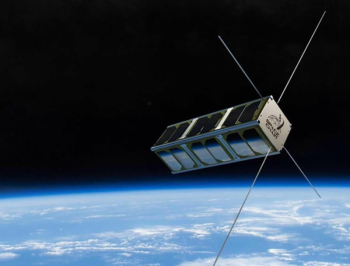
This project aims to create a compact, lightweight, and highly reliable antenna deployment mechanism that will be attached to an Orbital 2U CubeSat satellite. It must survive launch and orbital conditions and allow data to be relayed from the CubeSat to the ground station at UCI. We must ensure that we design a working mechanism that fits within the limited space provided to us on the 2U CubeSat. The antenna has to be the correct length for the material used to provide the needed frequency. We work alongside UC Irvine’s Cubesat team to verify design requirements and ensure that our designed mechanism will be compatible with the team’s CubeSat which will be launched onboard a third-party launch provider when complete.

MAE
2025-2026 - Fall, Winter
UCI Rocket Project - Liquids Team: Latterally Actuated Technical Test Environment (L.A.T.T.E.)
Successful launch operations for the UCI Rocket Project Liquids Team’s rocket, MOCH4, depend on performing pre-launch procedures efficiently and consistently at the Friends of Amateur Rocketry (FAR) site. Delays in setup increase exposure to rising wind speeds and propellant boil-off, both of which reduce launch success and altitude performance. To maximize performance and prevent the waste of money and time on the trip for an unsuccessful launch at the FAR site, the team is developing a modular launch rail that matches the FAR setup, enabling full-scale cold flows in the actual launch configuration and providing a realistic environment for assembly practice. This system reduces setup variability, improves data accuracy, and helps ensure reliable and repeatable launch operations.
MAE
2025-2026 - Fall, Winter
Zot-Under-Pressure: Fluid Powered Vehicle Challenge
The Zot-Under-Pressure team is UC Irvine’s second-generation entry into the National Fluid Power Association’s Fluid Power Vehicle Challenge (FPVC). This competition requires engineering students to design a hydraulic-powered vehicle capable of competing in sprint, endurance, efficiency, and regenerative braking events. Our design integrates a pedal-driven hydraulic pump, high-pressure accumulator, efficient charging/discharging system, and regenerative braking capable of storing braking energy for reuse. This year's goal for the vehicle is to reach the top three among the nationally competing teams. The project advances sustainable energy storage by converting human power into hydraulic propulsion while exploring innovative regenerative techniques.