
This project addresses the challenge of maintaining healthy greenhouse conditions without constant manual monitoring and intervention. Our team developed an AI-enabled automated greenhouse system that monitors soil moisture, temperature, and humidity, then automatically regulates irrigation and lighting to support plant growth. The project matters because it demonstrates how embedded systems, IoT devices, and machine learning can make plant care more efficient, consistent, and scalable. By reducing unnecessary watering and improving environmental stability, the system supports smarter and more sustainable small-scale agriculture. For more information, please access our Final Project Report: https://drive.google.com/file/d/1TOLH5HtbCEyqZn1P6OdofzXTeMpmVzWa/view?u...
AI-Enabled Automated Greenhouse System Using Raspberry Pi and Predictive Environmental Modeling
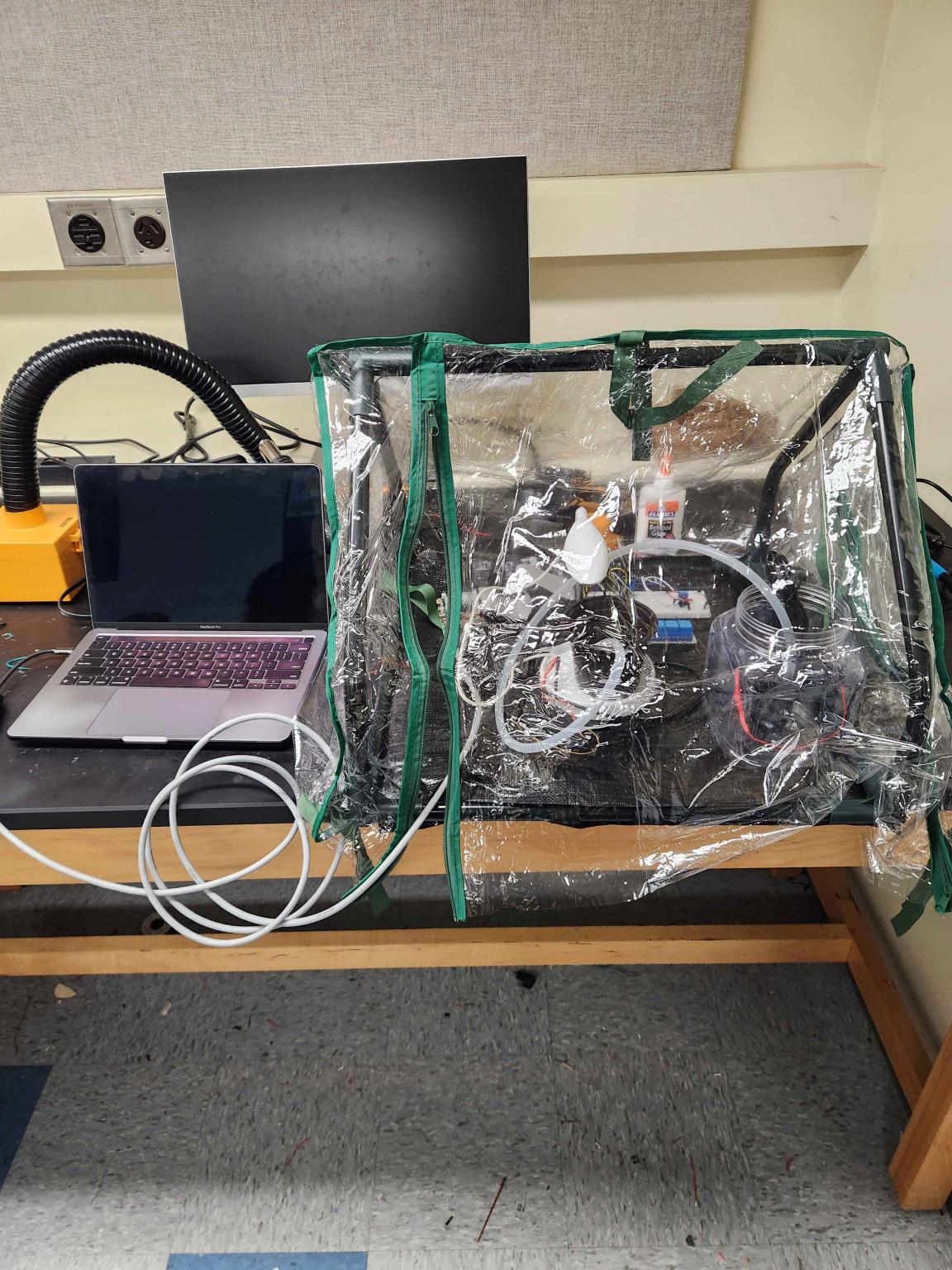
Summary
Technical Approach/Methodology
Our solution uses a Raspberry Pi 5 as the main controller for an automated greenhouse system that continuously monitors soil moisture, temperature, and humidity. Sensor data is processed through a backend service and displayed on a web dashboard built for live monitoring and manual control. We also integrated machine learning to predict when soil is likely to become dry soon, allowing the system to make more proactive watering decisions instead of relying only on fixed thresholds. Together, the hardware, software, and predictive modeling create an accessible smart greenhouse platform for more reliable plant care.
Outcomes
By the end of the project, we produced a functional automated greenhouse prototype with integrated sensing, irrigation, lighting control, and a web dashboard for monitoring system activity. The final system can detect environmental changes, trigger watering when soil moisture falls below target levels, and provide users with real-time visibility into greenhouse conditions. We also developed a predictive machine learning component to estimate upcoming soil dryness and improve decision-making. Key deliverables include the physical greenhouse prototype, Raspberry Pi hardware integration, backend services, dashboard interface, and predictive model.