
The courses for the capstone projects in the Department of Civil and Environmental Engineering (CEE 181B/C) are run by Associate Professor Joel Lanning and offered during the winter and spring quarters. Interested industry is encouraged to reach out to Prof. Joel Lanning at joel.lanning@uci.edu.
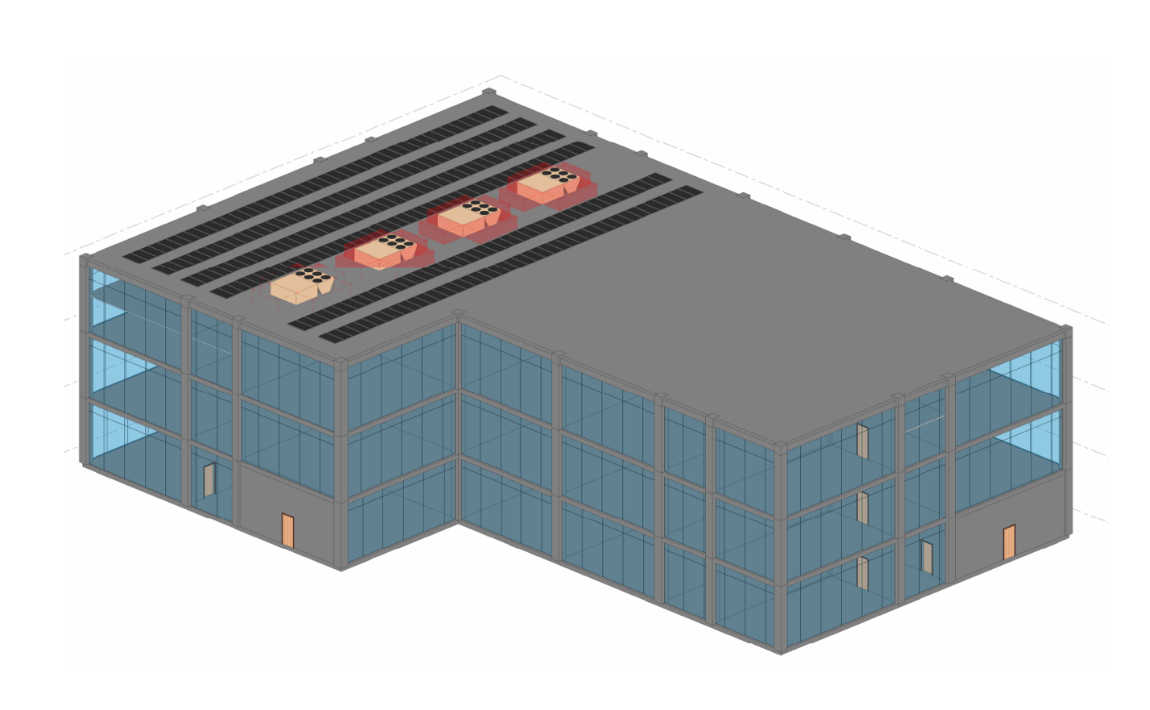
FUSION Engineering Project: Autonomous Vacuum (Team Oompa Loompa Broombas)

The objective of the FUSION Engineering Project is to design and create a functional autonomous vacuum cleaner. Each team must adhere to certain design specifications set by the Project Directors and will compete with each other at FUSIONCon in May 2023. Each team’s goal is to create a cost-effective robot while maintaining functionality.
Electric Powered Water Filtration
The World Health Organization published that more than 884 million people did not have access to safe drinking water in 2017. Unsanitary water can cause different diseases like cholera, dysentery, and polio. The goal of this project is to design and build an affordable, portable, and sustainable water filtration system that can provide clean drinking water for one day for a family of four in developing countries. This team will design a system that uses electric power to operate a pump or similar device to move water from the source to the designed filtration system.
UCI CubeSat
UCI CubeSat is a student design team working on the design and construction of UCI's very first CubeSat satellite. Our mission is to deliver two research payloads to low earth orbit.
Anteater Formula Racing (FSAE Internal Combustion Engine) 2021-22

Background:
Each year, Anteater Formula Racing designs, manufactures, tests, and competes with an open-wheel car modeled after Formula 1 racecars. Formula SAE (Society of Automotive Engineers) is an international organization that puts on competitions worldwide every year. There are dynamic components that involve racing the car itself, and static components that revolve around testing students knowledge of the engineering design process and business tactics. This year, the team will be working on the newest iteration of the car, named "Peter the Pavement Eater" or, PPE for short.
The team of 45 students participate in the design, manufacturing and testing phases to gain the engineering skills needed for industry in a highly-technical, fast-paced and competitive environment. The team collectively spends over 15,000 hours each year developing the car and its subsystems while balancing their engineering coursework.
Engineering students earn jobs in several industries, including automotive, aerospace, electrical, software and more, because of the hands-on training and...
Industrial Steel Pipe Rack
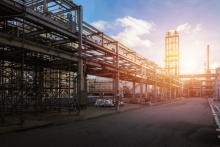
Pipe racks are non-conventional structures that are typically utilized in refineries, chemical, power, and petrochemical plants. The proposed pipe rack for Fluor Corporation was designed to support power cables, pipes, cable trays, an air cooler exchanger, and a platform for air cooler maintenance. According to ASCE 7-16, pipe racks are non-building structures that are similar to buildings. As a result, typical design requirements found in building codes may not apply to this structure.
Partially Buried Reinforced Concrete Reservoir
The purpose of this project is to design a partially buried rectangular cast-in-place reinforced concrete reservoir that takes up to 1.3 million gallons. This reservoir is aimed to supply water to a residential area in Villa Park. The stored water will also aim to be used during a fire emergency or any other natural disasters such as wildfires or earthquakes. Additionally, the reservoir is needed to supply water to the residential areas during times of low flow, when natural flows are inadequate to meet the water demand.
The design of this reservoir will consider static, dynamic and hydrodynamic loading based on 2019 California Building Code, ACI 350, ASCE 7-16, and other relevant applicable codes and standards, as well as utilizing a design software such as RISA 3D. The design process consists of various structural elements such as flat slab roof, columns, walls and footings. Additionally, the roof will be partially covered...
Steel Bridge at UCI

The National Student Steel Bridge Competition is an inter-collegiate competition held annually by the American Institute of Steel Construction (AISC). The Steel Bridge at UCI team at the University of California, Irvine is among the 17 universities that compete in the Pacific Southwest regional conference located this year at Fullerton, CA. The top three teams this year will proceed to the national competition which will be held at Virginia Tech, Virgina.
Steel Bridge at UCI is a supplemental project to the Civil Engineering curriculum, where students are tested in various ethics of structural engineering and construction management. AISC hosts and provides the rules which cover common ground in design constraints, fabrication restrictions, constructability regulations and competition rules. The students are engaged in three phases of the project which include design, fabrication and construction. The design is assessed, fabricated and constructed at competition to score in categories such as stiffness, lightness, construction speed, aesthetics, efficiency and economy. This...
Willowick Urban Golf Course Redevelopment

-
Project Statement:
The Multi-Disciplinary Group 3 was tasked with working with Fuscoe Engineering to create a conceptual plan on an existing golf course in North Santa Ana. This involves going through multiple public agencies to acquire proper documentation and understand the channels that must be navigated to ensure a timely project schedule.
-
Project Description:
The Willowick Golf Course is currently the oldest golf course in Orange County and began operations in 1928. As the years have gone on the generations have aged, the use of the golf course has subsided and the management of the golf course has begun considering design alternatives for the site. The 160-acre golf course is relatively flat and mild Earthwork would need to be done. The location is zoned for mixed-use which would allow for multiple different buildings to be implemented. The revenue is vital to...
Student Inspired Structure
The project involves a student inspired structure. The group of students will collaborate with KPFF on what type of structure they would like to design based on what structural system(s) they would like to learn more about. Project factors chosen by the students include location, appearance, structural use, and its complexity. KPFF will guide the group on how to design the structure and produce structural drawings for the entire project.
Two-story Cafeteria and Conference Center
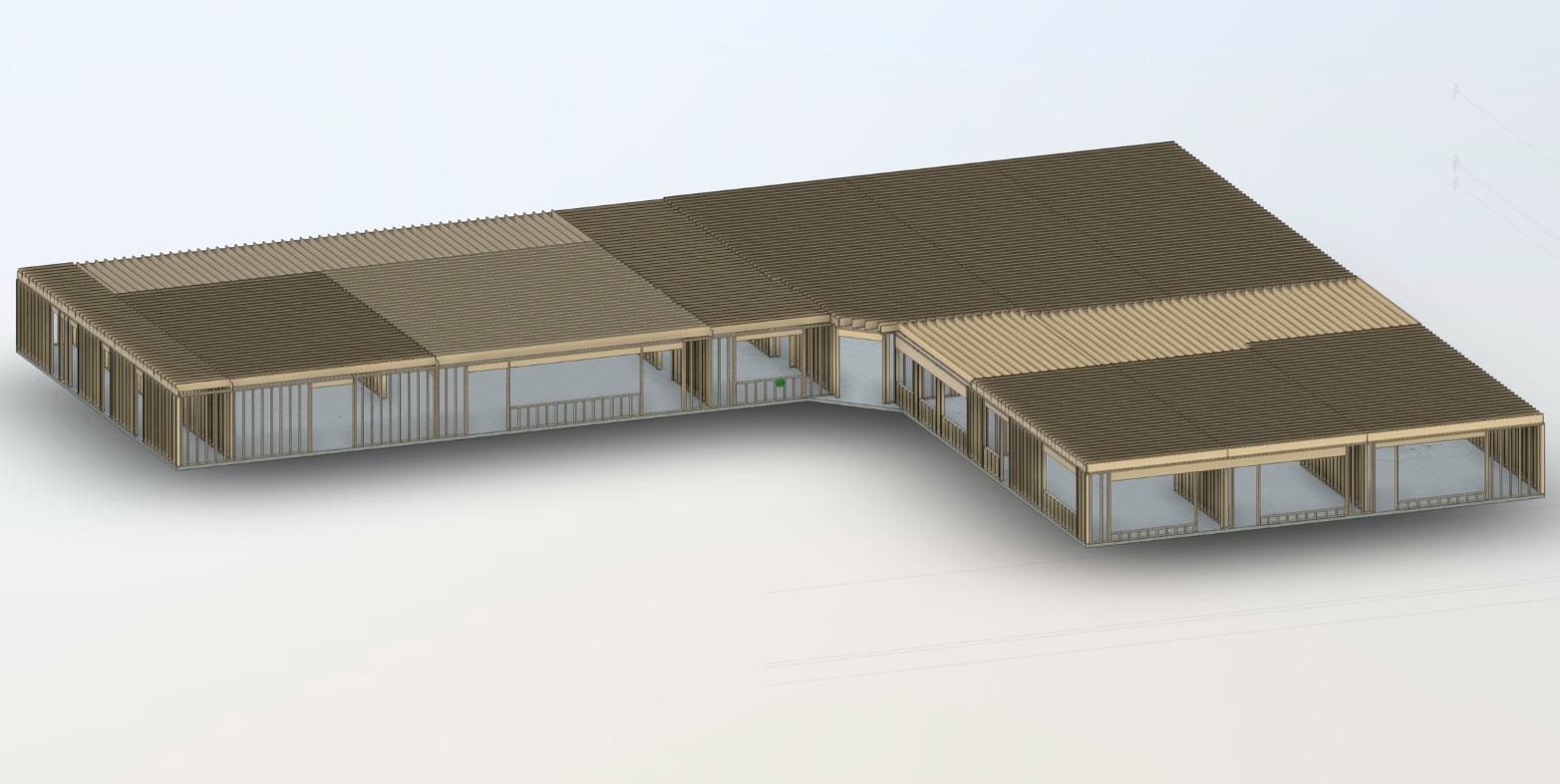
The project is approximately 30,000 square feet, 2-story Cafeteria and Conference Center/study space. The site of the building is on UCI campus where it will be built over the Steinhaus Hall. The building will be seismically retrofitted to this location. It will be used by the students as another place to eat and study on the weekdays and on the weekends the upper floor will be used as a conference center for other organizations on campus as well as potential corporations. The floors and roof will consist of concrete filled metal deck slabs spanning the entire floor. The beams used will be steel wide flange beams with 10-foot spacings. These columns will span to other steel wide flange columns. The foundation system will consist of a combination of spread footings to support the gravity columns and grade beam and spread footings. The lateral force resisting system will be Bulking Restraint Brace system....
Montezuma Hills 100-Year Site Restoration Master Plan
After decades of excessive underground water pumping and unregulated farm watering, the aquifer system in portions of California’s San Joaquin Valley has depleted to upwards of 28 feet in several locations, which have resulted in soil compaction and the degradation of ecosystem diversity. The Montezuma Site Restoration Team will develop a 100 year master plan to replenish 1,000-acre property located in the Sacramento Valley’s Montezuma Hills Site and prepare the property for a self-sustaining closed looped farming complex. Design considerations in the master plan will consist of utilizing different strategies to recharge the site conditions in Montezuma Hills, such as keyline farming, carbon farming, biochar infiltration, holistic management, and agroforestry.
Eureka Avenue Bridge Replacement
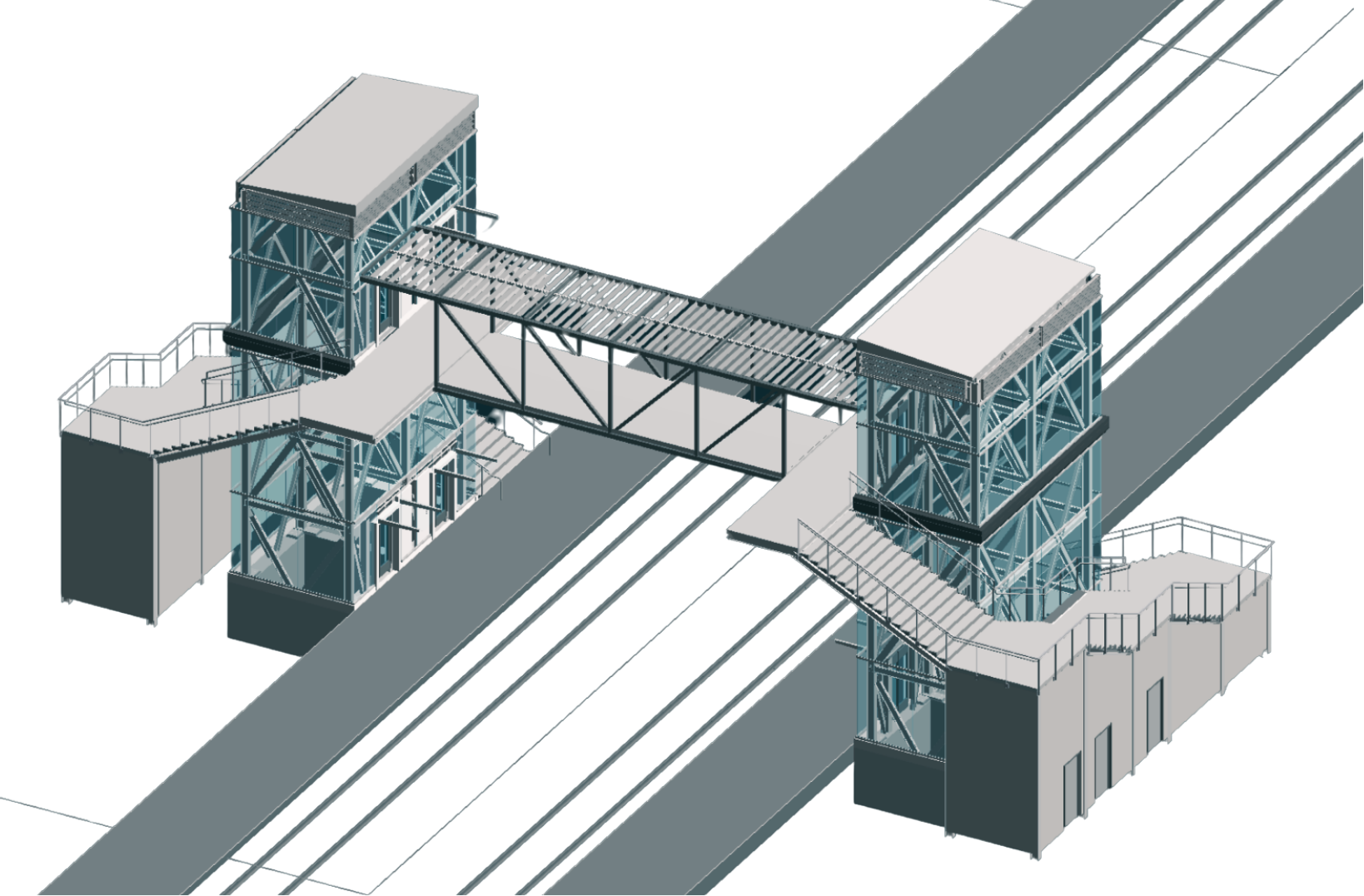
The city of Rosemead is in need of a bridge replacement that will carry Eureka Avenue traffic over State Route 10 (SR-10). When completed, the replacement will span 307’, accommodate for two lanes of traffic in each direction, and provide a 16.5' clearance below the bridge. The team will first termine the bridge type selection and finalize the project with its construction documents.
Aldrich Park Stream Restoration
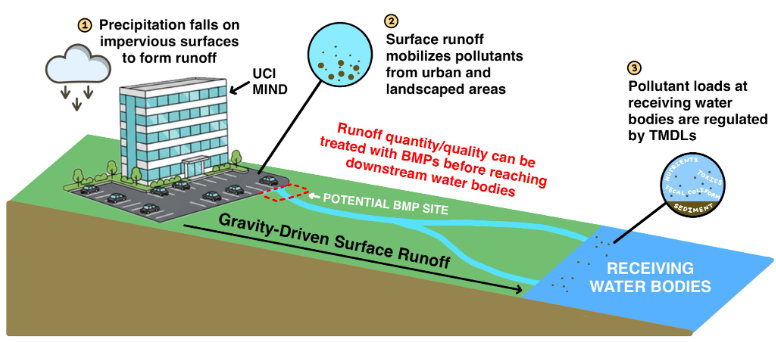
A²S² is working with Michael Baker International to assist the UCI Department of Environmental Planning and Sustainability in converting a portion of Mjölnir Solutions’ design of a daylit stream in Aldrich Park into a water feature that will act as a water treatment system and a campus amenity. The water feature will improve the surface water quality by treating stormwater runoff and will be able to handle existing and future flood flows. To maintain an aesthetic water depth, the water feature will recirculate recycled water in an absence of a storm. This project is part of UCI’s efforts to improve all open space on campus and have it serve aesthetic, sustainability, and research purposes.
LA Metro Rail to Rail

The main project involves creating an active transportation corridor spanning 10 miles throughout LA County; this corridor will replace a current railroad right-of-way that is underutilized by the county. The corridor is multi-purpose and will serve pedestrians and cyclists alike. The corridor has many uses: it will be used as a link to many Metro & municipal bus lines along the corridor; it will connect the Blue Line, Silver Bus, and future Crenshaw/LAX Line; lastly, it will also provide connections to the Los Angeles River & the Los Angeles River Bike Path. Overall, this active transportation corridor will serve as a major link between cities in LA County (including LA) such as Inglewood, Huntington Park, Vernon, Maywood, Bell, etc. This is crucial in providing more public transit for an area of the county that is mostly comprised of high-density, low-income neighborhoods.
Pacific Standard Park
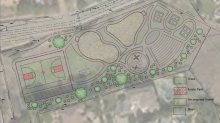
A 1.58-acre site located on the southeast corner of the intersection of Olympus St. and Piraeus St. in city of Encinitas is will be designed as a park which meets the demands of the community. To begin the park designing there will be a detailed site plan that must contain a dog park, a playground, a basketball court and a restroom.
Chlorine to UV Disinfection for Wastewater Treatment Plant
This project involves installing an Ultraviolet Water Disinfection System in place of the Chlorine Water Disinfection system for the pseudo treatment facility that was adopted from the Michelson Water Reclamation Treatment Facility of Irvine Ranch Water District. The project encompasses a design plan involving the layout, site plan, hydraulic profile, and process flow of the system. Conceptual tests and calculations determine the efficiency and rationality of switching from chlorine to ultraviolet disinfection systems. Cost analysis made accordingly to cover the project’s cost of materials and construction will support or deflect the feasibility of implementing a UV system.
Brewery Traffic Analysis
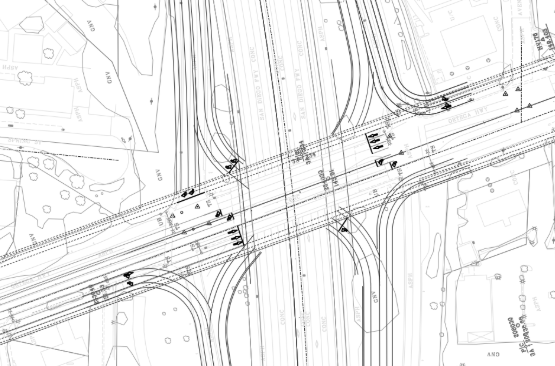
J&Co. is tasked to evaluate the trip generation and traffic impact analysis at adjacent intersections for a proposed brewery project in the City of Aliso Viejo. This will be done by surveying pre-existing brewery sites to estimate the trip generation and traffic impact of this project. Another task that the team must complete is developing a design of a modern-roundabout for one of the adjacent intersections.
Single-use Adsorption Filter Media
The current state of the art in treatment of drinking water impacted by emerging contaminants uses technologies such as Reverse Osmosis (RO), Ion Exchange (IX), Granular Activated Carbon (GAC), or media adsorption. Some of these systems are complex in terms of equipment needs and associated operator training and also are quite energy intensive. As such, single use adsorption type of systems are often considered for these type of applicaitons.
Project Goals and Objectives:
This project will examine use of single-use adsorption filter media capable of removing arsenic, PFAS, selenium, and other contaminants from water. This passive filtration process types only require a feed pump, thereby eliminating many steps that are normally associated with the operation of conventionally technologies, thus saving both electricity and water. Water quality impedes the performance of such system and understanding of these is an important step is critical.
The goal of this project is...
Water Reuse Facility for an Inland City
A semi-arid city is looking into the feasibility of a water reuse facility that will approximately handle 20MGD. The facility must include a preliminary, primary and secondary treatment. Each treatment system must abide by their respective EPA requirements and regulations. To add to that, since activated sludge will be used as part of the treatment process, the facility must implement a solids-handling facility to treat the sludge used in primary and secondary treatment. Moreover, the recycled water is expected to meet reuse standards and hence, an appropriate tertiary treatment will be designed to meet set standards under Title 22. The final design must include estimates to the associated costs and timeline required to build it.
Optimum Roadway Network
This project involves designing the optimum roadway network and roadway geometric, drainage and pavement design for the forecasted traffic loading and pattern. A site plan previously developed in the fall quarter of Senior Design is used with the goal of designing an optimum street design within the neighborhoods/developments already in place. The project involves creating multiple alternatives for roadway network design and pavement design in order select the optimal design. During the design process, the City of Irvine and AASHTO standards and regulations are to be followed. A life cycle analysis cost will also be performed for each pavement alternative and total construction cost will also be estimated.
Groundwater Well Design and PFOS Treatment Facility
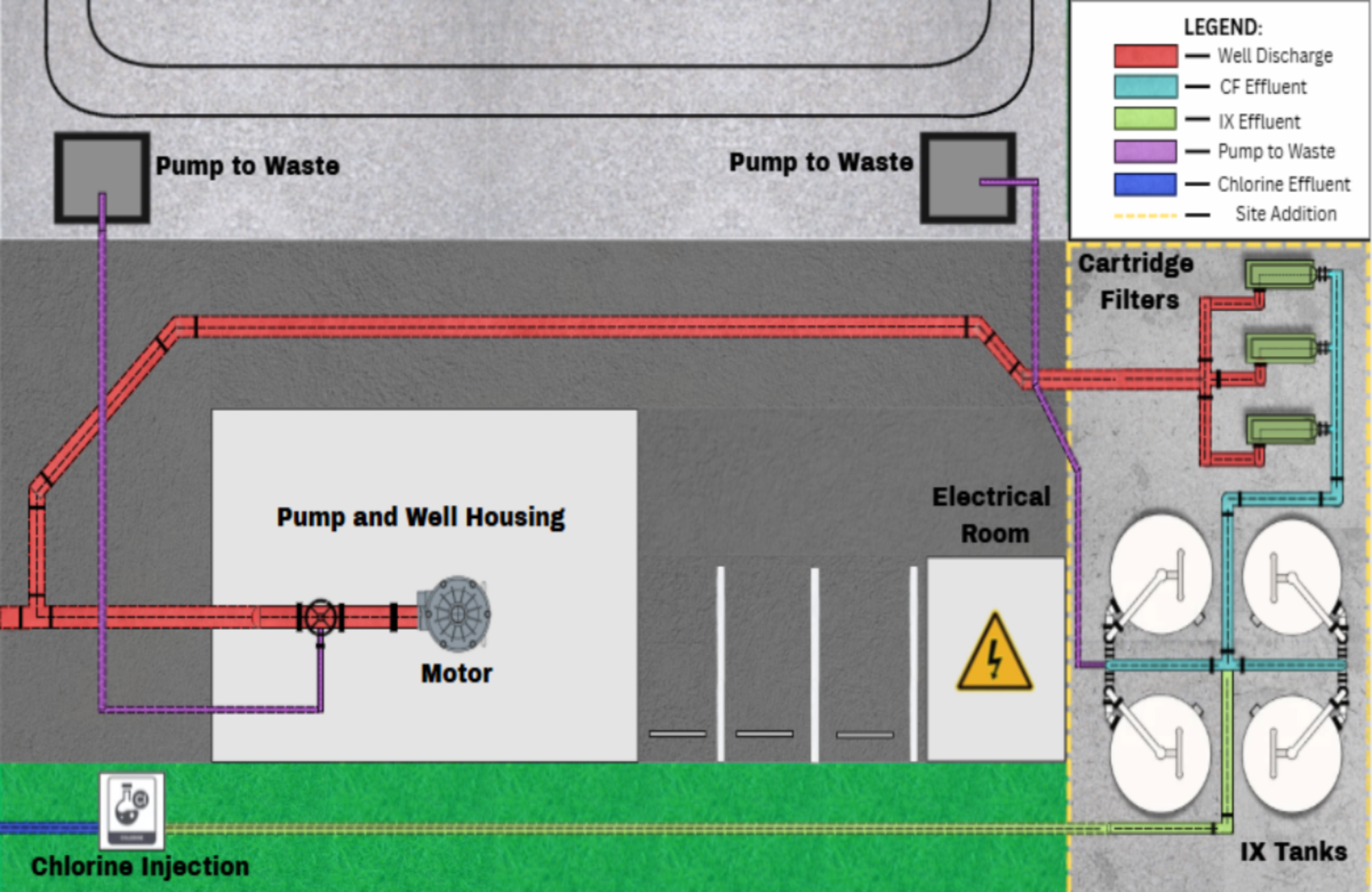
Groundwater aquifers are a major resource for drinking water and are more cost effective when compared to imported water. A recent contaminant that has become detected in groundwater aquifers are perfluorooctanesulfonic acids (PFOS), which are known to accumulate and persist in the environment and cause adverse effects on human health when ingested. The scope of this project is to fully design, equip, and operate a groundwater well in the City of Montebello and design a treatment facility PFOS before distributing any pumped water into the water distribution system.