
The AudioVisor project addresses the difficulty individuals with hearing impairments experience in perceiving and localizing sounds within their environment. Many everyday situations depend on auditory awareness, such as recognizing conversations, alarms, or approaching hazards, which can significantly impact safety and communication. This project functions by converting sound signals into visual cues that represent both the direction and intensity of surrounding audio in real time. By providing an alternative method to interpret environmental sounds, the AudioVisor enhances situational awareness and supports greater independence for individuals who are deaf or hard of hearing.
EECS
2025-2026
Fall
Winter
Internally Mentored (faculty, staff, TA)
AudioVisor
Summary
Technical Approach/Methodology
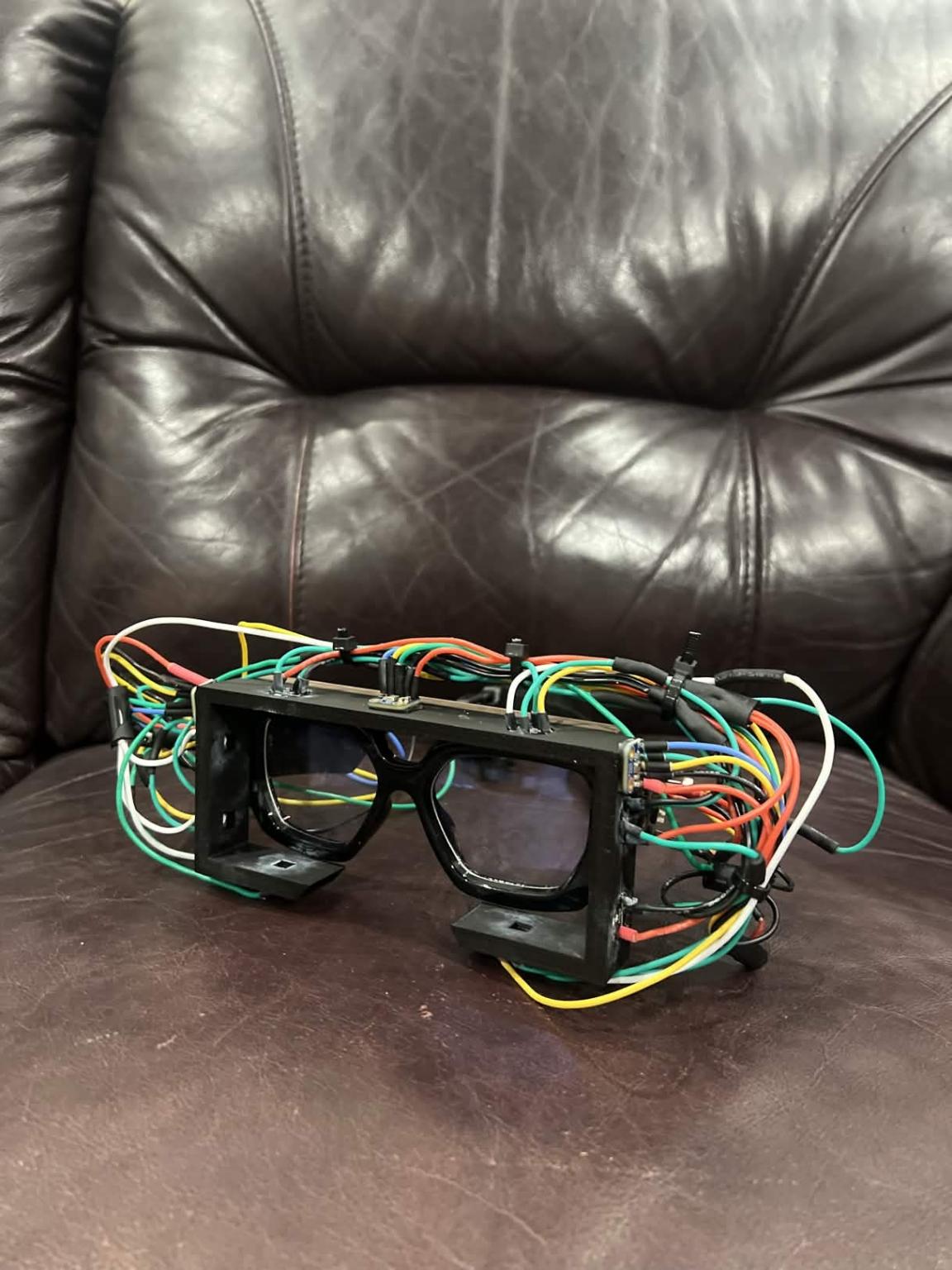
The AudioVisor system was developed using a combination of custom hardware integration and embedded software. Starting with a pre-existing glasses frame, we designed a 3D-printed mount secured with screws to hold all components, including Adafruit ItsyBitsy microcontrollers, multiple PDM MEMS microphones, individual LEDs, Li-Po batteries, switches, and charging modules on each side of the frame for a fully portable system. On the software side, the microcontrollers process real-time audio signals by calculating sound magnitudes from each microphone and comparing them to determine direction, which is then translated into LED light patterns. Bluetooth communication was also implemented to transmit data and adjust parameters such as brightness and sensitivity, enabling real-time control and interaction with the system
Outcomes
The project resulted in a functional AudioVisor prototype along with a supporting website that enhances user interaction and system control. The website allows users to adjust LED brightness and microphone sensitivity while also displaying real time sound levels from each microphone as well as a rolling average of the past ten minutes. The AudioVisor itself operates reliably in most conditions and is able to indicate the direction where sound is strongest by activating the corresponding LEDs. However, some limitations were observed in consistently noisy environments, where sound can bleed across microphones and occasionally reduce the accuracy of directional indication.
Project Media
Project Video
Project Poster