
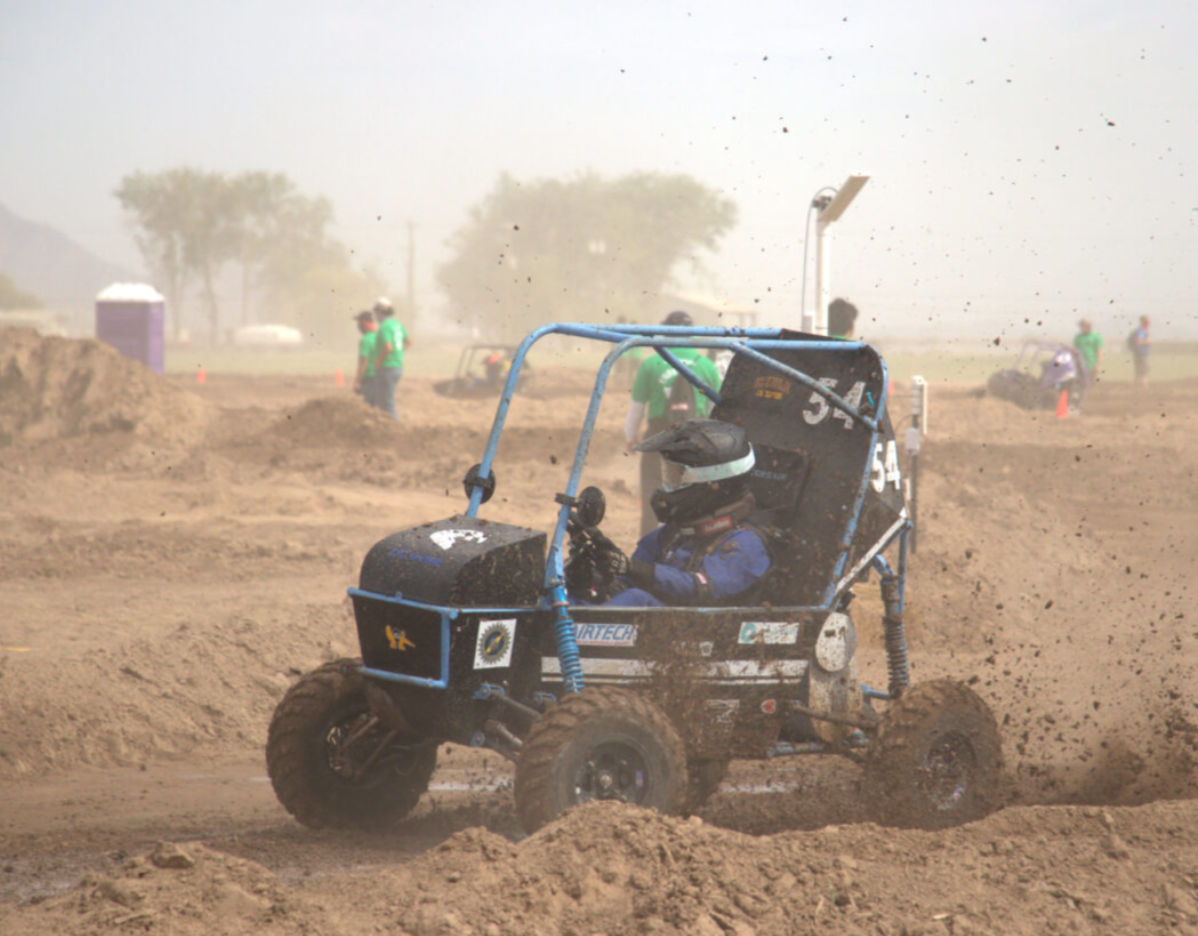
The UCI Anteater Baja Racing team is a 30+ member team tasked with designing, building, and testing an off-road race car for the SAE Baja competition each year. We are a subset of the team working specifically on transferring power from the CVT output to all four wheels. Last year, our car performed well at the 2025 SAE Baja competition in Arizona. However, it performed under its potential due to lack of testing. This year, we are emphasizing the testing and redesign of our previous design, and as such, our modular transfer case will be easy to modify and test the optimal performance of our car, verifying the design improvements. We want to design two iterations of the modular transfer case through testing with the first iteration finished before the end of fall and the final iteration finished by the end of winter. We will also develop a new output shaft to the front wheels in order to flip the front differential that is currently upside down to test the current transfer case with upwards front differential orientation as a baseline. Finally, we will design and manufacture custom CV axles in an attempt to reduce weight and improve serviceability, manufacturability, and design flexibility of future design iterations.
Team Website: https://sites.uci.edu/anteaterbajaracing/
Team Zotfunder: https://zotfunder.give.uci.edu/project/48325/wall
Chief Engineer: James Churchley (jchurchl@uci.edu)
Team Advisors: John Michael McCarthy (jmmccart@uci.edu) and Mark Walter (m.walter@uci.edu)