
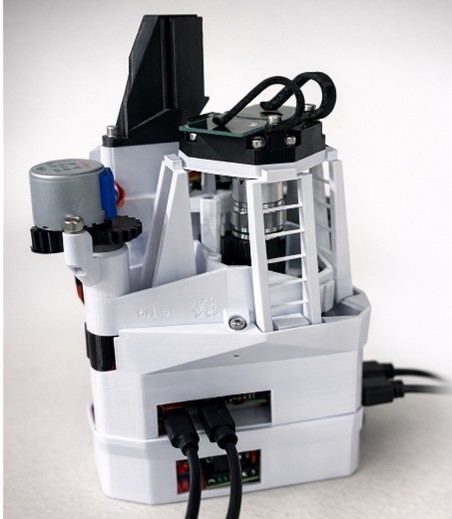
Cell counting within cell biology labs is a tedious process that is done manually. The 3D-printed microscope using AI/ML Image Recognition provides a cost-effective and efficient solution that streamlines this process. The 3D-printed open-source microscope is affordable and intuitive to use for capturing images of cells. When used in tandem with open-source artificial intelligence cell counting software, biology labs can now effectively count cells at a fraction of the time it takes to count these cells by hand.
EECS
2025-2026
Fall
Winter
Internally Mentored (faculty, staff, TA)
3D Printed Microscope Using AI/ML Image Recognition for Automated Cell Counting
Summary
Technical Approach/Methodology
Our project integrates low-cost hardware with artificial intelligence to automate the process of cell counting. We designed and assembled a 3D-printed microscope using an OpenFlexure-based structure, combined with a Raspberry Pi camera module for image capture and an Arduino-controlled motorized stage for precise positioning. A Python-based pipeline running on the Raspberry Pi captures images and communicates with a computer, where the Cellpose AI model processes the images to detect and count cells. Key technologies include Python, PyTorch, and SSH-based remote control, enabling seamless interaction between hardware and software components. This approach allows for an efficient, accessible, and automated solution compared to traditional manual cell counting methods
Outcomes
By the end of the project, we successfully developed a fully functional 3D-printed microscope system capable of capturing images and performing AI-based cell counting. The system includes a motorized 3-axis stage with micrometer-level precision, integrated Raspberry Pi and Arduino communication, and a working image processing pipeline using Cellpose. We demonstrated the ability to capture biological samples and obtain accurate cell segmentation results, with an average processing time of approximately 32 seconds per image. The final deliverable is a low-cost (~$250), portable microscopy platform that combines imaging, automation, and AI analysis, with future potential for full pipeline automation.
Project Media
Project Poster